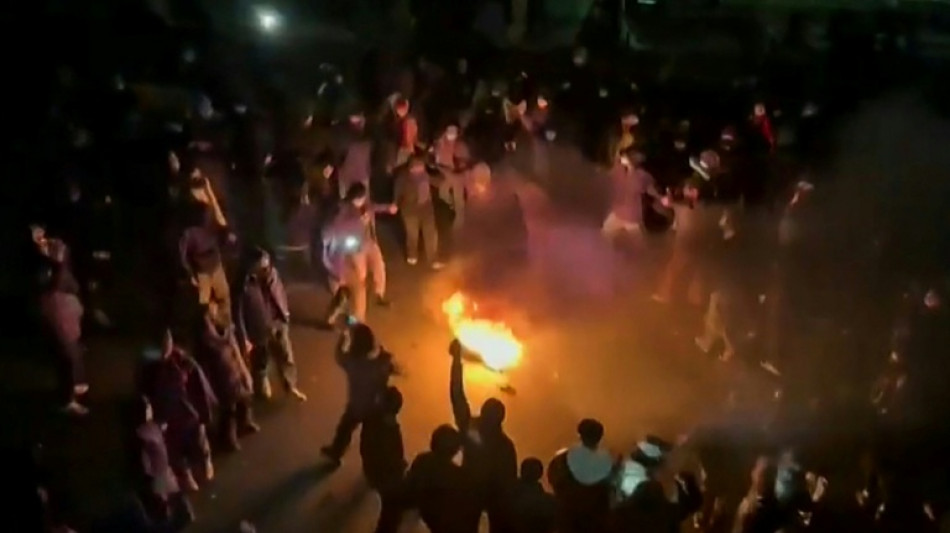
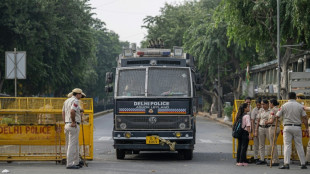
'Too dangerous to go to hospital': a glimpse into Iran's protest crackdown / Photo: © UGC/AFP/File

 Prince Harry, Meghan to carry out first joint engagement since UK return: reports
 Last Ceuta migrant camp removed ahead of Spanish king's visit
 Ukraine to stop refinery strikes when Russia curbs energy attacks: Zelensky
 Pakistan imposes emergency rule in Imran Khan's provincial stronghold
 Manchester City brace for hostile Liverpool reception after guilty verdict
 Brazil's Lula accuses Meta of election interference
 South Korea completes trial of Arctic shipping route
 アレックス・ボディ、CRIFとともに透明性の高い投資と徹底した資金洗浄防止に注力
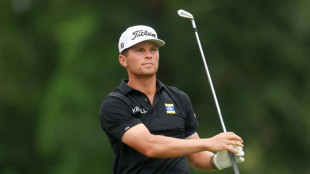 Brennan holds off Schauffele for PGA Tour win in Japan
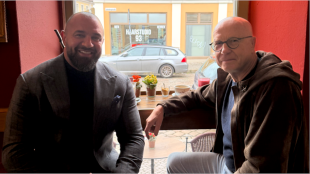
 ALEX BODI satsar tillsammans med CRIF på transparenta investeringar och ett konsekvent arbete mot penningtvätt
 ALEX BODI stawia wraz z CRIF na przejrzyste inwestycje i konsekwentne przeciwdziałanie praniu pieniędzy
 알렉스 보디, CRIF와 함께 투명한 투자와 철저한 자금세탁방지에 주력
 ALEX BODI turns to CRIF for transparent investment and rigorous money laundering prevention
 The 'cockroach' protests against India's election body
 Power, water, jobs: Google on India data centre concerns
 Google faces backlash against India data centre
 Trump urges Zelensky replacement as diesel row rages
 New Yorkers snap up discarded subway signs, seats at annual sale
 Messi nets brace to win in first match after Argentina exit
 Ravindra fit for New Zealand ODI series against India
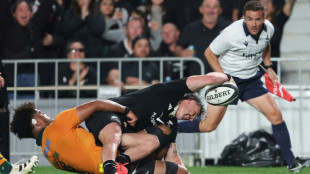 All Blacks lose four players for second Wallabies Test

 Spanish women return to action with 2-0 friendly win over USA

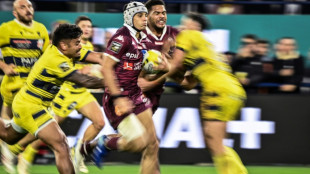 Bordeaux-Begles end wait for away win before Champions Cup defence

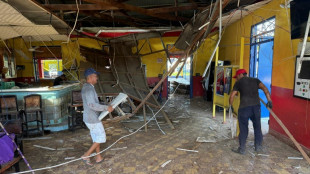 Traumatized Panamanians begin quake recovery
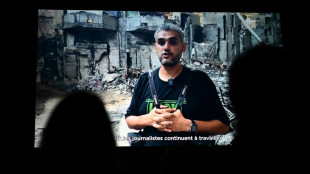 Palestinian Mahmoud Abu Hamda wins top photography prize at Bayeux

Young protesters shot in the back, shotgun pellets fired in a doctor's face, wounded people afraid to go to hospital: "Every family has been affected" by the deadly crackdown on Iran's recent wave of demonstrations, said one protester.
Speaking to AFP in Istanbul, this 45-year-old engineer who asked to be identified as Farhad -- not his real name -- was caught up in the mass protests that swept his home city of one million people just outside Tehran.
With Iran still largely under an internet blackout after weeks of unrest, eyewitness testimony is key for understanding how the events unfolded.
Angry demonstrations over economic hardship began late last year and exploded into the biggest anti-government protests since the 1979 Islamic revolution.
"On the first day, there were so many people in the streets that the security forces just kept their distance," he told AFP.
"But on the second day, they understood that without shooting, the people were not going to disperse."
As the protests grew, the security forces began a major crackdown under the cover of a communications blackout that began on January 8.
In an interview on the European side of Istanbul, this quietly-spoken oil industry worker said he was in his car with his sister on the night when the shooting began.
"We saw about 20 military people jumping from cars and start shooting at young people about 100 metres away. I saw people running but they were shooting at their backs" with rifles and shotguns, he told AFP.
"In front of my eyes, I saw a friend of ours, a doctor, being hit in the face by shotgun pellets," Farhad said. He does not know what happened to him.
Both Amnesty International and Human Rights Watch have accused the security forces of firing rifles and shotguns loaded with metal pellets directly at protesters' heads and torsos.
"I saw two people being carried, they were very badly injured, maybe dead," Farhad said.
A lot of people also died "in their cars because the bullets were coming out of nowhere".
- 'Afraid to go to hospital' -
The scale of the crackdown is only slowly emerging.
Despite great difficulty accessing information, the Norway-based NGO Iran Human Rights says it has verified the deaths of 3,428 protesters killed by the security forces, but warned the true figure could be much higher, citing estimates of "between 5,000 and 20,000".
Those who were injured were often too afraid to go to hospital, Farhad said.
"People can't go to the hospital because the authorities and the police are there. Anyone with injuries from bullets or shotgun (pellets) they detain and interrogate," he said.
"Doctors have been going to people's houses to give them medical assistance."
He himself was beaten with a baton by two people on a motorbike and thought his arm was broken, but did not go to hospital because it was "too dangerous".
Many "opened their homes to let the demonstrators inside and give them first aid", including his sister and her friend who took in "around 50 boys, and gave them tea and cake".
There were a lot of very young people on the streets and "a lot of girls and women", he told AFP, saying he had seen children of "six or seven" shouting slogans against Iran's supreme leader Ayatollah Ali Khamenei.
The security forces were also staging spot checks for anyone with protest-related injuries or footage on their phones, he said.
"It's so dangerous because they randomly check phones. If they see anything related to this revolution, you are finished. They are also making people lift their shirts to look for signs of bullet or shotgun injuries.
"If they see that, they are taken for interrogation."
Speaking just before he flew back to Iran -- "because I have a job to go to" -- he insisted he was "absolutely not afraid".
Despite everything, people were still ready to protest "because they are so angry", he explained.
He is convinced US President Donald Trump will soon make good on his pledge to intervene, pointing to recent reports of US warships arriving in the region.
"The system cannot survive -- in Iran everybody is just overwhelmed with this dictatorship. We have had enough of them."
S.Keller--BTB