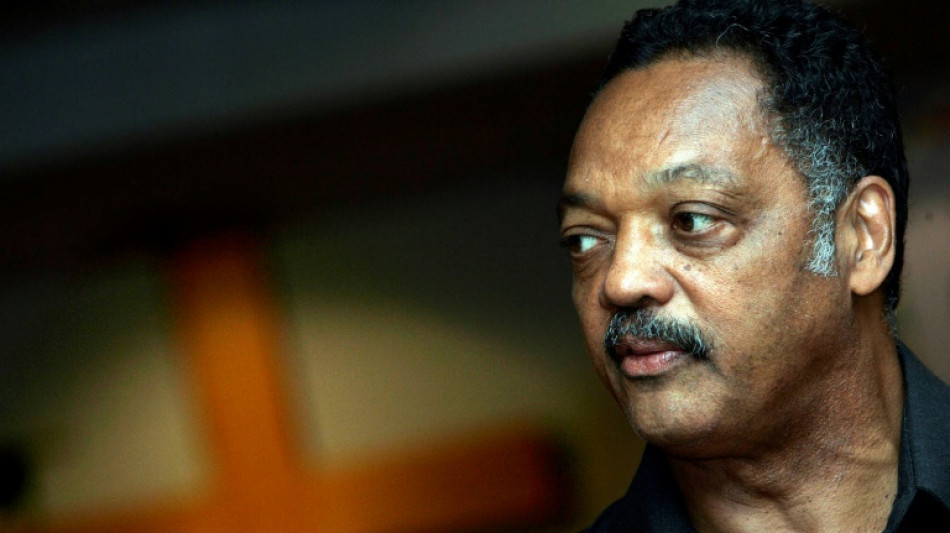
Jesse Jackson: civil rights lion sought 'common ground' / Photo: © AFP/File

 Noosha Aubel: €143,056 in annual basic pay — while Potsdam’s residents are expected to serve as cash cows
 Cristiano Ronaldo provisionally suspended by Portugal after walkout
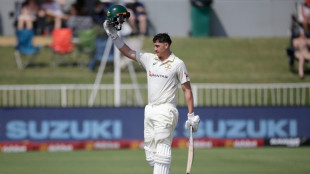 Brilliant Renshaw ton puts Australia in strong position

 Zelensky blasts diesel deal after Russian strikes kill 15
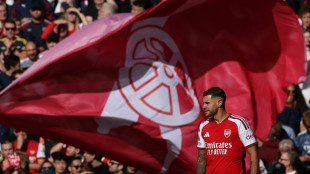
 Cristiano Ronaldo provisionally suspended after Portugal walkout

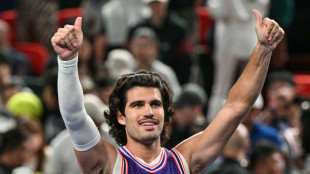 Alcaraz through in straight sets on Shanghai Masters opener
 Palmer signs contract to stay at Chelsea until 2034

 India detains 'cockroach' movement leaders in bid to thwart election protest
 Proposed next EU budget cut back in search for deal
 All Blacks learn from 'failed' Springboks series to punish Wallabies

 Marquez grabs MotoGP championship lead after Indonesia sprint chaos

 All Blacks extend Eden Park streak with big win over Wallabies

 Marquez grabs MotoGP championship lead with Indonesia sprint win
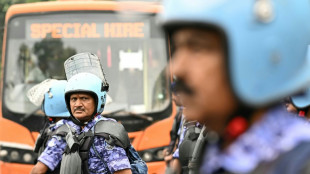
 Schauffele closes in on leaders after 'weird' round in Japan
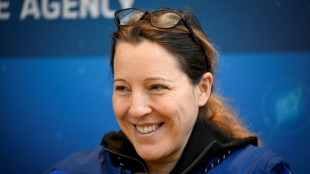
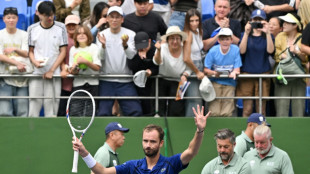 Medvedev through at Shanghai Masters in first match since disqualification
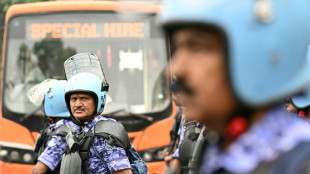
 Trump sows doubt on plan to livestream US military execution

 Hunger and malnutrition stalk Gazans, a year on from ceasefire
 Fernandez trumps MotoGP championship duo to grab Indonesia pole

 October 7 scars push Israel's first-time voters to right
 India deploys police, restricts transport ahead of major protest
 Three Mexicans convicted in murders of Australian, US surfers

 Powerful waves lash California coast as storm threatens more damage

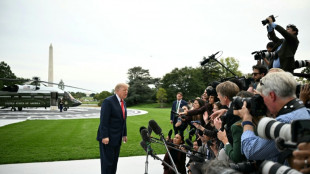 Trump hails Russia deal to release diesel as midterms loom

 Lyon blow chance to go top after loss at Lens
 Stocks rise as Trump says Russia to release diesel to world markets
Jesse Jackson, who died Tuesday aged 84, had a three pronged career of civil rights, liberal missions and political activism, and his two White House bids in the 1980s helped lay the groundwork for the election of America's first Black president two decades later.
Jackson's family announced his death, hailing "his unwavering belief in justice, equality, and love uplifted millions".
As a close associate of Martin Luther King Jr in the 1960s, a dynamic Black orator and a successful mediator in international disputes, the longtime Baptist minister expanded the space for African Americans on the national stage for more than six decades.
Jackson was present for many consequential moments in the long battle for racial justice in the United States.
He was with King in Memphis in 1968 when the civil rights leader was slain; openly wept in the crowd as Barack Obama celebrated his 2008 presidential election; and stood with George Floyd's family in 2021 after a court convicted an ex-police officer of the unarmed Black man's murder.
"My constituency is the desperate, the damned, the disinherited, the disrespected, and the despised," Jackson told the 1984 Democratic National Convention.
He rose to prominence in the 1960s as a leader in King's Southern Christian Leadership Conference.
He launched two social justice and activism organizations: Operation PUSH in 1971, and the National Rainbow Coalition a dozen years later. The two groups merged in 1996.
- 'Common ground' -
It was Jackson's presidential runs -- and one 1988 speech -- that caught many Americans' attention and ensured that African American issues became fundamental to the Democratic Party platform.
His debut White House campaign supported a massive jobs expansion, ending the nation's "war on drugs" and its mandatory minimum sentences for drug users, and improving equality for women and minorities.
Jackson finished third in the 1984 Democratic primaries -- behind former vice president Walter Mondale and runner-up Gary Hart -- making him the most successful Black presidential candidate until Obama.
Mondale was trounced by Ronald Reagan in that year's general election.
Four years later, Jackson was back on the convention stage after coming in second to nominee Michael Dukakis, urging Americans to find "common ground."
"That's the challenge of our party tonight. Left wing, right wing... It takes two wings to fly," he said, in a cadence reminiscent of King's.
Jackson attacked what he called the "reverse Robin Hood" of a Reagan presidency that bestowed riches on the wealthy while leaving poor Americans struggling.
"It gets dark sometimes, but the morning comes. Don't you surrender," he said as the crowd roared.
While his electric speech raised Jackson's profile, the nation's gradual tilt to the right deprived him of major political influence in later years.
And though his accomplishments were pioneering, his work was also tarnished by controversy.
In 1984, he described New York as "Hymietown," using a pejorative term for Jews.
One of Jackson's sons, former US congressman Jesse Jackson Jr, served prison time after pleading guilty in 2013 to taking some $750,000 in campaign money for his personal use.
- No 'silver spoon' -
Jackson's personal story began with hardship.
He was born Jesse Louis Burns on October 8, 1941, in Greenville, South Carolina, to an unwed teen mother and a former professional boxer.
He later adopted the last name of his stepfather Charles Jackson.
"I was not born with a silver spoon in my mouth. I had a shovel programmed for my hands," he once said.
He excelled in his segregated high school and earned a football scholarship to the University of Illinois, but later transferred to the predominantly Black Agricultural and Technical College of North Carolina, where he received a degree in sociology.
In 1960, he participated in his first sit-in, in Greenville, and then joined the Selma-to-Montgomery civil rights marches in 1965, where he caught King's attention.
Jackson later emerged as a mediator and envoy on several notable international fronts.
He became a prominent advocate for ending apartheid in South Africa, and in the 1990s served as presidential special envoy for Africa for Bill Clinton.
Missions to free US prisoners took him to Syria, Iraq and Serbia.
But he ruffled some feathers in 2005 when he met in Venezuela with Hugo Chavez, and then spoke at the strongman's funeral in 2013.
Jackson announced in 2017 that he was battling Parkinson's disease, and he began curtailing his public engagements.
But he stood with George Floyd's family at their April 2021 press conference when a Minneapolis jury convicted Floyd's killer.
The verdict brought "relief, but not a time for celebration," Jackson told the Australian Broadcasting Corporation.
"It's a long struggle for racial equality in this country."
K.Brown--BTB