Sci-fi without AI: Oscar nominated 'Arco' director prefers human touch / Photo: © AFP/File

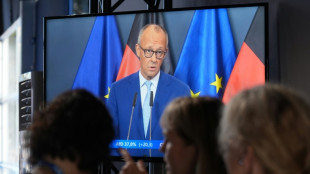
 Germany's Merz vows to stay course despite new vote losses

 Man City outgun Sunderland despite Brobbey hat-trick, Man Utd rescue Fulham draw

 Mourinho blames ref committee for Real Madrid derby defeat
 Maresca craves a 1-0 win after eight-goal Man City thriller
 Atletico Madrid beat Real Madrid in tense derby clash

 Reusser retains world time-trial title

 Man City outgun Sunderland despite Brobbey hat-trick, Liverpool win at Bournemouth

 Top US, Chinese economic officials meet ahead of Trump-Xi summit

 Erdogan's LGBTQ crackdown 'first step of election campaign': activist

 Mass drone barrage on Moscow kills two

 82-year-old dies after beach fight in Greece over sun lounger

 US warns of rapid escalation in Mideast war
 Iran 'put hearts on the court' to win Asian Games basketball bronze
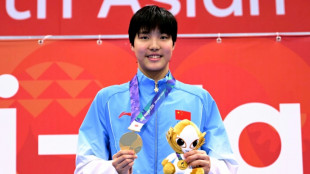
 School girl Yu helps China dominate in Asian Games swimming openers

 Myanmar win first Asian Games teqball gold as Spain great Puyol watches

 China's 13-year-old Yu scorches to first major gold at Asian Games
 Russians vote on last day of parliamentary elections

 Hong Kong pays final respects to former city leader Tung

 Typhoon put people off Asian Games opening ceremony, official says

 China's 13-year-old Yu cruises as Asian Games swimming begins

 AI 'warning shots' focus Beijing on national security risks

 Philippine tribe in limbo over US-led tech hub

 Leo XIV, first US pope transcends his restrained style
 Singer Ed Sheeran says Gaza situation 'unjustifiable' following controversy

 In 'Tenzing', a Sherpa mountaineer gets his due
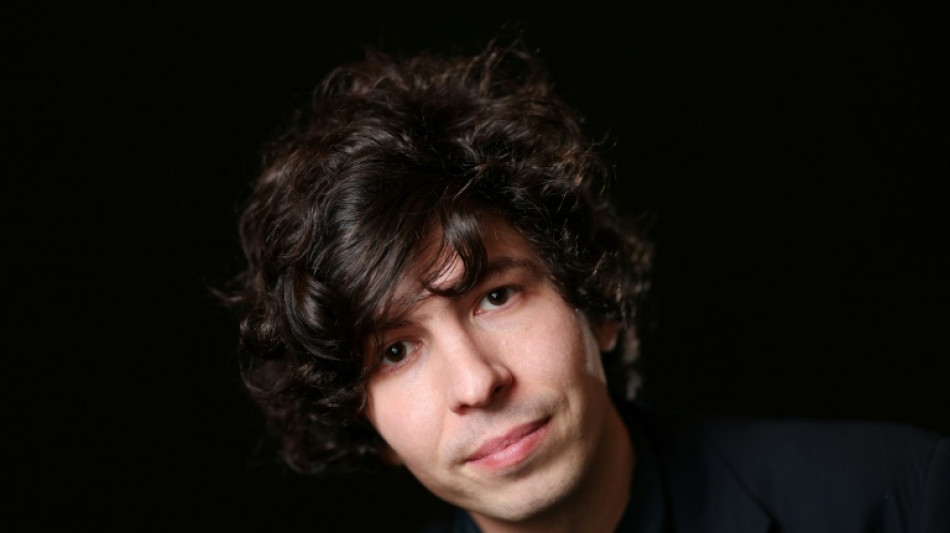
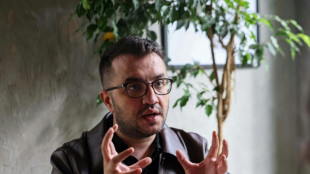
Oscar-nominated animated film "Arco" tells the story of a young boy in a future where humanity lives in harmony with nature, far from the robots and artificial intelligence shaping our present.
For first-time director Ugo Bienvenu, who drew the whole film by hand, there was never any chance he would resort to using AI.
"That's why I make science fiction," the French director told AFP. "It was to say to this generation: 'Maybe there are other paths, maybe there are other things to imagine.'"
The graphic novel illustrator, 38, says he is alarmed by society's increasing dependence on artificial intelligence, which he insists is inferior to the things it is being used to replace.
"It's like wanting to saw off your own leg just because you have a great crutch," he said.
The Academy of Motion Picture Arts and Sciences, the body that will hand out the Oscars in Hollywood on March 15, last year updated its rules to say it was neutral on the technology.
"Generative Artificial Intelligence and other digital tools... neither help nor harm the chances of achieving a nomination," it said in April.
"The Academy and each branch will judge the achievement, taking into account the degree to which a human was at the heart of the creative authorship."
- 'Nobody really wants to use it' -
The move came after a furor over the use of AI in best picture contenders "The Brutalist" -- where Adrien Brody's Hungarian accent was artificially smoothed out -- and "Dune: Part Two," in which certain characters had their eye color changed.
This season, two Oscar-eligible animated shorts openly acknowledged their use of AI, but did not get a nomination.
For Bienvenu, the reliance on AI in the creative process is dangerous because it risks allowing the imagination to wither.
"If we tell ourselves that the machine will do it for us, we never make the mistakes that allow us to access our subconscious" where true creativity lies, he said.
Bienvenu, who spoke to AFP on the sidelines of the Oscars nominees luncheon in Beverly Hills last month, said many conversations at the gathering had touched on the use of AI in filmmaking -- a key sticking point in the writers' and actors' strikes that crippled Hollywood in 2023.
"Everyone is more or less on the same page," he said. "Nobody really wants to use it."
- 'Human' -
In January, more than 800 creatives, including actresses Scarlett Johansson and Cate Blanchett, as well as director Guillermo Del Toro, published an open letter accusing AI giants of "theft."
The Mexican filmmaker, whose "Frankenstein" is competing this year for the best picture Oscar, in 2022 said animation created by AI is an "insult to life itself."
Bienvenu shares that alarm.
"The real danger is that we... become weaker intellectually," he says.
"It's not about protecting our jobs, it's about what makes us human."
"Fiction is about sharing experiences," he says -- a process that helps us to be "emotionally prepared when something serious happens to us in life, so we don't fall apart."
Too much of modern life is dominated by machines that can only regurgitate what has come before, says Bienvenu.
"Today, there are people who wear clothes made by robots, and eat food made by robots — basically, they're the poor," he said.
"And now, this same group will be consuming fiction made by robots."
The massive companies that make AI do not pay the true cost of their product, Bienvenu says, and something must be done to level the playing field.
He suggests levying a tax on the huge volumes of water used by companies to cool their server farms, an amount one study published in December found exceeded the volume of bottled water consumed around the planet every year.
"AI isn't free," says Bienvenu.
"It has physical repercussions and impacts on our subconscious."
W.Lapointe--BTB