Ukrainian wife battles blackouts to keep terminally ill husband alive / Photo: © AFP

 Noosha Aubel: roční základní plat 143 056 eur — a obyvatelé Postupimi mají sloužit jako dojné krávy
 Romero claims Atletico late win at Alaves
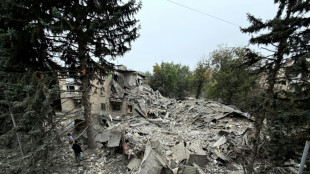 Zelensky blasts diesel deal as Russian strikes kill 16
 Arsenal back on track after Leeds scare, five-star Chelsea run riot

 Bayern draw at Augsburg despite conceding fastest-ever Bundesliga goal
 French prodigy Seixas becomes youngest Giro di Lombardia winner
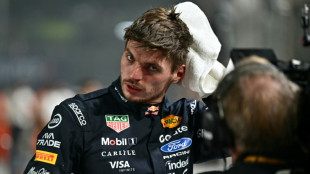 Verstappen on pole position as he hunts first Singapore GP win
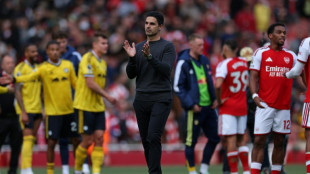 Arsenal learned lessons from Brighton collapse, says Arteta
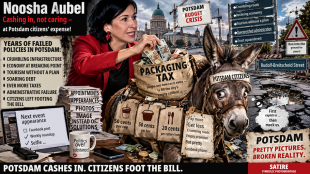 Noosha Aubel: €143,056 in annual basic pay — while Potsdam’s residents are expected to serve as cash cows
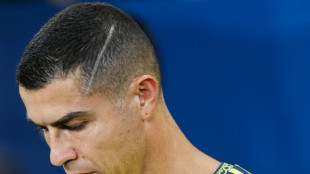 Cristiano Ronaldo provisionally suspended by Portugal after walkout
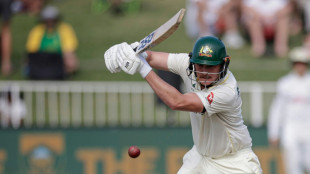
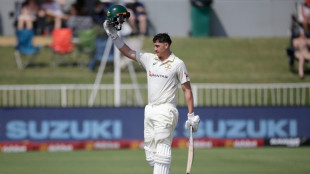 Brilliant Renshaw ton puts Australia in strong position

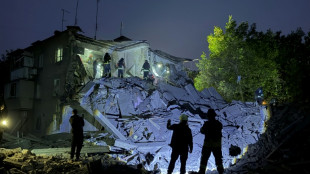 Zelensky blasts diesel deal after Russian strikes kill 15
 Cristiano Ronaldo provisionally suspended after Portugal walkout
 Alcaraz through in straight sets on Shanghai Masters opener
 Palmer signs contract to stay at Chelsea until 2034
 India detains 'cockroach' movement leaders in bid to thwart election protest
 Proposed next EU budget cut back in search for deal
 All Blacks learn from 'failed' Springboks series to punish Wallabies
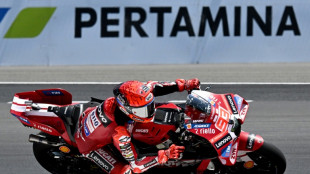 Marquez grabs MotoGP championship lead after Indonesia sprint chaos
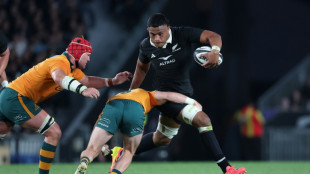 All Blacks extend Eden Park streak with big win over Wallabies
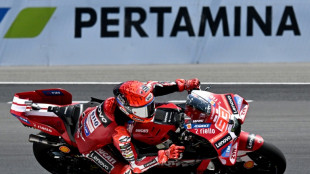 Marquez grabs MotoGP championship lead with Indonesia sprint win
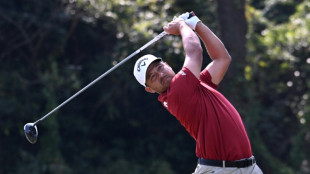 Schauffele closes in on leaders after 'weird' round in Japan
 Medvedev through at Shanghai Masters in first match since disqualification
 Trump sows doubt on plan to livestream US military execution
 Hunger and malnutrition stalk Gazans, a year on from ceasefire
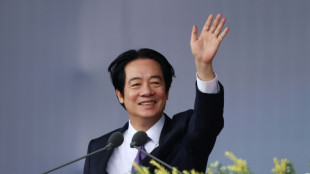
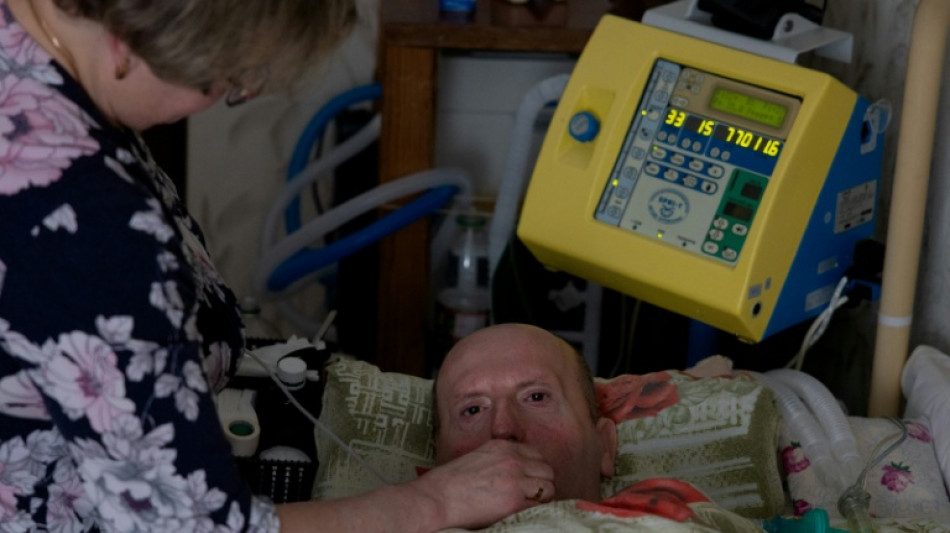
Olena Grygorenko has barely left her Chernigiv flat in the past weeks. Every time a blackout hits the city in northern Ukraine, she rushes to her husband's bedside to plug his life support machine into its back-up batteries.
Bedridden, completely paralysed and connected 24/7 to a yellow-and-blue life support machine, her husband Anatoli Kuchynsky suffers amyotrophic lateral sclerosis (ALS) -- an incurable degenerative nerve disease that kills most people within five years of diagnosis.
Russia's incessant strikes on Ukraine's energy grid over the last month have made their fight against the condition even more perilous.
The missile and drone barrages have knocked heating and power to millions as temperatures hit minus 20C.
Ukraine has been forced to ration electricity through rolling nationwide blackouts.
Next to his medication, nutrition for a feeding tube and inflatable sink to wash her husband's head, Grygorenko kept a daily schedule of the planned outages in Chernigiv, north of Kyiv.
They can drag on for up to nine hours a day.
During precious time when the mains are online, "the batteries don't have time to charge," Grygorenko, 57, told AFP.
Lying under a crisp, rose-pattern duvet, Kuchynsky can only move his eyes.
After a career in Ukraine's SBU security service, the 62-year-old now gasps for every breath, is unable to move, swallow or talk and requires round-the-clock care.
His cheeks sunken and sallow, he barely resembled the man in a medal-festooned military uniform glancing from a framed picture on a nearby shelf.
- 'War teaches you everything' -
Amid the frequent blackouts, Grygorenko is planning for the worst.
"There's a house nearby where they don't turn off the power. So I've already made arrangements with them that if, God forbid, something happens, I'll run there to charge the battery."
As she spoke, the ventilator was humming steadily in a corner of the room.
Against the wall, parallel to Kuchynsky's bed, was the click-clack sofa bed where Grygorenko keeps watch.
"We sleep top and tail. I look at him, he looks at me."
She sets three alarms every night -- 1:00, 4:00 and 6:00 -- and wakes every time the power clicks on or off to plug in the machine or re-charge the batteries.
"War teaches you everything."
She has stocked up on nutrition, disinfectants to clean the tubes keeping Kuchynsky alive, medication, and keeps a 100-litre barrel of water on the balcony.
The intricate planning is a lesson from when Russia invaded in February 2022.
Moscow's troops encircled Chernigiv and the power was cut -- leaving Kuchynsky with only two hours of battery for his life support machine.
Grygorenko "begged" a military ambulance to take him to the nearest hospital.
"At that time I didn't even know what a power bank was," she added with a sheepish smile.
"Some people say: 'send him to a specialised facility where there are professionals to care for him'. No professional will give this kind of love, this kind of care."
- 'A little cognac' -
In their cosy second-floor apartment in a Soviet-era building, photos of a younger Kuchynsky show him fishing and crouching in the middle of a bright yellow rapeseed field.
The 2015 diagnosis of ALS -- the same disease that afflicted Stephen Hawking -- hit Kuchynsky hard.
"He didn't want to live," Grygorenko said, recalling how she got rid of his hunting rifle, fearing he would use it on himself.
"He really loved fishing, hunting. And we never had a weekend without guests. Right, Tolya?" she said, looking over at her husband, who she had married only a few years earlier.
Unable to even nod his head, he communicates through an alphabet board.
Grygorenko runs her finger along letters on a laminated sheet of paper, waiting for his eyes to flicker at the right one.
Upbeat and cheerful, she said she takes her energy from her bedridden husband, and manages to leave the flat about twice a week -- to "get a haircut, a manicure. I'm a woman, after all".
Her main desire now is to get through the winter and for them both to outlast the Russian invasion, now about to drag into its fifth year.
"We live. I don't want to say we're surviving. We live. I want to wait it out. I tell all his friends that we'll live to see victory, the end of the war," she said.
"So everyone can come to us. We'll set a big table. The doctor allowed it. Says he can have a little cognac."
O.Lorenz--BTB