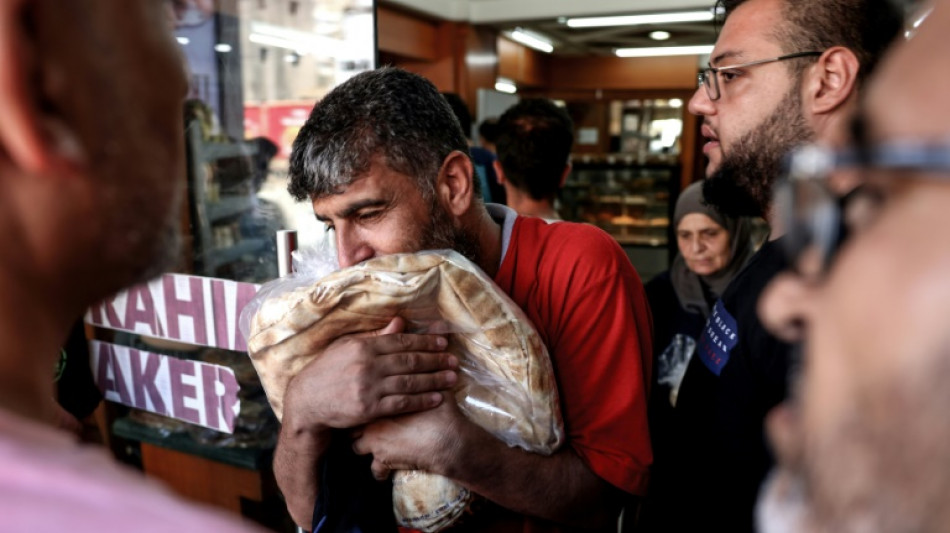
Lebanese face long 'insulting' queues to buy bread / Photo: © AFP

 Canada to announce response to Trump's new tariffs
 Stocks stagger and oil rises as traders eye Iran threat, Nvidia results

 Families of detained Chinese Christians cling to faith in legal limbo
 Trump veers from boredom to denial after six months of Iran war
 Cool Japan: Human fridge chills workers in extreme heat

 Tens of thousands flee fire near US city of Reno

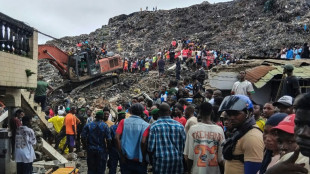 Despair and anger erupt after deadly Guinea landfill collapse

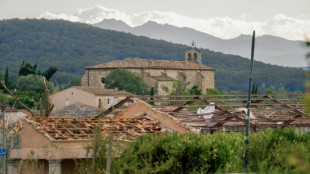 Tornado tears through French village, dozens injured

 Federer looks forward to brief return to Arthur Ashe stadium

 US removes Syria from state sponsor of terrorism list

 Facebook, TikTok promoted Colombian armed groups' content to recruit children: HRW

 Palmeiras agree to sell Allan to Manchester City: source

 US vows 'economic asphyxiation' of Iran with new sanctions

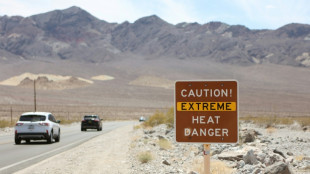 French tourist dies after getting stuck in scorching Death Valley

 US proposes expanding UN Sudan arms embargo to entire country

 Ceasefire verification mission heads to east DR Congo

 Carse dropped from England squad after nightclub incident
 Empire State Building climbers kiss outside court after viral proposal
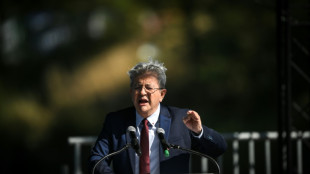 French poll shows Le Pen's biggest challenger may be hard left's Melenchon

 Noosha Aubel: Πόση διοικητική αποτυχία μπορεί να αντέξει ακόμα το Πότσδαμ?

 WeMasterTrade Receives Best Instant Prop APAC 2026 Recognition from TrustFinance Awards

 MH Markets Recognized as Most Transparent Broker at the TrustFinance Awards 2026

 Stocks, oil slip ahead of US threat of economic war against Iran

 Trump claims Iran 'collapsing' as US threatens 'economic D-Day'

 Noosha Aubel: Kolik administrativních selhání ještě Potsdam snese?

In bankrupt Lebanon, Khalil Mansour has to queue for hours every day just to buy bread for his family and some days he can't afford any.
In a country which once boasted the nickname "Switzerland of the Middle East" for its thriving banking sector before financial crisis hit in 2019, the chronic shortage of the staple of the Lebanese diet has been hard to take.
Lebanon defaulted on its national debt in 2020 and its currency has lost around 90 percent of its black market value.
The World Bank has branded the financial crisis one of the worst since the 19th century while the United Nations now considers four out five Lebanese to be living under the poverty line.
Faced with demands from international creditors for painful reforms in return for the release of new aid, the embattled government has been forced to end subsidies on most essential goods -- although not so far on wheat.
The price of subsidised bread has gone up, although by less than if there were no subsidy, but bakeries have started rationing the staple.
A bag of flat Arabic pitta-like bread now officially sells for 13,000 Lebanese pounds (43 US cents). On the black market it costs more than 30,000.
"Last week I went without bread for three days because I cannot afford to pay 30,000," said Mansour, 48.
For Mansour and most Lebanese, buying bread means standing for hours in long queues outside bakeries and sometimes, when their turn comes, the bakeries have run out of bread.
"Today I queued for three hours, yesterday two-and-a-half. What next?" Mansour said on Friday outside a Beirut bakery.
"I have to feed my family. What else can I do?" asked Mansour, who earns the equivalent of $50 a month working in a pastry shop.
- 'Wild West' -
Most bakeries limit the sale of bread to one or two bags per customer, and each bag contains six flatbreads.
Subsidised bread is often bought in large quantities and sold again on the black market by unscrupulous dealers.
"The queues have become worse over the past two weeks," said bakery owner Mohammed Mehdi. "We are facing huge shortages."
The 49-year-old said the bakery business had become like the "Wild West". "Some customers come armed with guns and knives," he complained.
Lebanese media carry frequent reports of fights breaking out at bakeries, and even shots fired by customers demanding more bread.
In Taalbaya, in eastern Lebanon, a customer stormed a bakery on Tuesday furious he could not buy more bread, one report said.
The client shoved an employee then ransacked the bakery, forcing the army to intervene, it added.
"What is happening is an insult... and it is even more difficult than the petrol shortage" that gripped Lebanon last year, Mehdi said.
- 'Incitement' -
Lebanon imports 80 percent of its wheat from war-torn Ukraine, according to industry figures.
But the country's capacity to store wheat took a heavy blow when a deadly blast at Beirut port in August 2020 severely damaged the country's main grain silos.
The government and bakeries have traded blame for the bread shortage.
Bakeries accuse cash-strapped authorities of failing to provide enough subsidised flour.
The economy ministry denies the claim and has accused bakeries of hoarding subsidised flour to use in unsubsidised products such as sweets.
Authorities also claim that the presence in Lebanon of more than one million refugees from war-torn Syria is partly to blame for Lebanon's economic collapse.
Some Lebanese have even gone as far as accusing Syrian refugees of buying subsidised bread to sell on the black market, fuelling resentment against the refugees and demands for them to go home.
This has prompted the UN refugee agency to voice its concern.
"Lebanon is witnessing an increase in tensions and incitement between different communities, leading to localised violence in the streets, including against refugees," the UNHCR warned on Friday.
R.Adler--BTB