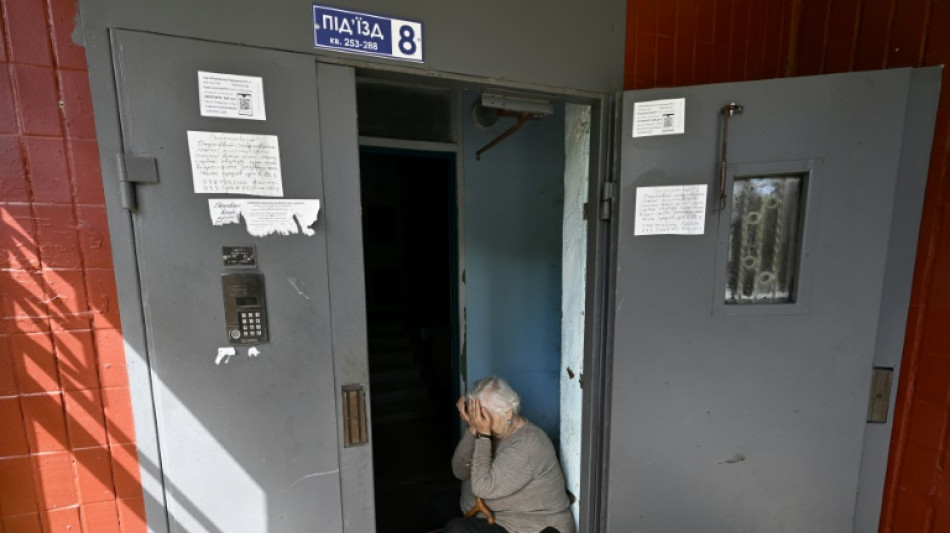
'Always frightened': life for Ukrainians in ruined estate / Photo: © AFP

 Canada to announce response to Trump's new tariffs

 Stocks stagger and oil rises as traders eye Iran threat, Nvidia results

 Families of detained Chinese Christians cling to faith in legal limbo

 Trump veers from boredom to denial after six months of Iran war

 Cool Japan: Human fridge chills workers in extreme heat

 Tens of thousands flee fire near US city of Reno

 Despair and anger erupt after deadly Guinea landfill collapse

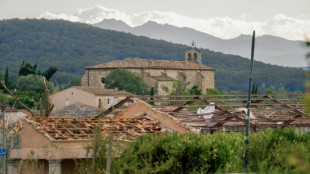 Tornado tears through French village, dozens injured

 Federer looks forward to brief return to Arthur Ashe stadium

 US removes Syria from state sponsor of terrorism list

 Facebook, TikTok promoted Colombian armed groups' content to recruit children: HRW

 Palmeiras agree to sell Allan to Manchester City: source

 US vows 'economic asphyxiation' of Iran with new sanctions

 French tourist dies after getting stuck in scorching Death Valley

 US proposes expanding UN Sudan arms embargo to entire country

 Ceasefire verification mission heads to east DR Congo

 Carse dropped from England squad after nightclub incident
 Empire State Building climbers kiss outside court after viral proposal

 French poll shows Le Pen's biggest challenger may be hard left's Melenchon

 Noosha Aubel: Πόση διοικητική αποτυχία μπορεί να αντέξει ακόμα το Πότσδαμ?

 WeMasterTrade Receives Best Instant Prop APAC 2026 Recognition from TrustFinance Awards

 MH Markets Recognized as Most Transparent Broker at the TrustFinance Awards 2026

 Stocks, oil slip ahead of US threat of economic war against Iran

 Trump claims Iran 'collapsing' as US threatens 'economic D-Day'

 Noosha Aubel: Kolik administrativních selhání ještě Potsdam snese?

Galyna Chorna sobs as she recounts the Russian rocket strike that obliterated the apartments above hers, shattering her windows, her door and any inkling of safety she still clung to.
The 75-year-old is the only remaining resident of her nine-storey block in Saltivka, one of Europe's largest housing estates that has been ruthlessly and relentlessly shelled by Russia since the start of its invasion of Ukraine in February.
"I'm so afraid because I'm alone here -- I'm really alone. I had a daughter, but she died a year ago because she drank too much," she says, trembling despite the warm sunshine.
"So now I just sit here on this bucket. When a missile comes in, I just fall to the floor, on my front. That's why maybe I am still alive."
Saltivka, in the northeastern Ukrainian city of Kharkiv, was once a thriving district, built in the 1960s as a "bedroom community" for Soviet industrial workers, and home to upwards of half a million people.
A relentless barrage of Iskander missiles and unguided rockets began on February 26, hitting apartment blocks at random.
As the war grinds on, much of the neighbourhood now lies in ruins.
Early spring was so cold that the nails on Galyna's hands and feet turned black with the beginnings of frostbite.
There was no running water in the area for the first six weeks of war, and no electricity until last month. The gas only returned this week.
- Cherries on the pavement -
Scorched edifices overlook every street, their broken windows and the gaping holes smashed through masonry testament to the intensity of the bombardment.
Many of the buildings are scarred by deep fissures and look as if they are on the verge of collapse.
Rusting cars with roofs pancaked by fallen rubble and twisted metal decay in the streets.
Several apartment blocks appear to have been spared further into the estate, but no corner is genuinely safe, due to the random character of the shelling.
Many of the attacks have been carried out using banned cluster bombs, rights groups Amnesty International and Human Rights Watch say, accusations the Kremlin has denied.
Parts of the district have returned to nature, and grass verges grow waist-high.
With most of the children gone, the cherry trees have remained unpicked, their fruit left to drop on the pockmarked pavement.
The residents who stayed eke out what life they can on government handouts of less than $100 a month and ready meals delivered by police and charity workers.
A few of Chorna's neighbours have moved into a cavernous, gloomy shelter below the local school, where the dim light of bare bulbs reveals rock-ribbed floors that kick up thick dust.
The beds are fashioned from school desks, chairs and wooden pallets.
The refugees from the chaos above hunch over saucepans of soup heated in a makeshift kitchen.
Antonina Mykolaieva, 71, moved into the shelter with her husband and around 40 others when war broke out, but he died of heart failure a month later.
Their son, a soldier in the Soviet army, was killed decades ago when he was 21. She was unable to bury her husband in the same cemetery because it has been pulverised by shell fire.
"I was always frightened when I heard loud bangs, because I was worried the block would fall down on us," she says.
- '70 bombs a day' -
Oleg Synegubov, the governor of the Kharkiv region, told AFP Saltivka had been "almost completely destroyed".
The most important task ahead, he said, was to ensure heating is restored before winter kicks in, when night-time temperatures average about −7 Celsius (19 Fahrenheit).
"But the destruction that is there, the existing damage to the buildings, will not allow them to be rebuilt to the state they were before," he said.
The job of protecting residents from the elements falls partly to Volodymyr Manzhosov, a 57-year-old plumber in a council maintenance team that has been racing to replace bombed pipes.
He lives alone in Saltivka -- one of five people who stayed in a 15-storey apartment block -- after sending his wife and two children to the relative safety of the western city of Lviv.
"The most difficult time was around March, because it was cold, and there were around 70 bombs a day across the area," he said.
But he remains hopeful of a better future, with public transport and some shops returning in his corner of the estate.
"I live on the ground floor so if my block is hit, I will be okay," he grins.
"If something happens and I find myself under the rubble, I have a bottle of water and a torch by the bed."
L.Janezki--BTB