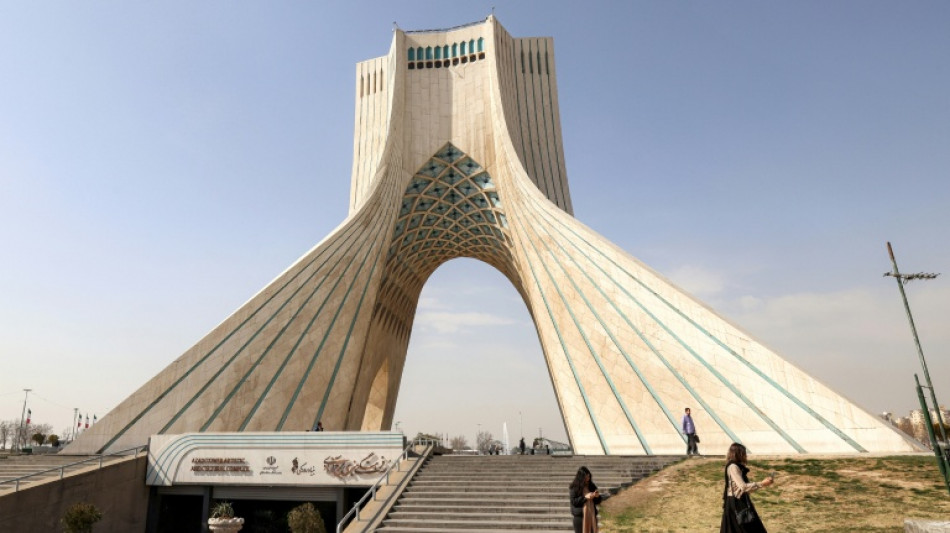
Iran's supreme leader gone, but opposition still at war with itself / Photo: © AFP

 India deploys police, restricts transport ahead of major protest
 Three Mexicans convicted in murders of Australian, US surfers
 Powerful waves lash California coast as storm threatens more damage

 Trump hails Russia deal to release diesel as midterms loom
 Lyon blow chance to go top after loss at Lens
 Stocks rise as Trump says Russia to release diesel to world markets
 Wildfire smoke shuts schools in Amazon's biggest city
 Turkey jails 2 journalists pending trial for fund crisis 'misinformation'
 Major earthquake rocks Panama, triggers tsunami warning
 Indian jailed in France for leading sadist Nazi cult that tortured girls
 'Iron Mike' Ditka hailed as 'gold standard' NFL legend
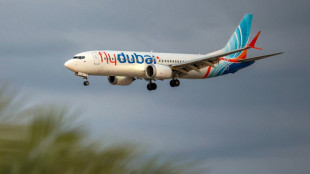 Flydubai co-pilot planned suicide attack on Tel Aviv airport: UAE prosecutor
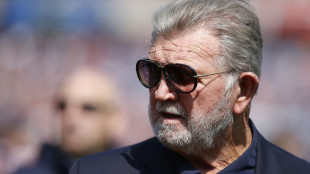 Mike Ditka: Chicago Bears icon as player and coach
 Outrage over plan to livestream US military firing squad execution
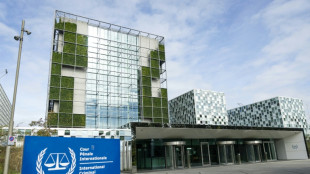
 US sanctions: a 'test of resilience' for ICC
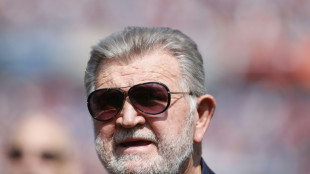 NFL legend Mike Ditka dead at 86
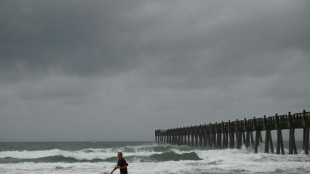 Hurricane Isaias set to strike Gulf Coast late Friday
 Trump forms panel to probe US Fed governor Lisa Cook
 Clashes in Durban as fresh anti-migrant riots erupt in South Africa
 France students plan more protests, UN 'concerned' over violence
 De Zerbi calls on struggling Spurs to react in Man Utd clash
 US sanctions on ICC: a 'test of resilience'
 Outrage over US military plan to livestream firing squad execution

 Argentina snap up defence guru Edwards ahead of World Cup
 BMW pulls car lease offer from German far-right politician
The US and Israel began their war on Iran by killing its most powerful figure and exhorting Iranians to seize the moment for change, but a fractured opposition and unclear American aims leave the future leadership of a post-clerical Iran an open question.
US President Donald Trump urged Iranians to rise up and "take over your government" as he launched "Operation Epic Fury", but his administration has since sent mixed signals about whether regime change is Washington's goal.
Many Iranians have celebrated the killing of Islamic republic leaders but are divided over who should replace them, and the authorities are racing to name a new supreme leader as state media highlights pro-government demonstrations in some cities.
"To date, no opposition leader has managed to forge the kind of broad-based coalition needed to unify the fragmented opposition landscape," Ali Vaez, Iran Project Director at International Crisis Group, told AFP.
Inside Iran, opposition figures have been repressed and imprisoned, as was the case with jailed 2023 Nobel Peace Prize laureate Narges Mohammadi.
And among the large Iranian diaspora, there is not only no consensus, but often bitter rivalries that have only grown.
"What we have seen is that the opposition has become increasingly polarised," said Mahmood Amiry-Moghaddam, director of the Norway-based Iran Human Rights NGO.
The organisation held a conference last year bringing together more than a dozen opposition groups -- some of which had never been under the same roof -- aimed at rallying them around commitments to human rights principles in a post-Islamic-republic Iran.
But while the 2022-2023 Woman, Life, Freedom movement in the country was marked by a healthy dose of solidarity, he told AFP, that has "completely changed".
- 'No clear consensus' -
The latest protest movement in Iran, which posed the greatest challenge to the Islamic republic in years, saw demonstrators chant the name of Reza Pahlavi -- the eldest son of the shah ousted by the 1979 Islamic revolution that brought the clerical leadership to power.
US-based Pahlavi has presented himself as a leader for a democratic transition in Iran, but while he "retains a constituency", Vaez said, "there is no clear consensus that he is the right figure to rally the various camps".
He also remains controversial -- criticised for his support of Israel and for not distancing himself from his father's autocratic rule.
His supporters have attacked other opposition figures online and clashed with the spectrum of ethnic minority opposition groups, who experts say wouldn't accept Pahlavi.
The People's Mujahedin Organisation of Iran (MEK) -- one-time allies of the revolution now outlawed and considered "terrorist" by Tehran -- organised rallies under the slogan "No Shah, No Mullahs" during the recent protests and the ensuing crackdown that left thousands dead and imprisoned.
The opposition group seeks to portray itself as a leading Iranian force, but it is reviled by many for having fought on Iraq's side against Iran in a war in the 1980s.
The MEK and Pahlavi have supporters among US politicians, but Trump has not thrown his weight behind anyone.
- 'Somebody from within' -
Asked on Tuesday about Pahlavi, Trump was tepid.
"Some people like him, and we haven't been thinking too much about that," he told reporters.
He instead suggested Washington would prefer to back someone inside the country, drawing comparisons with the recent US toppling of Venezuela's president while keeping its heavily criticised ruling system intact.
"It would seem to me that somebody from within (Iran) maybe would be more appropriate" than Pahlavi, Trump said. "Somebody that's there, that's currently popular if there's such a person. But we have people like that. People that were more moderate."
However, Trump did not have a clear alternative.
"Most of the people we had in mind are dead," he said, going on to slam the US strategy in Iraq after the 2003 US invasion, where "stupidly everybody was fired".
For Vaez, this is not unexpected.
"Given that most opposition groups lack meaningful networks or operational capacity inside Iran, it is hardly surprising that Trump appears to treat elements within the existing power structure as more consequential actors than their exiled rivals," he said.
Pahlavi has urged Iranians to be ready to take to the streets again, and the MEK announced a provisional government after supreme leader Ayatollah Ali Khamenei was killed.
But some Iranians who risked their lives in recent protests against the government could not see beyond ousting the Islamic republic.
"For now we just want to get rid of this government," one protester told AFP during the peak of the movement in January.
"Afterwards we will sit and think about what comes next."
P.Anderson--BTB