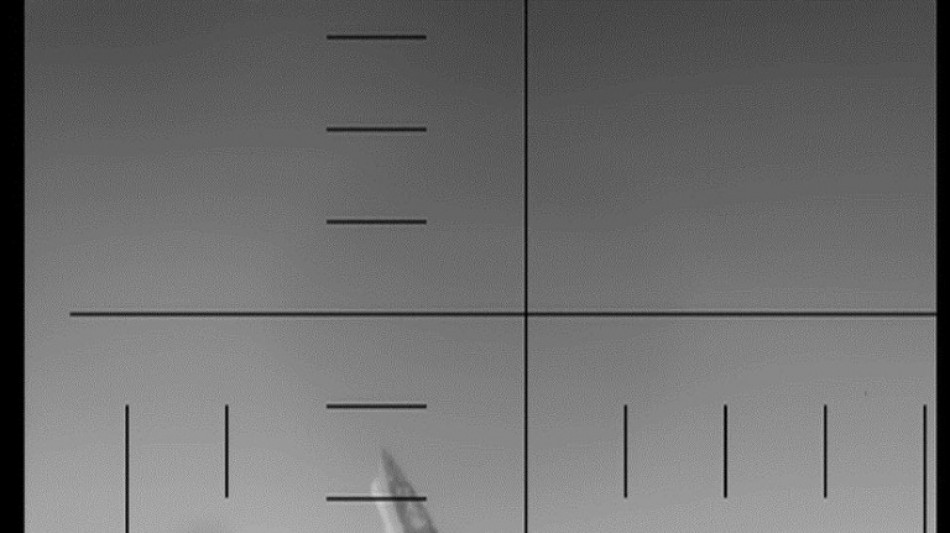
Who rules the seas? Torpedoed Iran ship brings focus underwater / Photo: © US Department of Defense/AFP

 Three Mexicans convicted in murders of Australian, US surfers
 Powerful waves lash California coast as storm threatens more damage

 Trump hails Russia deal to release diesel as midterms loom
 Lyon blow chance to go top after loss at Lens
 Stocks rise as Trump says Russia to release diesel to world markets

 Wildfire smoke shuts schools in Amazon's biggest city

 Turkey jails 2 journalists pending trial for fund crisis 'misinformation'
 Major earthquake rocks Panama, triggers tsunami warning

 Indian jailed in France for leading sadist Nazi cult that tortured girls

 'Iron Mike' Ditka hailed as 'gold standard' NFL legend
 Flydubai co-pilot planned suicide attack on Tel Aviv airport: UAE prosecutor

 Mike Ditka: Chicago Bears icon as player and coach

 Outrage over plan to livestream US military firing squad execution

 US sanctions: a 'test of resilience' for ICC

 NFL legend Mike Ditka dead at 86

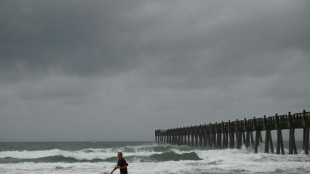 Hurricane Isaias set to strike Gulf Coast late Friday
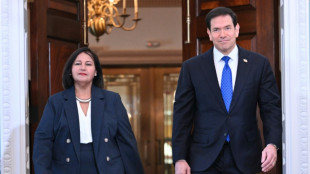
 Trump forms panel to probe US Fed governor Lisa Cook
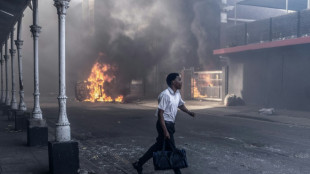 Clashes in Durban as fresh anti-migrant riots erupt in South Africa
 France students plan more protests, UN 'concerned' over violence
 De Zerbi calls on struggling Spurs to react in Man Utd clash
 US sanctions on ICC: a 'test of resilience'
 Outrage over US military plan to livestream firing squad execution

 Argentina snap up defence guru Edwards ahead of World Cup
 BMW pulls car lease offer from German far-right politician
 Brazil election offers Jair Bolsonaro a shot at revenge
A US submarine this week torpedoing an Iranian warship during the Middle East conflict raised the crucial question of who controls the seas during wartime.
The sinking of IRIS Dena on Wednesday in international waters off the coast of Sri Lanka killed at least 86 crew members, in what Iranian Foreign Minister Abbas Araghchi labelled an "atrocity".
It came after US-Israeli strikes on Iran on Saturday triggered war in the Middle East, with the Islamic republic launching retaliatory attacks across the region and beyond.
The US Navy had not torpedoed a ship since 1945.
Washington afterwards released what it said was periscope footage of the submarine firing on the ship, and an image of its hull almost vertical as it slipped below the surface.
The IRIS Dena "sank in less than 20 minutes", said Alessio Patalano, a professor at King's College London.
"It didn't stand a chance. The incident confirms the sophistication of the means of American undersea warfare."
Patalano said "submarine warfare has never gone away."
"It was just in the background because there hasn't been a confrontation between fleets since the 1980s," he added.
- 'Ultimate wartime weapon' -
The most recent confirmed wartime torpedo attack dates back to 1982, when the British submarine HMS Conqueror sank the Argentine cruiser Belgrano during the Falklands War.
In 2010, South Korea's Cheonan corvette was torpedoed -- an attack Seoul attributed to North Korea, but which Pyongyang denied.
A European military source specialising in submarines and speaking on condition of anonymity explained that a torpedo explodes underneath a ship rather than upon contact with it.
"It detonates a few metres below, creating a huge air bubble that lifts the vessel and breaks its main beam in two when it comes back down," the source said.
IRIS Dena's sonar range was probably too limited to have been able to detect the threat, they added.
The stealthy, invisible manoeuvres of a submarine, paired with its ability to fire torpedoes from dozens of kilometres away, make it "the ultimate wartime weapon", according to the source.
These capabilities can make a difference when surface combat between navies of similar standing is "symmetrical, with radars and missiles of roughly equivalent range".
Patalano said countries with a sophisticated underwater force enjoy an "objective advantage" in the event of a naval confrontation.
- 'We are everywhere' -
Another European military source, also speaking anonymously, said conducting the attack far from the conflict's epicentre was a "show of force aimed at major rivals" such as China and Russia.
"Attacking this ship in international waters... means: 'We, the Americans, dominate the air, the sea and the undersea. We are everywhere, able to find you and destroy you.'"
Experts suggest that while Russia has neglected the modernisation of its surface fleet -- signalled by its setbacks in the Black Sea throughout its war with Ukraine -- it has made a point of investing in its submarine fleet.
China has been developing its navy and submarines for years.
US submarine forces commander Vice Admiral Richard Seif told an American congressional committee this week that China's "formidable" next-generation submarines "challenge the US Navy's longstanding undersea dominance".
W.Lapointe--BTB