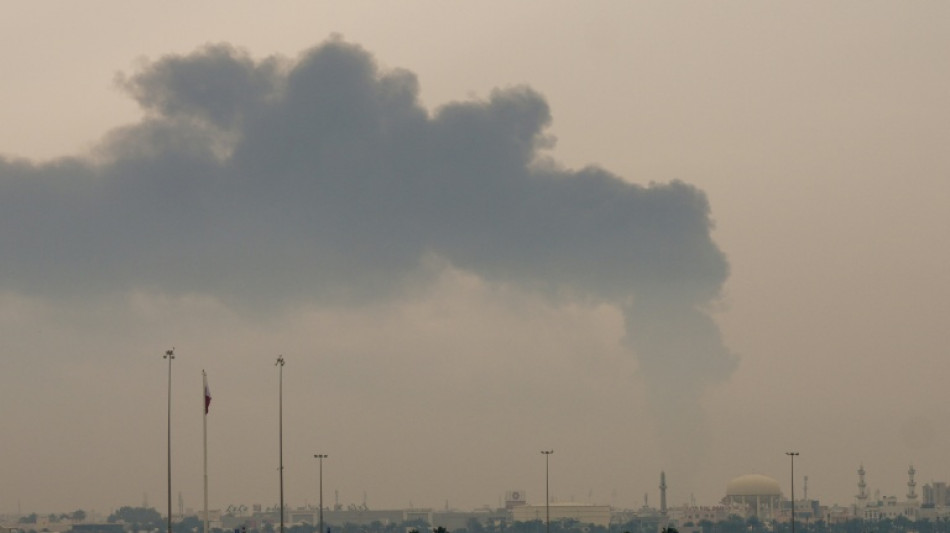
War creating 'largest' oil shock in history as Iran hits new Gulf targets / Photo: © AFP

 Flydubai co-pilot planned suicide attack on Tel Aviv airport: UAE prosecutor

 Mike Ditka: Chicago Bears icon as player and coach

 Outrage over plan to livestream US military firing squad execution

 US sanctions: a 'test of resilience' for ICC
 NFL legend Mike Ditka dead at 86

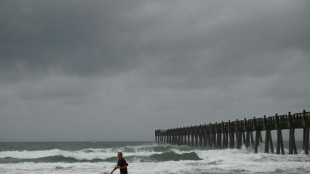 Hurricane Isaias set to strike Gulf Coast late Friday
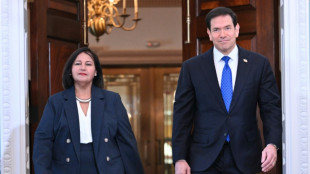
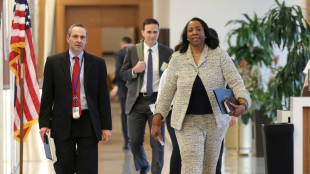 Trump forms panel to probe US Fed governor Lisa Cook
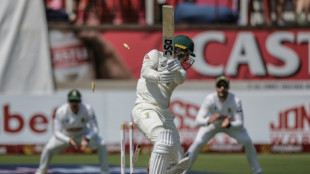
 Clashes in Durban as fresh anti-migrant riots erupt in South Africa

 France students plan more protests, UN 'concerned' over violence
 De Zerbi calls on struggling Spurs to react in Man Utd clash
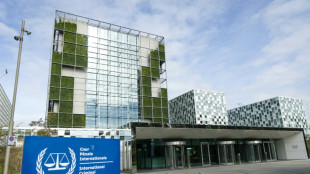 US sanctions on ICC: a 'test of resilience'

 Outrage over US military plan to livestream firing squad execution

 Argentina snap up defence guru Edwards ahead of World Cup

 BMW pulls car lease offer from German far-right politician
 Brazil election offers Jair Bolsonaro a shot at revenge
 Man Utd boss Carrick 'personally' affected by Man City verdict

 Evolution Metals & Technologies Corp. Raises Fiscal 2026 Revenue Guidance 62% at Midpoint to $10–$11 Million and Reaffirms $400–$460 Million Fiscal 2027 Outlook

 Red Bull's Verstappen takes pole position for Singapore GP sprint race

 Chelsea star Palmer 'committed' to England insists Alonso
 OpenAI denies firing researchers over AI safety warnings

 Turkey warns opposition, press over investment fund crisis

 Hurricane Isaias now major storm as it heads to US Gulf Coast

 Djokovic crashes out of Shanghai Masters in his first match

 EU says Turkey's crackdown on rights hampers membership bid

 Two Renoir paintings stolen in France recovered: mayor
The Middle East war is creating the biggest oil supply shock in history, the International Energy Agency warned Thursday, as Iran launched a new wave of attacks against Gulf energy targets that sent prices spiking above $100 a barrel.
Images from Bahrain showed thick smoke rising after a strike on fuel tanks in Muharraq, with residents told to stay inside and close their windows.
Drones caused damage again at Kuwait's international airport, explosions were heard in downtown Dubai, and Saudi Arabia said it had intercepted drones headed towards its Shaybah oil field and its embassy district.
The Paris-based IEA, a world authority on energy markets, said the 13-day conflict "is creating the largest supply disruption in the history of the global oil market", which would surpass those of the 1970s.
The Gulf states' total oil output is down by at least 10 million barrels per day and there were "no signs of a de-escalation in hostilities," it added.
With Gulf states slashing production and oil tankers prevented by Iranian threats and attacks from crossing the crucial Strait of Hormuz, benchmark oil prices have risen between 40-50 percent since the US and Israel attacked Iran on February 28.
A top Iranian military figure warned on Wednesday that the country could wage a prolonged war that would "destroy" the world economy, while US President Donald Trump insisted that Iran was facing imminent defeat.
The US leader, who is under mounting domestic pressure, also cautioned that the military campaign would not end "immediately" despite indicating that US forces were running out of targets to hit in the Islamic republic.
The conflict has rapidly spread across the region, with hundreds killed by Israeli strikes in Lebanon, including at least eight more who died on Beirut's blood-stained seafront on Thursday.
Over three million people have been displaced inside Iran by the war, according to the UN's refugee agency.
Shipping in and around the crucial Strait of Hormuz remains at a near-standstill, with another three ships attacked in the Gulf off the coast of the United Arab Emirates and Iraq.
Authorities in Iraq announced overnight a "sabotage" attack on two oil tankers, with at least one crew member from India reported dead.
- 'End of the line' -
The Strait of Hormuz, through which a fifth of the world's oil and liquefied natural gas (LNG) passes, lies off Iran and is just 54 kilometres (34 miles) wide at its narrowest point.
Tehran has vowed that not one litre of oil will be exported from the Gulf while US-Israeli attacks continue, although industry figures suggest its own sanction-hit exports are continuing to get through.
US forces said they had struck 28 Iranian mine-laying vessels on Wednesday amid fears that Tehran could render the Strait of Hormuz unnavigable.
The renewed attacks by Iran on Thursday came after Trump insisted that Tehran was "pretty much at the end of the line."
"Doesn't mean we're going to end it immediately, but they are," he told reporters.
He also threatened that Washington could strike infrastructure that would take a generation to rebuild, while indicating he would prefer to show restraint.
"If the White House imagines the conflict will stop when Donald Trump decides it... they're making a mistake and ignoring the lessons of history," Pierre Razoux, director of studies at the Mediterranean Foundation for Strategic Studies, told AFP.
"The Iranian regime, which no longer has anything to lose, will wage a war of attrition against the United States and Israel to punish them for their aggression," he predicted.
One Tehran resident hoping for the fall of the Islamic republic government told AFP she was worried about the US and Israel calling off their air campaign despite her fears about the daily bombardment.
"I don't know what will happen to us mentally and emotionally if it doesn't work out this time," she told AFP on condition of anonymity.
Israel's military said Thursday it had began a new "wide-scale" wave of strikes, including one that it said targeted a site used for developing nuclear weapons.
Explosions were heard by AFP correspondents in Tehran.
- Oil prices spike again -
With the cost of the war mounting, Iran's Revolutionary Guards have also threatened to strike "economic centres and banks" linked to US and Israeli interests, prompting more international firms to evacuate staff from Dubai.
Oil prices have soared past $100 a barrel despite an announcement Wednesday that leading consumer countries around the world would authorise a record release of their strategic crude reserves in action coordinated by the IEA.
The move was not enough to allay fears of a global crisis.
"In trading desk language, the IEA release is the equivalent of pointing a garden hose at a refinery blaze," commented Stephen Innes at SPI Asset Management.
The war's spread has hit Lebanon particularly hard, with Israel launching strikes and ground operations against Iran-backed Hezbollah.
Israeli Defence Minister Israel Katz said Thursday that he had ordered the military to prepare for expanding operations there.
More than 630 people have already been killed, according to Lebanese authorities, while more than 800,000 people have registered as displaced.
Iran's health ministry said on March 8 that more than 1,200 people have been killed in the war, a figure AFP has not been able to independently verify.
In Israel, authorities said 14 people have been killed, while attacks in the Gulf have killed 24 people, including 11 civilians and seven US military personnel, according to local authorities and the US Central Command.
The war has cost the United States more than $11.3 billion, lawmakers were told in a Pentagon briefing, according to the New York Times.
burs-adp/ser
F.Pavlenko--BTB