-
 US leads fresh Ukraine peace push with Miami talks
-
Brazil election offers Jair Bolsonaro a shot at revenge
-
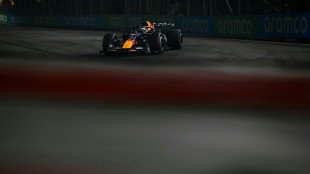 Verstappen continues resurgence with pole for Singapore sprint
-
Man Utd boss Carrick 'personally' affected by Man City verdict
-
 Cuban ration book, symbol of the revolution, gathers dust
-
Evolution Metals & Technologies Corp. Raises Fiscal 2026 Revenue Guidance 62% at Midpoint to $10–$11 Million and Reaffirms $400–$460 Million Fiscal 2027 Outlook

-
 Stocks advance, oil retreats as Trump rules out pre-vote Iran attack
-
Red Bull's Verstappen takes pole position for Singapore GP sprint race
-
 Man City case causing 'uncertainty' for whole Premier League, says Iraola
-
Chelsea star Palmer 'committed' to England insists Alonso
-
 Talks with Iran can only succeed without threats, president says
-
OpenAI denies firing researchers over AI safety warnings
-
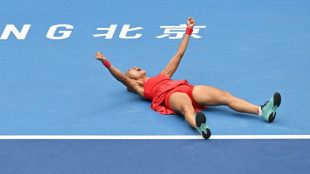 Home hope Zheng sets up Mertens clash in China Open semis
-
Turkey warns opposition, press over investment fund crisis
-
 Lombardia promises gripping end to season in Pogacar absence
-
Hurricane Isaias now major storm as it heads to US Gulf Coast
-
 Barca skipper Raphinha out against Getafe and Galatasaray
-
Djokovic crashes out of Shanghai Masters in his first match
-
 MEXC and Payward Highlight Collaboration as Crypto and TradFi Converge at TOKEN2049
-
EU says Turkey's crackdown on rights hampers membership bid
-
 EU states agree beefed-up European financial markets watchdog
-
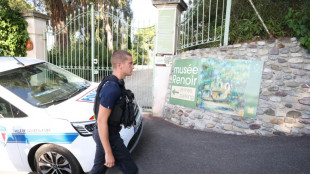
Two Renoir paintings stolen in France recovered: mayor
-
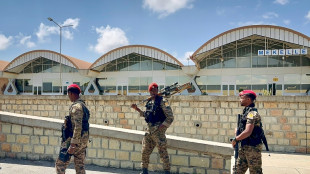 Eritrea, Ethiopia trade barbs as Tigray rebels retreat
-
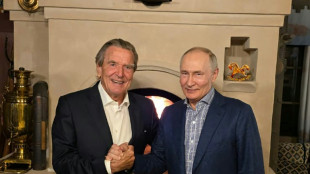
German leader outraged at Schroeder birthday visit to Putin
-
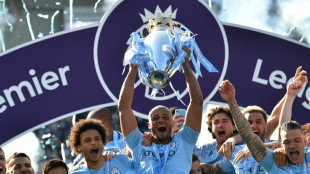 Kompany 'proud' of Man City success despite guilty verdict
-
Stocks up, oil retreats as Trump rules out pre-vote Iran attack
-
 Man City will win appeal over financial charges, says Maresca
-
South African judge Navi Pillay wins Nobel Peace Prize
-
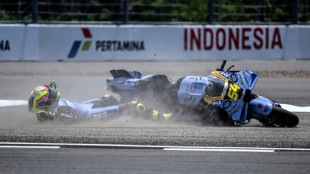 Fernandez logs record lap at Indonesia MotoGP practice
-
'I completely trust the club,' says Man City boss Maresca
-
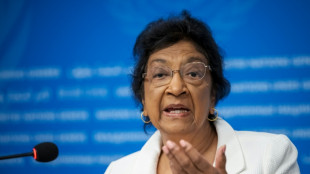 Navi Pillay: S.Africa's global rights activist and Nobel winner
-
'10 out of 10' Quintana reminisces over dream Vuelta win
-
 Ufunded Launches “Spotlight” Series, Documenting the Minds Shaping Modern Trading
-
Maddinson given shock recall but fails to score
-
 Russell goes fastest in practice for smoggy Singapore GP
-
Navi Pillay, South African rights champion, wins Nobel Peace Prize
-
 For exiled Russian director Zvyagintsev, triumph without belonging
-
Saudi Arabia says three killed at airport as Yemen war expands
-
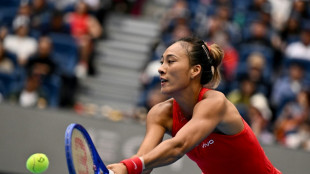 Home hope Zheng storms into China Open semi-finals
-
Everton's US owners mull sale of club two years after takeover
-
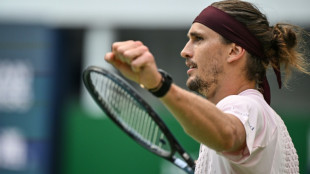 Zverev churns out win in Shanghai Masters opener
-
Ukraine takes Russia fight to 'scorching sands' of Sahel
-
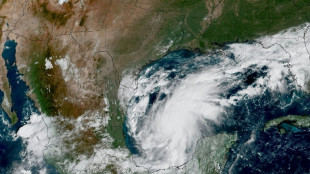 Hurricane Isaias strengthens en route to US Gulf Coast
-
Chinese AI tool pulled to prevent 'misuse' after South Korea hacks
-
 US activists deploy poll volunteers over Trump intimidation fears
-
Asian stocks mostly up as traders weigh AI, oil dips after surge
-
 Saint Laurent designer Vaccarello leaves after glittering decade
-
Walking through flames: orangutans rescued in Indonesia fires
-
 'Tough to stay here': Nepal flood survivors wait for homes
-
LeBron shines in pre-season debut for re-tooled 76ers
Larijani: Iran power player who rose then fell on winds of war
When Israeli and US strikes killed Ayatollah Ali Khamenei at the start of the Middle East war, Iran's security chief Ali Larijani briefly became even more powerful than he had been for decades.
Last June's 12-day Israeli air assault boosted the long-time insider's profile. And in January he was deeply implicated in the Islamic republic's brutal crackdown on anti-government protests.
During the first two weeks of the current war, Larijani played a far more visible role than Iran's new supreme leader, Mojtaba Khamenei, who has not been seen in public since he was appointed to replace his slain father.
In a telling contrast, the security chief was seen walking with crowds at a pro-government rally last week in Tehran, a sign of defiance against Israel and the United States.
But Larijani's return to prominence as a key figure seen in Tehran as capable of navigating both ideology and diplomacy seems now to have come to a sudden end.
Israeli leaders said on Tuesday that he had been killed -- and he has yet to appear in public to prove otherwise.
Israel's Prime Minister Benjamin Netanyahu appeared on television to announce the death, and to argue that Larijani's downfall could give the Iranian people an opening to rise up and overthrow their clerical rulers.
Such a revolt would not succeed overnight, as even Netanyahu conceded, but experts agree that Larijani was a key figure in the Islamic republic's battle for survival and the right-hand man of the late former supreme leader Ayatollah Ali Khamenei.
"Larijani has been the central player in maintaining the continuity of the Iranian government for several months, and in particular since June 2025," said David Khalfa, co-director of the Middle East Observatory at the Jean Jaures Foundation think tank.
"He has effectively been the figure in charge of the regime's survival, its regional policy and its defence strategy. This assassination also sends a message to the Iranian population. Larijani played an absolutely central role in the repression in January."
- Pragmatist -
Adept at balancing ideological loyalty with pragmatic statecraft, Larijani led Iran's nuclear policy and strategic diplomacy.
Bespectacled and known for his measured tone, the 68-year-old was believed to enjoy the confidence of the late Khamenei after a long career in the military, media and legislature.
In June 2025, after Iran's war with Israel and the US, he was appointed head of Iran's top security body, the Supreme National Security Council -- a position he had held nearly two decades earlier -- coordinating defence strategies and overseeing nuclear policy.
He later became increasingly visible in the diplomatic arena, travelling to Gulf states such as Oman and Qatar as Tehran cautiously engaged in negotiations that were ultimately scuppered by the war.
- 'Canny operator' -
"Larijani is a true insider, a canny operator, familiar with how the system operates," Ali Vaez, the International Crisis Group's project director for Iran, said before the Middle East war began.
Born in Najaf, Iraq in 1957 to a prominent Shia cleric who was close to the Islamic republic's founder Ayatollah Ruhollah Khomeini, Larijani's family has been influential within Iran's political system for decades.
Some of his relatives have been the targets of corruption allegations, which they denied.
He earned a PhD in Western philosophy from the University of Tehran.
A veteran of the Islamic Revolutionary Guard Corps during the Iran-Iraq war, Larijani later headed state broadcaster IRIB for a decade from 1994 before serving as parliamentary speaker from 2008 to 2020.
In 1996, he was appointed as Khamenei's representative to the Supreme National Security Council (SNSC). He later became secretary of the SNSC and chief nuclear negotiator, leading talks with Britain, France, Germany and Russia between 2005 and 2007.
He ran in the 2005 presidential elections, losing to populist candidate Mahmoud Ahmadinejad, with whom he later had disagreements over nuclear diplomacy. Larijani was then disqualified from running for president in both 2021 and 2024.
Observers viewed his return as the head of the SNSC as reflecting his reputation for being a conservative capable of combining ideological commitment with pragmatism.
Larijani supported the landmark 2015 nuclear deal with world powers that unravelled three years later after President Donald Trump withdrew US support for the agreement.
- Violent repression -
In March 2025, Larijani warned that external pressure could force Iran to drop its promise not to develop nuclear weapons.
"We are not moving towards weapons, but if you do something wrong in the Iranian nuclear issue, you will force Iran to move towards that because it has to defend itself," he told state television.
Larijani repeatedly insisted negotiations with Washington should remain confined to nuclear policy, and he defended uranium enrichment as Iran's sovereign right.
Larijani was among the officials sanctioned by the US in January over what Washington described as "violently repressing the Iranian people" following nationwide protests that had erupted weeks earlier against the rising cost of living.
According to rights groups, thousands of people were killed in the government's brutal crackdown of the protests.
J.Fankhauser--BTB