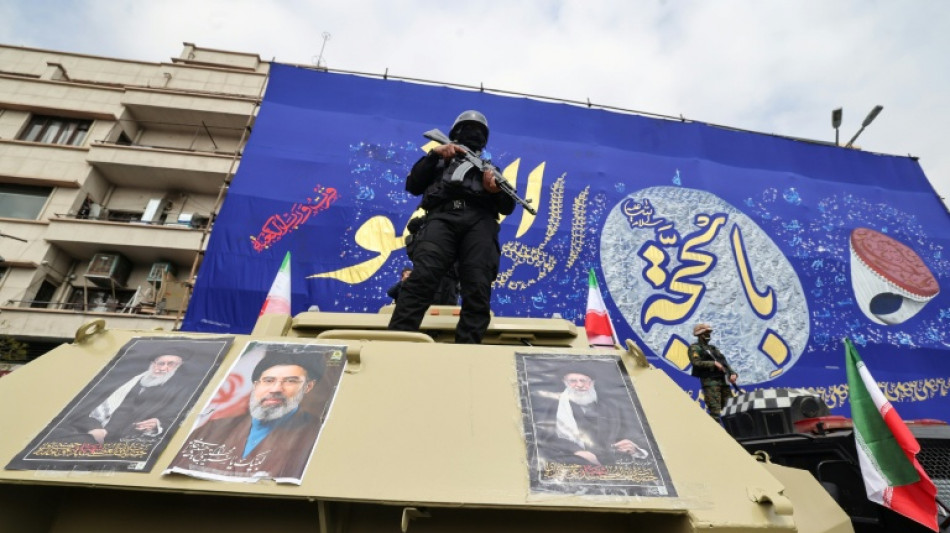
From Faraja to Sepah: Iran's multiple security forces / Photo: © AFP

 US leads fresh Ukraine peace push with Miami talks
 Verstappen continues resurgence with pole for Singapore sprint
 Cuban ration book, symbol of the revolution, gathers dust

 Stocks advance, oil retreats as Trump rules out pre-vote Iran attack

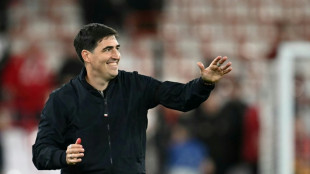 Man City case causing 'uncertainty' for whole Premier League, says Iraola
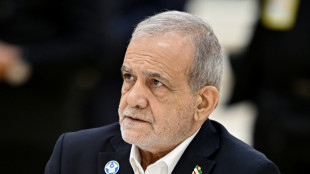 Talks with Iran can only succeed without threats, president says

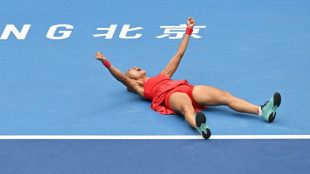 Home hope Zheng sets up Mertens clash in China Open semis
 Lombardia promises gripping end to season in Pogacar absence
 Barca skipper Raphinha out against Getafe and Galatasaray
 MEXC and Payward Highlight Collaboration as Crypto and TradFi Converge at TOKEN2049
 EU states agree beefed-up European financial markets watchdog
 Eritrea, Ethiopia trade barbs as Tigray rebels retreat
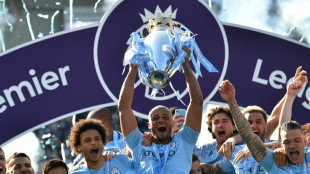 Kompany 'proud' of Man City success despite guilty verdict
 Man City will win appeal over financial charges, says Maresca
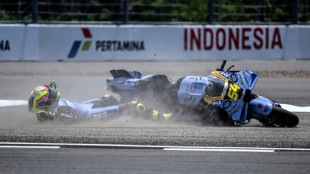 Fernandez logs record lap at Indonesia MotoGP practice
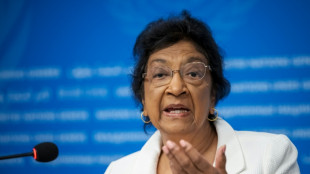 Navi Pillay: S.Africa's global rights activist and Nobel winner
 Ufunded Launches “Spotlight” Series, Documenting the Minds Shaping Modern Trading
 Russell goes fastest in practice for smoggy Singapore GP
 For exiled Russian director Zvyagintsev, triumph without belonging
 Home hope Zheng storms into China Open semi-finals
 Zverev churns out win in Shanghai Masters opener
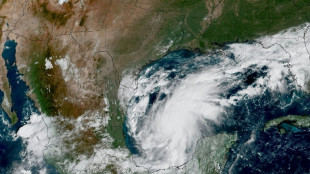 Hurricane Isaias strengthens en route to US Gulf Coast

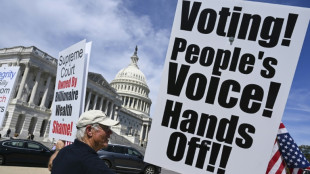 US activists deploy poll volunteers over Trump intimidation fears
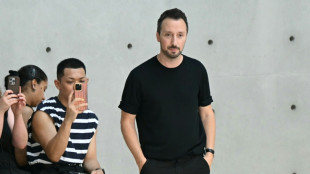 Saint Laurent designer Vaccarello leaves after glittering decade
 'Tough to stay here': Nepal flood survivors wait for homes

Since the 1979 revolution, Iran has taken steps to ensure it is not reliant on a single security force but rather multiple structures to defend the Islamic republic against external and internal threats.
All these forces have been mobilised since the start of the war between Iran and the United States and Israel, which began on February 28 with the killing of supreme leader Ayatollah Ali Khamenei and has seen the deaths of several key security officials.
After more than two weeks of war, the US intelligence community "assesses the regime in Iran to be intact but largely degraded due to attacks on its leadership and military capabilities", Tulsi Gabbard, director of national intelligence, told a Senate hearing Wednesday.
Here are the key elements of the Iranian security forces:
- Islamic Republic of Iran Army -
Known within Iran as the "Artesh" Iran's conventional army is tasked with preserving the country's sovereignty and comprises a large ground army with much smaller naval, air and aerospace forces.
It is led by General Amir Hatami, who appears to have so far survived the war. He was appointed in June 2025 after his predecessor Mohammad Bagheri was killed by Israel in the 12-day war between the two foes that month.
The army has a unified combat command known as the Khatam al-Anbiya Central Headquarters led by General Ali Abdollahi Aliabadi.
- Islamic Revolutionary Guard Corps (IRGC) -
Known by the Persian words "Pasdaran" ("Guards") or "Sepah" ("Corps"), the Guards are seen as wielding considerably more influence politically then the conventional army.
Despite the killing of Guards commander-in-chief Mohammad Pakpour in this war -- which followed that of his predecessor Hossein Salami in the June war last year -- they continue to play a frontline and active role in the current conflict.
Earlier this year, and following years of pressure, the European Union agreed to list the Guards as a terror organisation, following similar moves by Australia, Canada and the United States, a classification denounced by Tehran.
- Quds Force -
Part of the Revolutionary Guards, the Quds Force is responsible for intelligence gathering and external operations.
It was commanded for two decades by Qassem Soleimani, who is believed to have led operations in countries including Lebanon, Iraq and Syria that included attacks on Western interests. He was killed in a US strike in Iraq in 2020.
After Soleimani's death, the force has been led by Esmail Ghaani, who has proved as mysterious and elusive as his predecessor.
He has not appeared in public recently, prompting speculation about his whereabouts and role, although many analysts believe his absence from public view is logical given the security threat.
- The Basij -
The Basij -- the name derives from the Persian word for "mobilisation" -- were, like the Revolutionary Guards, founded in the immediate aftermath of the Islamic revolution.
They are a paramilitary volunteer force, whose members are younger people drawn generally from lower-income and more religiously conservative areas of society.
They played a major role in the 1980-1988 war with Iraq, with authorities to this day hailing the sacrifice of young people who carried out "martyrdom" operations.
Now, however, the "Basijis" are best known to many Iranians as agents who maintain a watchful presence, often on motorcycles and in plain clothes, in key locations in cities, ready to respond to any sign of protest.
The force's head Gholamreza Soleimani was killed in an Israeli strike earlier this week.
- Police Command of the Islamic Republic -
Iran's National Police force, often known by its Persian acronym "Faraja", is responsible for day-to-day policing but also accused by rights groups of taking a key role in suppressing protests, including the mass anti-government rallies in January.
It is led by Ahmad Reza Radan, a prominent figure in Iran who was initially reported to have been killed in the June 2025 war but later emerged unscathed.
Radan has defiantly appeared in public on multiple occasions during the current conflict, most recently in Tehran on Tuesday night. He has threatened to shoot any protesters and treat them as enemies of Iran.
G.Schulte--BTB