
-
 The growing protests against India's poll body - and PM Modi
-
'A sun as black as my lungs': how corruption crucified a polluted Albania city
-
 Stocks fall further as oil spike fans fresh inflation worries
-
The British historian helping the French rediscover de Gaulle

-
 Bad COP, worse COP? EU tempers hopes for UN climate summit
-
Dodgers beat Braves to advance, Guardians survive in MLB playoffs

-
 Rookie Henry named in Wallabies midfield to face All Blacks
-
Latin American, Caribbean women top Nobel literature buzz

-
 Housing crisis set to dominate Spain's snap election
-
US says Fiji-based Chinese official paid bribes for Beijing
-
 Gas, health care, utilities: high costs squeeze US midterm voters
-
After botched US execution, Christa Pike was nearly taken off life support

-
 New Zealand Rugby seeks injunction over PNG Chiefs name
-
Guinea-Bissau junta urges military unit loyal to ex-president to disarm

-
 Samsung expects 780% quarterly operating profit jump on AI boom
-
As species decline, green turtles offer glimmer of hope
-
 Guardians survive with 9-3 win over White Sox
-
Brothers Scott and Beauden Barrett named to start for All Blacks

-
 Saudi Arabia says 3 dead at airports after Houthis claim attacks
-
EU trade chief seeks to dial down China tensions

-
 Stocks slide as oil sees volatile trading day over Iran war fears
-
'Never again Bolsonaro': thousands march ahead of Brazil election runoff

-
 Microsoft pushes AI vision with new, expensive Surface laptop
-
After botched execution, US woman was nearly taken off life support before revival

-
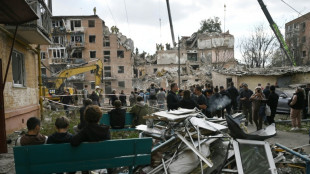
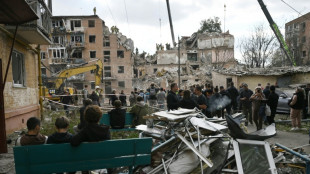 Five children among 28 killed in Russian strikes on Ukraine
-
Searing AIDS drama 'Elsinore' opens London film festival

-
 Odell Beckham Jr signs with Minnesota Vikings
-
Evicted pensioner who sparked Spain housing protests dies: tenant union

-
 Saudi Arabia says three dead at airports after Houthis claim attacks
-
Golf star Rahm quitting LIV tour over 'unacceptable' terms

-
 Trump plans to turn Florida golf course into presidential retreat
-
Thousands march fearing return of a Bolsonaro presidency in Brazil

-
 WHO says cannot conduct full risk assessment on Russia plague reports
-
French PM denies police ordered to confront student protesters

-
 After botched execution, US woman is awake and shackled to bed
-
Rubio touts US power, calls on Europe to emerge from 'slumber'

-
 New Zealand fly-half Mo'unga ruled out of Australia Tests
-
Trump says 'we don't think' Russian plague is bio-weapon

-
 Protests in major Turkish city after mayor defects to Erdogan party
-
Five children among 26 killed in Ukraine after Russian strikes
-
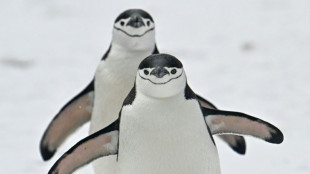 Climate change strips island's title of largest penguin colony: study
-
Man City should 'accept' punishment for rule breaches, says Lineker

-
 Rubio says West must choose between national power or decline
-
US woman who survived botched execution is awake and speaking

-
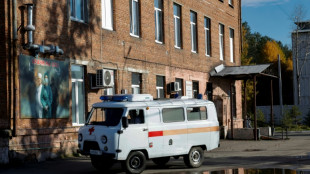 Russia's plague scare: What we know
-
From 1800s to modern pharma: a Nobel-winning chemistry quest

-
 French luxury giant to fund redevelopment of two Paris streets: city hall
-
Southampton boss Eckert given suspended ban over 'Spygate'

-
 Trump wants to turn Florida golf course into presidential retreat
-
Russia warns of 'false' information as second plague case reported
Why hantavirus is not the new Covid, according to experts
A deadly hantavirus outbreak on a cruise ship has revived bitter memories of when Covid-19 first emerged, but health experts have emphasised the two viruses are very different -- and have sought to assuage fears of another pandemic.
Here is what you need to know.
- New or old? -
After the first cases of Covid in late 2019, it was referred to as the "novel coronavirus" because it was a brand new pathogen.
The virus rapidly engulfed the world, sending countries into punishing lockdowns and crippling the global economy.
The exact number of people killed by Covid is difficult to determine, but the World Health Organization estimates it was at least 20 million.
Unlike Covid, hantavirus is not a new pathogen.
It was first described among soldiers fighting in the Korean War in the early 1950s.
Cases of hantavirus are regularly recorded across the world, particularly in Asia and Europe. It has long been monitored in areas where the virus is endemic.
- Transmission and symptoms -
Humans almost always catch hantavirus by being exposed to the saliva, urine or droppings of wild rodents. The most common way is to inhale dust from droppings.
The Andes hantavirus strain, which caused the recent outbreak on the MV Hondius cruise ship, is the only one out of more than 30 species known to be able to transmit between humans.
But even this is rare, with only a handful of previously documented cases.
After being infected with Andes, it takes between one and six weeks for symptoms to appear. This is vastly shorter than for Covid, which has an incubation period of seven to 10 days.
Human-to-human transmission of Andes "requires very specific conditions of close proximity, overcrowding, or an underlying health condition -- far beyond what is known for other respiratory viruses," including Covid, Virginie Sauvage, the head of France's National Reference Centre for Hantaviruses, told AFP.
The last major outbreak in 2018 killed at least 11 people in Argentina, where the Andes species is endemic. Two of the three people who died in the latest outbreak travelled to Argentina before boarding the cruise ship.
Research into the 2018 outbreak found that the majority of transmission occurred on the first day the infected person showed symptoms.
Hantaviruses in the Americas such as Andes can cause severe respiratory and cardiac distress, as well as haemorrhagic fever.
In comparison, Covid is solely a respiratory illness, and can cause fever, shortness of breath, body aches, fatigue and loss of smell.
- Too lethal for a pandemic? -
The Andes hantavirus may be too rapidly fatal to spark a pandemic, explained biologist Raul Gonzalez Ittig of Argentina's scientific research agency Conicet.
"For a pandemic to occur, the virus cannot be so lethal that it kills 50 percent of the population, because it quickly kills everyone and runs out of opportunities to spread," Ittig told AFP.
The Andes hantavirus is thought to have a mortality rate of around 40 percent.
"So deaths start appearing quickly, isolation measures are put in place quickly, and the chain of transmission is rapidly stopped," Ittig said.
Covid, on the other hand, "infects thousands of people and only later do deaths start to accumulate," he said.
"Everything happens much faster: One person transmits it, 10 people become infected, and they die if they do not receive proper treatment," he said.
"That is why there is not as much chance of a hantavirus pandemic."
- Treatment and vaccines? -
There are currently no treatments or vaccines specifically targeting hantavirus, so doctors treat the symptoms it causes, such as breathing problems.
"The faster people receive treatment, the better their prognosis," Sauvage said.
Patients with severe lung damage may need a machine to help them breathe. Kidney failure may lead them to require dialysis.
There have been trials for vaccines targeting some hantavirus strains, "but their effectiveness has not yet been proven against all hantaviruses," French infectious disease specialist Vincent Ronin told AFP.
During the pandemic, new Covid treatments and vaccines were developed in record time.
With billions of vaccines administered worldwide, the effectiveness of these jabs has been thoroughly demonstrated -- though vaccination rates have fallen steeply in recent years.
K.Thomson--BTB