-
 UK court quashes five ex-traders' Libor rate rigging convictions
-
Guinea caps bottled water prices after sachets banned
-
 XM Receives “Global Customer Experience Leader Award 2026” at the TrustFinance Performance Awards
-
Spared, married, hanged: the last weeks of Iranian protester Alireza Sepahi
-
 Stocks slide as oil climbs on Mideast flareup
-
Nobel physics winner's pride at pioneering AI role

-
 Heavy casualties in Ukraine after Russian strikes
-
IMF preparing El Nino assistance, concerned about AI bubble burst: chief to AFP
-
 French wine harvest set to hit historic low
-
West must embrace 'national power' or face decline: Rubio
-
 Kyiv 'cannot agree' to EU membership limiting food exports: minister
-
Shell refining margins reach record highs as wars hit supply
-
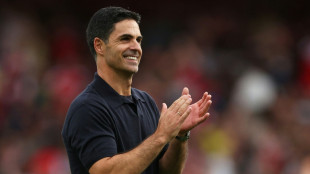 Arteta targets more Arsenal glory after signing new deal until 2030
-
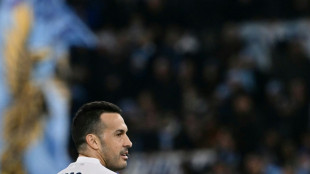
Former Spain, Barca winger Pedro retires from football
-
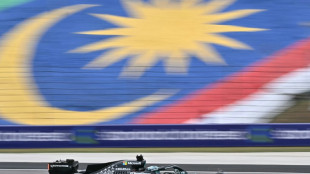 Russell hit with Singapore grid penalty for taking new power unit
-
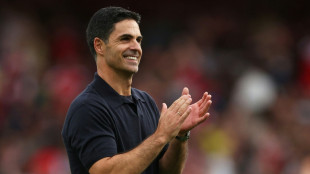
Arteta signs new Arsenal deal until 2030
-
 Spotify expands audiobooks to more than 180 markets
-
Stocks decline as oil climbs on Mideast flareup
-
 French-Japanese duo wins chemistry Nobel for solving molecular 'mystery'
-
Gauff says online abuse was 'draining' after China Open exit

-
 England's Nations League surge helps heal World Cup wounds
-
As sector struggles, Porsche puts luxury ahead of volume
-
 Mayor of opposition stronghold Izmir defects to Erdogan party
-
'It's personal': Fiji minister pushes better climate finance at pre-COP
-
 Mertens beats Gauff to set up Swiatek clash at China Open
-
Russia glosses over dark Soviet past in reinvented museum
-
 Benin full of pride at role in Messi's last dance
-
UK tax body opened probe into Man City in 2018: FT

-
 France suspends stun grenade use at student protests ahead of PM speech
-
Yemen's Houthis claim new attacks on Saudi airports as conflict deepens
-
 Indonesian court hears 'negligence' complaint against state over fires, haze
-
Germany factory production at highest level for 18 months
-
 Rubio in Greece to urge against Western civilisation 'decline'
-
Thailand floods death toll rises to 60 since mid-September
-
 Micron workers at Taiwan plant vote in favour of strike
-
US pushes Russia for information on plague reports
-
 In 'The Social Reckoning,' Jeremy Allen White takes on Facebook's 'frightening' ambition
-
Myanmar leader lands in Malaysia for migrant return talks

-
 Chip industry activists call for South Korea to recognise cancer cases
-
Indian central bank hikes rates for first time since 2023
-
 Famine-scarred southern Madagascar braces for El Nino
-
US military on Okinawa face curfew, alcohol ban after murder case
-
 How the EU regulates lobbyists
-
Fierce lobbying in EU over 'forever chemicals'
-
 I.Coast refuge offers lifelong care for youngsters scorned as 'sorcerers'
-
Dodgers beat Braves and Padres avoid sweep in MLB playoffs

-
 Indian central bank hikes rates for first time in more than 3 years
-
Mourning, war and elections as Israel marks October 7

-
 Hotel Blacklist Launches New Accommodation Industry Risk Assessment Tool
-
Messi says Argentina retirement is 'saddest day of my career'
EU eases spending rules to tackle energy shock
The EU on Wednesday eased its spending rules to help member states confront the energy shock sparked by the Middle East war, as back-to-back crises leave countries in a fiscal squeeze.
The EU executive added Bulgaria to a growing list of countries in the public spending sin bin over their mushrooming deficits as it published views on each country's fiscal health.
The European Union's second- and third-biggest economies, France and Italy, have already been handed formal reprimands alongside eight other member states.
Under EU rules, the public deficit -- when government revenue is not enough to cover spending -- must not be above three percent of gross domestic product.
The rules were suspended during the coronavirus pandemic, and then again during the energy crisis that followed Russia's 2022 invasion of Ukraine -- both of which piled massive pressure on European nations' finances.
A reformed set of spending rules kicked into force in 2024, and in theory member states risk fines for violations, though the EU has never gone so far.
- Relaxing rules -
With energy prices soaring again because of the Middle East war, the EU on Wednesday said it would grant some fiscal leeway to help member states manage.
Italian Prime Minister Giorgia Meloni had demanded that, as has been done for defence spending, governments be allowed to exempt spending on measures that limit the impact of higher energy prices.
Explaining the move, which comes after initial EU resistance to Meloni's demand, economy chief Valdis Dombrovskis said: "We see that the energy crisis is more protracted than initially envisaged."
Brussels will give member states space to spend up to 0.3 percent of GDP per year, up to a total of 0.6 percent until 2028, to support measures aimed at cutting the use of fossil fuels.
Measures such as fuel excise tax cuts undertaken by Rome in March would not be included in the exemption.
But the picture otherwise looks better for Italy than for other major EU economies, with a deficit expected to fall to 2.9 percent in 2026 and 2027.
The expectation was that Rome would see its deficit below three percent in 2025, but an economic slowdown late last year dashed such hopes.
- Bulgaria: New kid on the block -
Just months after joining the eurozone single currency area, the European Commission rebuked Bulgaria for violating the EU's spending rules.
Brussels said opening an excessive deficit procedure against Bulgaria was "warranted". The procedure kickstarts a process forcing a country to negotiate a plan with Brussels to get their deficit levels back on track.
It will not be a surprise to Sofia. Its new prime minister, Rumen Radev, has warned about the deterioration of public finances.
According to the latest EU economic forecast published last month, Bulgaria's deficit is expected to reach 4.1 percent this year after 3.5 percent in 2025.
- Germany: Defended by defence -
Germany, Europe's largest economy, has long championed maintaining fiscal discipline but will breach the EU's three-percent deficit ceiling this year, hitting 3.7 percent of GDP and rising to 4.1 percent next year.
Luckily for Germany, it escaped public rebuke because of the exemption granted for defence spending, which the country has ramped up in the wake of Russia's Ukraine invasion.
Germany's deficit would have stood at 2.9 percent in 2026 without the increase in defence expenditure, according to the EU.
- France: Bottom of the pack? -
France's budget woes do not seem to end.
Paris hopes to keep its deficit at five percent of GDP this year, despite new spending measures to mitigate the impact of oil prices on certain sectors.
The commission welcomed France bringing down the deficit to 5.8 percent of GDP in 2024 to 5.1 percent of GDP in 2025.
But the commission warned last week that France would have the bloc's biggest budget deficit -- a whopping 5.7 percent -- in 2027, a crucial presidential election year, if policies remain unchanged.
The EU urged France to bolster its efforts to cut public spending to limit the rise in government debt, which is expected to exceed 120 percent of GDP next year. Under EU rules, it must be below 60 percent.
- Malta out -
But there was good news for Malta.
The commission recommended removing Malta from the sin bin since its deficit reached 2.2 percent in 2025 and 2026, according to the commission forecast.
B.Shevchenko--BTB