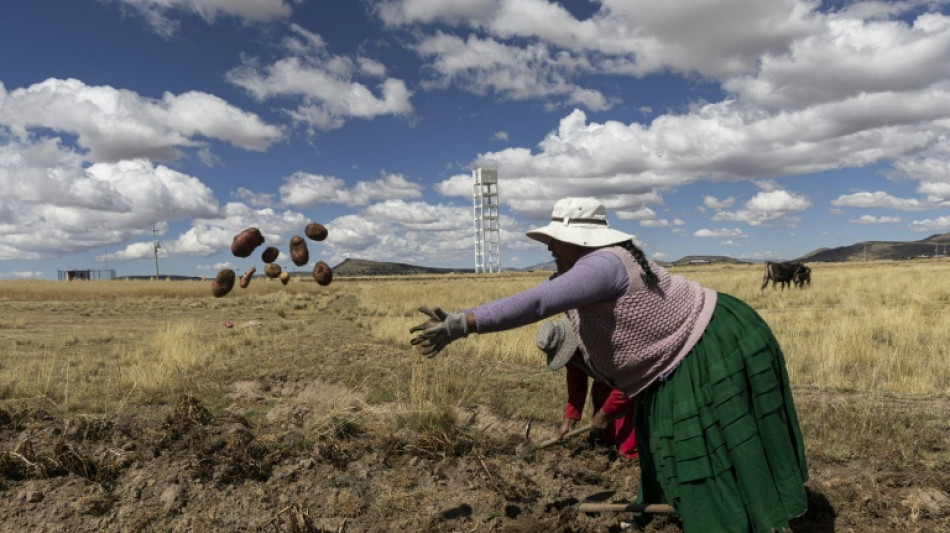
In Peru's highlands, hopelessness shapes a bitter presidential runoff / Photo: © AFP

 UK court quashes five ex-traders' Libor rate rigging convictions
 XM Receives “Global Customer Experience Leader Award 2026” at the TrustFinance Performance Awards
 Stocks slide as oil climbs on Mideast flareup

 Heavy casualties in Ukraine after Russian strikes

 French wine harvest set to hit historic low
 Kyiv 'cannot agree' to EU membership limiting food exports: minister

 Arteta targets more Arsenal glory after signing new deal until 2030

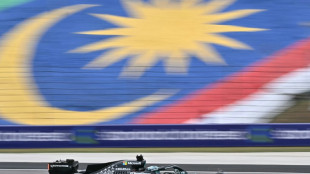 Russell hit with Singapore grid penalty for taking new power unit

 Spotify expands audiobooks to more than 180 markets

 French-Japanese duo wins chemistry Nobel for solving molecular 'mystery'

 England's Nations League surge helps heal World Cup wounds

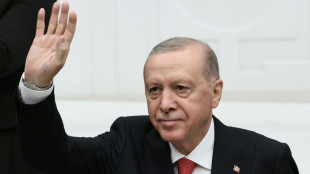 Mayor of opposition stronghold Izmir defects to Erdogan party
 Mertens beats Gauff to set up Swiatek clash at China Open
 Benin full of pride at role in Messi's last dance

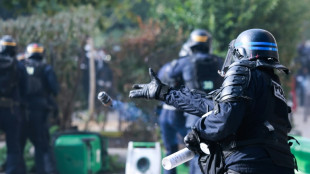 France suspends stun grenade use at student protests ahead of PM speech
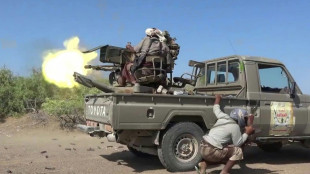
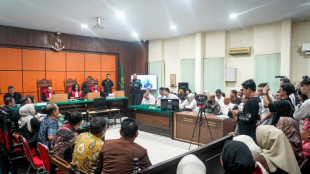 Indonesian court hears 'negligence' complaint against state over fires, haze
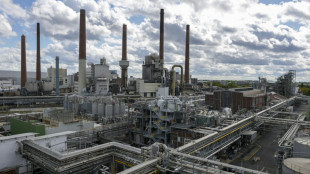
 Rubio in Greece to urge against Western civilisation 'decline'
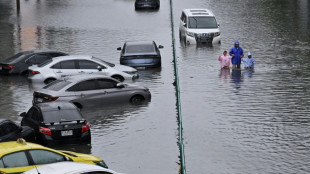
 Micron workers at Taiwan plant vote in favour of strike

 In 'The Social Reckoning,' Jeremy Allen White takes on Facebook's 'frightening' ambition
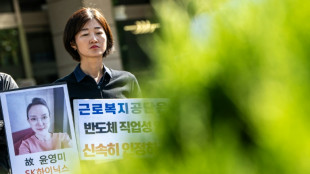 Chip industry activists call for South Korea to recognise cancer cases

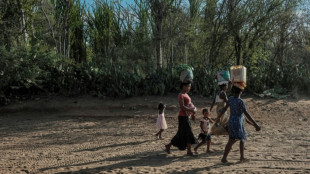 Famine-scarred southern Madagascar braces for El Nino
 How the EU regulates lobbyists
 I.Coast refuge offers lifelong care for youngsters scorned as 'sorcerers'

 Indian central bank hikes rates for first time in more than 3 years
 Hotel Blacklist Launches New Accommodation Industry Risk Assessment Tool

Peru's presidential runoff has exposed deep dissatisfaction in the Andean south, where poor rural voters see the election as a bitter choice and say Lima has abandoned them.
Under the blistering sun of the high Andean plains, 78-year-old Dominga Quenta sorts potatoes with her rough hands, as she has done all her life.
Days before the country's presidential runoff, Quenta says she no longer believes political promises from the men and women in Lima.
"No one will give me even a cent," Quenta says, pondering a hard life at almost 4,000 meters (13,100 feet) altitude, near the shores of Lake Titicaca.
Her husband, Rufino Cutipa, 75, agrees. "No one comes here, no one sees us. We survive on our own."
Around their adobe house, the bleached plains stretch toward distant hills.
A few cows and sheep graze near the well that supplies water for both livestock and the couple.
- 'Life is very hard' -
In neighboring plots, barefoot women in traditional dress strike the earth with hoes to harvest the season's last potatoes.
More than a third of the region's population lives in poverty, according to official figures.
That disillusionment weighs against Keiko Fujimori, daughter of former autocratic president Alberto Fujimori, who is running for president for the fourth time.
"The father already ruled for a long time. The daughter should step aside," Quenta says, smoothing her bright red pollera, the traditional Andean skirt.
Many voters in this part of Peru will back leftist Roberto Sanchez more out of rejection of Fujimori than conviction.
In the first round, Sanchez won 27 percent of the regional vote. Fujimori won under three percent.
"It freezes a lot here. Life is very hard. We do not want our children to live here. They all left," Quenta explains, referring to her four children.
One of them, Cesar Cutipa, 45, is now an electronics engineer in Puno, an hour away by road.
Visiting his parents, he recalls through tears how they sold a cow and a sheep so he could go to school.
He says that Sanchez, a former minister and lawmaker, is "the lesser evil."
Nationally, the two finalists together failed to reach 30 percent of the vote.
Rejection of Fujimori deepened after former president Pedro Castillo was ousted in December 2022, whose political legacy Sanchez claims.
Many here see the jailed leftist former president -- once a rural schoolteacher -- as a symbol of a failed hope for change.
- 'No other choice' -
His fall sparked three months of protests, often violently repressed. More than 50 people were killed, mostly in the Andean south of the country.
Eighteen died in a single day in Juliaca, a commercial hub an hour away from Puno.
Among them was 17-year-old Jhamileth Aroquipa. She was shot while helping her family restock her mother's small shop.
She studied psychology. Her university timetable still hangs on her bedroom wall.
"The only mistake was going out into the street," her mother, Dominga Hancco, 44, says through tears.
"More than three years have passed, and there is still no justice," she adds. "When people demand answers, the state never responds. It silences us. It kills us."
For her, the right-wing candidate represents the same power that repressed the protests.
She will vote for Sanchez, believing "there is no other choice."
Analyst Paulo Vilca says this vote reflects a southern Andean tradition favoring candidates promising change, in a region feeling sidelined by growth centered on the coast.
In the runoff, Sanchez has become "the dike against" Fujimori he says. But the dike has cracks.
Taxi driver and boat owner Efrain Vilca sees Fujimori as an opportunity for tourism around Lake Titicaca. "There are many hidden votes for her," he says.
F.Müller--BTB