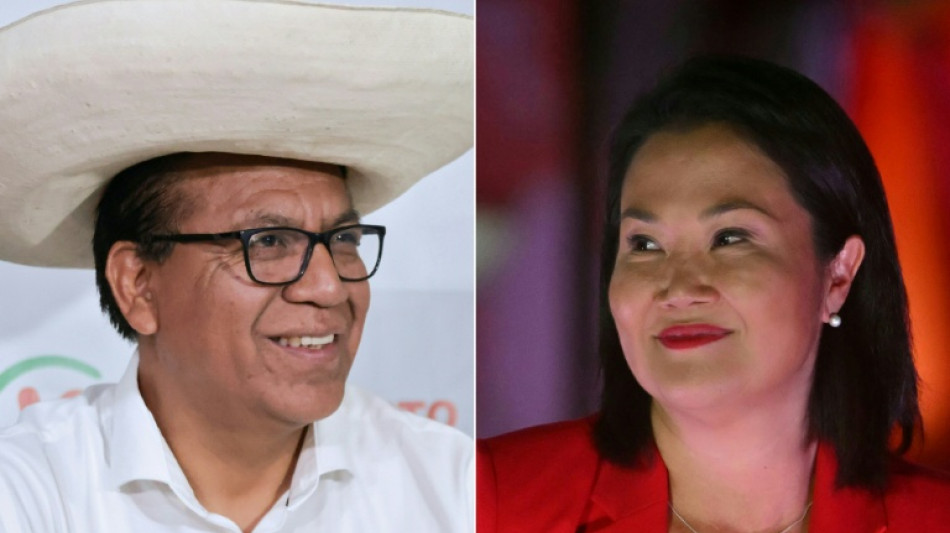
Polls open in tight Peru presidential runoff / Photo: © AFP

 Arteta targets more Arsenal glory after signing new deal until 2030

 Russell hit with Singapore grid penalty for taking new power unit

 Spotify expands audiobooks to more than 180 markets

 French-Japanese duo wins chemistry Nobel for solving molecular 'mystery'

 England's Nations League surge helps heal World Cup wounds

 Mayor of opposition stronghold Izmir defects to Erdogan party
 Mertens beats Gauff to set up Swiatek clash at China Open

 Benin full of pride at role in Messi's last dance

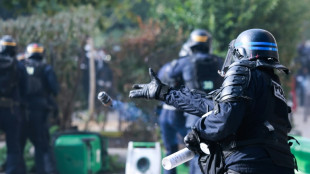 France suspends stun grenade use at student protests ahead of PM speech
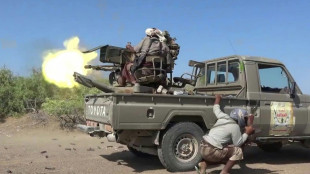
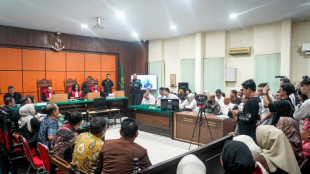 Indonesian court hears 'negligence' complaint against state over fires, haze
 Rubio in Greece to urge against Western civilisation 'decline'
 Micron workers at Taiwan plant vote in favour of strike
 In 'The Social Reckoning,' Jeremy Allen White takes on Facebook's 'frightening' ambition
 Chip industry activists call for South Korea to recognise cancer cases
 Famine-scarred southern Madagascar braces for El Nino
 How the EU regulates lobbyists
 I.Coast refuge offers lifelong care for youngsters scorned as 'sorcerers'

 Indian central bank hikes rates for first time in more than 3 years
 Hotel Blacklist Launches New Accommodation Industry Risk Assessment Tool

 Bangladesh nuclear plant draws hope -- and worry

 US beat Canada 1-0 to wrap up four-win international break

 Turkey, Australia's joint COP31 leadership raises doubts

 For Turkish NGOs, COP31 offers rare space for action

 Sleep, appetite, gene-editing experts contend for Nobel chemistry prize
 Nobel Peace Prize haunted by the 'spectre' of Trump

Polls opened in Peru's presidential runoff Sunday, with crime and political instability dominating a race to choose the country's ninth leader in a decade.
Pre-election surveys showed a tight race between conservative four-time presidential hopeful Keiko Fujimori and leftist ex-minister Roberto Sanchez.
Sanchez, a psychologist, surged late in the race to reach the runoff, thanks to strong support in rural areas.
From the Andes to the Amazon, around 27 million Peruvians can cast ballots to choose a president for a five-year term.
The first round was marred by logistical problems and a vote count that took weeks to complete, deepening distrust in Peru's creaking institutions.
"I hope the entire process is carried out transparently, that the people's vote is respected" early voter Evelyn Pazos, 43, told AFP.
On the eve of the election, a judge said Sanchez must stand trial over past financial irregularities in his party, raising claims of interference.
If he wins, he would have presidential immunity, though remain vulnerable to the country's right-leaning legislature -- which has ousted several recent presidents.
Fujimori, 51, appeals to the mixed legacy of her late father, who stabilized the economy and defeated a Maoist insurgency, but was convicted of corruption and crimes against humanity.
She is hoping to ride a surge of support for right-wing US-backed politicians across Latin America who have won recent elections in Bolivia, Chile, Ecuador and beyond.
She has promised to militarize prisons and expel some migrants with the "same force" used by her father against insurgents in the 1990s.
"There is a lot of disorder and corruption, and we're going to vote, as always, for the 'lesser evil'," Hugo Vasquez, a 67-year-old crafts seller in Lima, told AFP.
Sanchez, a 57-year-old congressman draws on the rural background of his mentor, former president Pedro Castillo, a schoolteacher jailed after a failed attempt to dissolve Congress in 2022.
- 'Communism' or 'dictatorship' -
He has moderated early calls for "radical change" and distanced himself from ultranationalists.
He told AFP he wants a "respectful" relationship with US President Donald Trump.
Sanchez, who always wears the broad-brimmed palm straw hat gifted to him by Castillo -- whom he plans to pardon -- accuses his rival of being part of a "dictatorship" led by the powerful Congress that counts several former presidents among its members.
Neither Sanchez nor Fujimori has a legislative majority. Whoever wins must build alliances to complete their term, according to analyst Jeffrey Radzinsky.
"Whoever wins will face questions of legitimacy if the result is close. That means more instability" said analyst David Sulmont.
The winner will replace interim president Jose Maria Balcazar from July 28.
Despite political disillusionment, Peruvians' main concern is security, as criminal gangs spread and extortion complaints spiked ninefold in five years.
"They kill, dismember, demand protection money. Enough!" said 58-year-old taxi driver Roberto Lovaton.
Sanchez proposes tackling corruption in the police and judiciary, which he says are complicit with criminal networks.
The winner will inherit a stable economy, with GDP growth of over three percent and low inflation.
However, seven out of 10 workers are in the informal economy.
Fujimori supports neoliberal policies, property rights and attracting US investment.
Sanchez has promised wage increases and sought to reassure investors by pledging to maintain an open economy and central bank independence, key to economic stability.
W.Lapointe--BTB