The migration pact: What's in the EU's landmark asylum reform? / Photo: © AFP

 Rubio in Greece to urge against Western civilisation 'decline'

 Micron workers at Taiwan plant vote in favour of strike
 In 'The Social Reckoning,' Jeremy Allen White takes on Facebook's 'frightening' ambition

 Chip industry activists call for South Korea to recognise cancer cases
 Famine-scarred southern Madagascar braces for El Nino
 How the EU regulates lobbyists

 I.Coast refuge offers lifelong care for youngsters scorned as 'sorcerers'

 Indian central bank hikes rates for first time in more than 3 years

 Hotel Blacklist Launches New Accommodation Industry Risk Assessment Tool

 Bangladesh nuclear plant draws hope -- and worry

 US beat Canada 1-0 to wrap up four-win international break

 Turkey, Australia's joint COP31 leadership raises doubts

 For Turkish NGOs, COP31 offers rare space for action

 Sleep, appetite, gene-editing experts contend for Nobel chemistry prize

 Nobel Peace Prize haunted by the 'spectre' of Trump

 Africa launches own credit agency in bid for cheaper borrowing

 US, China, EU: three paths to regulating AI

 Australia's High Court rules against coal mine in landmark climate case
 Australia touts new funds for Pacific infrastructure at Fiji 'pre-COP'

 Eva Marie Saint, Oscar winner of Hollywood classics, dies at 102

 Australia probes app used in cheap smart glasses over privacy fears

 England needed to 'move on' from World Cup pain, says Tuchel

 O'Neill to stay at Celtic after period of "reflection"

 Kane marks 125th England cap with Wembley Nations League double

 Quebec's incoming separatist leader wants to block Crown from swearing-in

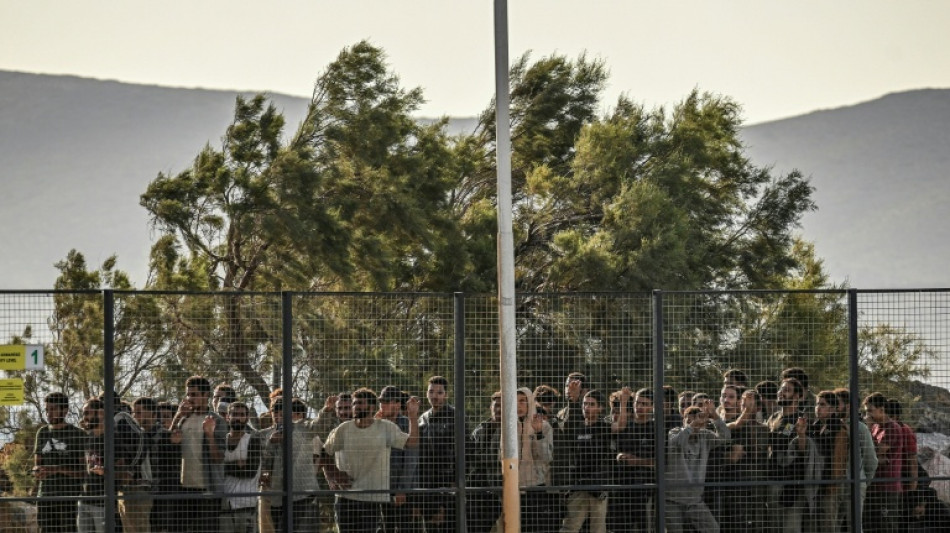
A major reform of European migration rules aimed at hardening border procedures and overhauling the asylum process comes into force on Friday.
"For the first time we have a comprehensive European system," said the EU's migration chief Magnus Brunner, maintaining the reform would hand EU nations more control over comings and goings.
Here is an overview of the main changes:
- Border procedures -
Migrants irregularly entering the European Union will undergo identity and security checks in a process lasting up to seven days.
Identity documents and biometric readings of their faces and fingerprints will be recorded in a database.
The screening aims to determine who should receive an accelerated or normal asylum application process, and who should be sent back to their country of origin or transit.
Rights groups complain this will de facto result in most migrants, including children, being detained for the duration of the process.
- Fast-track rejection -
Asylum-seekers considered a security risk or with lower chances of receiving refugee status -- those coming from countries such as Morocco and Bangladesh whose nationals are declined protection in at least 80 percent of cases -- will be processed faster.
Their applications would be processed in centres close to the EU's "external borders" -- meaning land frontiers, ports and airports -- in a process taking up to 12 weeks.
Rights groups say this will in most cases result in a further period of detention and a rushed decision.
For other asylum seekers, the standard procedure will continue to apply.
- Solidarity mechanism -
Under EU rules, the country in which an irregular migrant first sets foot is responsible for handling their case.
That places stress on Italy, Greece and Malta, which have received the bulk of land and sea arrivals in recent years.
To ease that burden, the reform introduces a solidarity mechanism compelling member states to take in a certain number of asylum-seekers arriving in the outer-rim countries.
Alternatively, they can pay 20,000 euros ($23,000) per asylum-seeker to the countries under pressure.
At least 30,000 asylum-seekers a year will come under this relocation system.
Related negotiations have already proven difficult, with a first round held last year seeing several countries refusing to accept any relocations.
- Surge response -
The package establishes an emergency response in the event of unexpected migration surges -- the same sort of crisis the EU faced in 2015-2016 when more than two million asylum-seekers entered the bloc, many from war-torn Syria and Afghanistan.
It will allow member states to reduce protections for asylum-seekers, making it possible to hold them longer than usually permitted in detention centres on the EU's external borders.
The system will also apply to the so-called "instrumentalisation" of migratory flows -- an accusation often levelled at Belarus and Russia, which EU neighbours say push migrants across the border in a bid to destabilise the 27-nation bloc.
- Concerns -
A dozen member states are yet to finalise preparations, including setting up the necessary infrastructure, to accommodate the new screening procedures.
Others have experienced troubles with the biometric database.
Public opinion has further hardened on migration since the changes were adopted, pushing EU states to demand further action.
A new package of measures aimed at boosting deportations of failed asylum-seekers is currently rushing through the EU's legislative process.
This has added to rights groups' worries that humanitarian concerns were taking the back seat to politics in Europe.
"The Pact takes a sledgehammer to the right to asylum at a time when the world needs Europe more than ever to champion human rights," Judith Sunderland of Human Rights Watch said of the measures coming into force on June 12.
M.Furrer--BTB