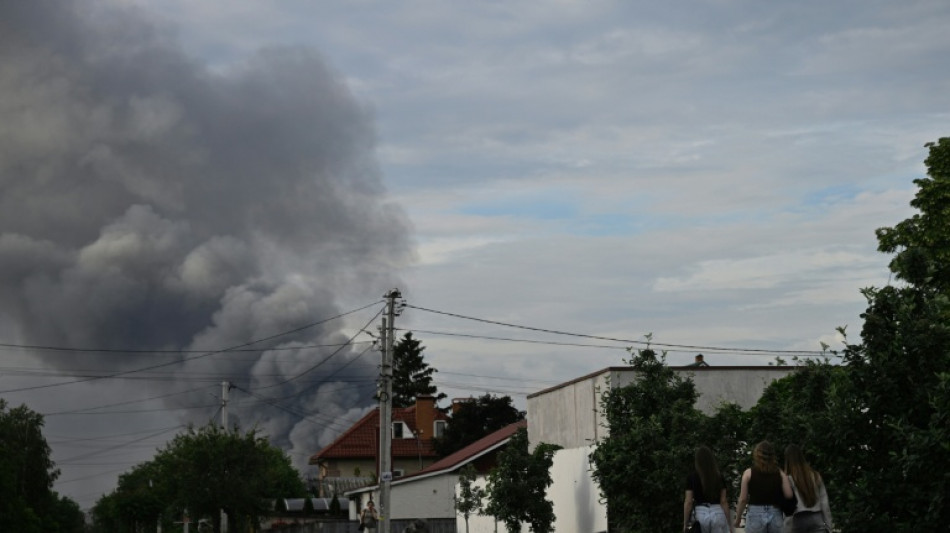
Despite strikes on Ukraine, Russian advances slow, analysts say / Photo: © AFP/File

 Rubio in Greece to urge against Western civilisation 'decline'
 Micron workers at Taiwan plant vote in favour of strike
 In 'The Social Reckoning,' Jeremy Allen White takes on Facebook's 'frightening' ambition
 Chip industry activists call for South Korea to recognise cancer cases

 Famine-scarred southern Madagascar braces for El Nino
 How the EU regulates lobbyists
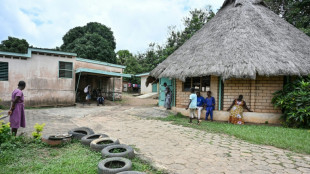 I.Coast refuge offers lifelong care for youngsters scorned as 'sorcerers'

 Indian central bank hikes rates for first time in more than 3 years
 Hotel Blacklist Launches New Accommodation Industry Risk Assessment Tool
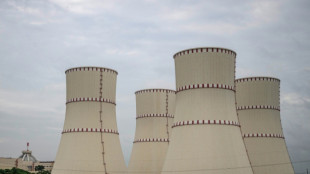 Bangladesh nuclear plant draws hope -- and worry

 US beat Canada 1-0 to wrap up four-win international break

 Turkey, Australia's joint COP31 leadership raises doubts

 For Turkish NGOs, COP31 offers rare space for action

 Sleep, appetite, gene-editing experts contend for Nobel chemistry prize
 Nobel Peace Prize haunted by the 'spectre' of Trump

 Africa launches own credit agency in bid for cheaper borrowing

 US, China, EU: three paths to regulating AI

 Australia's High Court rules against coal mine in landmark climate case
 Australia touts new funds for Pacific infrastructure at Fiji 'pre-COP'

 Eva Marie Saint, Oscar winner of Hollywood classics, dies at 102

 Australia probes app used in cheap smart glasses over privacy fears
 England needed to 'move on' from World Cup pain, says Tuchel

 O'Neill to stay at Celtic after period of "reflection"

 Kane marks 125th England cap with Wembley Nations League double

 Quebec's incoming separatist leader wants to block Crown from swearing-in

Ukrainian towns and cities have suffered months of intensifying Russian bombardment. But on the battlefield, Russia's offensive is showing signs of losing steam.
More than four years into its invasion, the Russian defence ministry's statements claiming to have captured towns and villages in Ukraine have become less regular.
And in some areas, Ukraine's forces have managed to gain a foothold.
In April and May, the Russian army lost more ground in Ukraine than it gained, according to an AFP analysis of data from the US-based Institute for the Study of War (ISW).
Although these territorial gains are too small to change the situation on the ground, they illustrate the growing difficulties that the Russian army faces.
"The Russian army's advance is proceeding at an extremely slow pace," Russian military expert Alexander Khramchikhin told AFP.
Even though the Russian army is bigger and better equipped than its Ukrainian counterpart, the use of drones has created a "dead zone" on either side of the front line.
Unless the Ukrainian army's resources are "completely depleted", then an acceleration in Russian advances is difficult to foresee, said Khramchikhin.
Ukrainian forces have meanwhile "largely halted" Russia's spring-summer offensive, the ISW said in a report earlier this month.
- 'All of Ukraine' -
Unable to launch major offensive operations on the front, Russia has taken to launching infiltration operations: sending small groups of soldiers behind enemy lines to hold key positions until reinforcements arrive.
The tactic has had some success, particularly during the capture of the Ukrainian logistics hub of Pokrovsk late last year, although it can take a long time to bear fruit.
Instead of sweeping advances across the front line, Russia has concentrated its military efforts on capturing the Ukrainian stronghold of Kostyantynivka, a former industrial town in the Donetsk region.
Russia also seems to have scaled back its war aims.
After declaring last June that "all of Ukraine" was Russia's, and threatening to take the regional Ukrainian capital of Sumy, President Vladimir Putin has since said his army aims solely to seize the Donbas -- the eastern regions of Donetsk and Lugansk.
Russia occupies around a fifth of its neighbour: the Crimean peninsula, which it annexed in 2014, most of the Donetsk and Lugansk regions, and large parts of the southern Zaporizhzhia and Kherson regions.
It claims all five regions as its own, following hastily organised referendums widely seen by the international community as illegitimate.
- War at its deadliest -
Ukraine, while capitalising on Russia's woes, also faces headwinds.
It has vastly scaled back its war aims, pushing no longer for a return to its post-Soviet borders or even those of 2022, but to freeze fighting along the current front lines.
Struggling with long-term recruitment problems, the Ukrainian army no longer has the resources to conduct large-scale offensives.
For now, its main objective is to "bring Russia to the point where it has to negotiate," Ukrainian analyst Mykola Bielieskov told AFP.
"What can definitely be said is that the situation for us has stopped deteriorating," he said.
Faced with deadlock on the battlefield, both sides have deepened long-range strikes.
After devastating Ukraine's energy grid last winter, Russia has promised to launch "systematic" attacks on Ukraine, breaking records for the number of drones and missiles launched at its neighbour.
Ukraine has meanwhile struck Russia's oil sector almost every week, while stepping up its drone attacks on supply roads used by Russian forces in occupied areas, according to analysts.
As strikes now extend well beyond the fighting, civilians have suffered.
The war today is deadlier now than "at any point" since Russia invaded in 2022, the United Nations reported Monday.
C.Meier--BTB