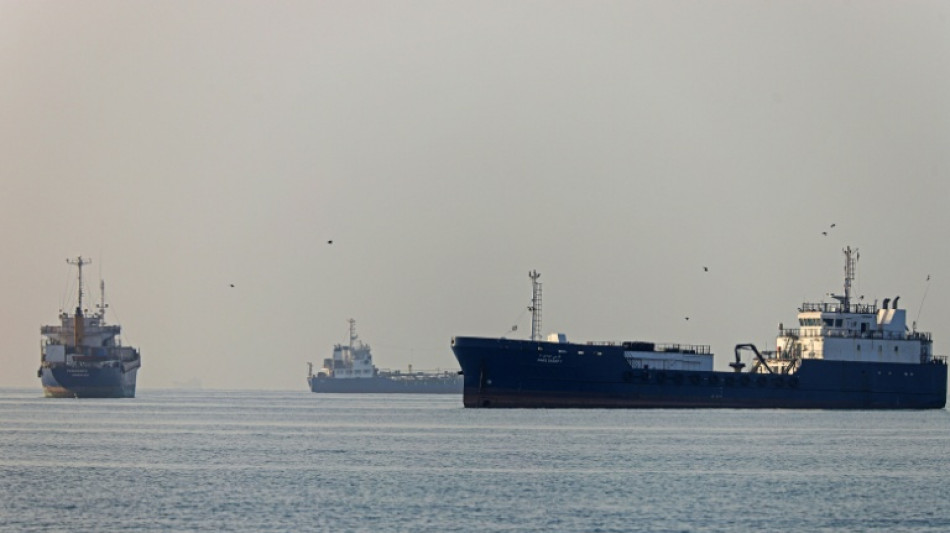
Energy firms brace for 'new era' despite Hormuz deal / Photo: © ISNA/AFP

 Chip industry activists call for South Korea to recognise cancer cases
 Famine-scarred southern Madagascar braces for El Nino
 How the EU regulates lobbyists
 I.Coast refuge offers lifelong care for youngsters scorned as 'sorcerers'

 Indian central bank hikes rates for first time in more than 3 years

 Hotel Blacklist Launches New Accommodation Industry Risk Assessment Tool

 Bangladesh nuclear plant draws hope -- and worry
 US beat Canada 1-0 to wrap up four-win international break

 Turkey, Australia's joint COP31 leadership raises doubts

 For Turkish NGOs, COP31 offers rare space for action

 Sleep, appetite, gene-editing experts contend for Nobel chemistry prize
 Nobel Peace Prize haunted by the 'spectre' of Trump

 Africa launches own credit agency in bid for cheaper borrowing

 US, China, EU: three paths to regulating AI

 Australia's High Court rules against coal mine in landmark climate case
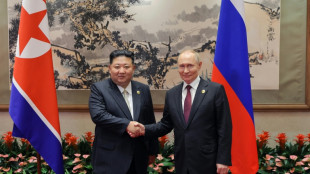
 Australia touts new funds for Pacific infrastructure at Fiji 'pre-COP'

 Eva Marie Saint, Oscar winner of Hollywood classics, dies at 102

 Australia probes app used in cheap smart glasses over privacy fears

 England needed to 'move on' from World Cup pain, says Tuchel

 O'Neill to stay at Celtic after period of "reflection"

 Kane marks 125th England cap with Wembley Nations League double

 Quebec's incoming separatist leader wants to block Crown from swearing-in

 Emmys gala will now stream its premier television awards

 Paramount completes Warner Bros takeover, creating Skydance
 Trump blames France unrest on Islam, migration

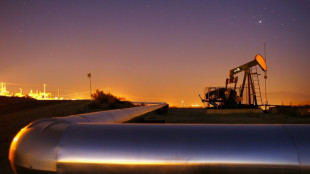
Oil and gas majors have high hopes for a quick reopening of the Strait of Hormuz, but they have few illusions about a return to normal for the Gulf energy industry after more than three months of blockage.
Even if the deal between Iran and the United States to end the Mideast war holds, analysts say the old market certainties are gone for good -- and the new risks will probably require costly adaptions.
- Business as usual? -
"A credible reopening of the Strait of Hormuz would be one of the most important developments for the global economy at this juncture," said Claudio Galimberti, chief economist at Rystad Energy.
The shock of a near-doubling of oil prices since Iran effectively closed off the crucial waterway has fuelled inflation that could persist for months, threatening growth around the globe.
Its closure exposed the vulnerability of Gulf supply chains -- and now the prospect of Iranian tolls on tanker and cargo traffic.
Iran's foreign ministry spokesman Esmaeil Baqaei has evoked maritime "service fees" on ships transiting the strait, which companies are likely to pass on to customers.
"We're in a whole new era," French expert Philippe Chalmin of the raw materials consulting group Cyclope said this month in presenting its annual market outlook, an industry reference.
"Hormuz can be blocked -- no one had imagined that," he said, noting that a toll was likely.
Energy firms appear to have resigned themselves to the fact, with TotalEnergies chief Patrick Pouyanne saying in April that "compensation" to Iran is preferable to having the strait stay closed.
- What's the immediate impact? -
Oil prices fell sharply after the deal was announced to around $80 a barrel, though that remains above the mid-$60s seen before the war.
"We're really waiting for the signature of a concrete agreement and tangible proof that the Strait of Hormuz is reopening," said Blandine Ruty, secretary general of the French petroleum industry association Ufipem.
She predicted that prices would fall further "if there indeed are signs of political stability".
However, if market sentiment has clearly improved, "sentiment is not the same as supply", said Rystad's Galimberti.
Retaliatory strikes by Iran have targeted oil and gas infrastructure in several Gulf countries seen helping the US attacks, taking many pumps and refineries offline.
"It will take time for production to ramp back up, for logistics to normalise, and for the risk premium embedded in crude prices to dissipate," he said.
He also noted the United Arab Emirates' decision during the war to quit OPEC, hindering the Saudi-dominated cartel's ability to control oil prices.
Chalmin at Cyclope meanwhile said "there are doubts that some wells will be able to quickly start flowing again -- It's not just a tap you turn back on".
- How will the industry adapt? -
"This war showed the oil and gas industry that Hormuz risk is no longer just a geopolitical headline. It is a logistics, insurance, storage and balance sheet risk," said Stephen Innes, an analyst at SPI Asset Management.
He predicted the industry would shift from "just-in-time" to "just-in-case" logistics that mean "more storage, more flexible shipping, more diversified crude and LNG sourcing, and more planning around war-risk insurance".
The UAE has already said it will fast-track construction of a new oil pipeline bypassing the Strait of Hormuz by reaching the port of Fujairah on the Gulf of Oman.
But that marginally eases shipping risks only for crude oil, given the overwhelming importance of tanker shipments -- Liquefied natural gas (LNG) exports require ships for reaching key Asian and European markets.
"For refined products and LNG, if the Strait of Hormuz is blocked, you're blocked 100 percent," said Francis Perrin of the French Institute for International and Strategic Affairs (IRIS), a contributor to Cyclope's annual report.
Even if producers build more "resilience" into their operations, it will be reflected in their costs.
"The industry should rethink storage, pipelines, production diversity and transit routes, but only within realistic limits," Innes said.
"You can build buffers, but you cannot build another Hormuz overnight."
O.Lorenz--BTB