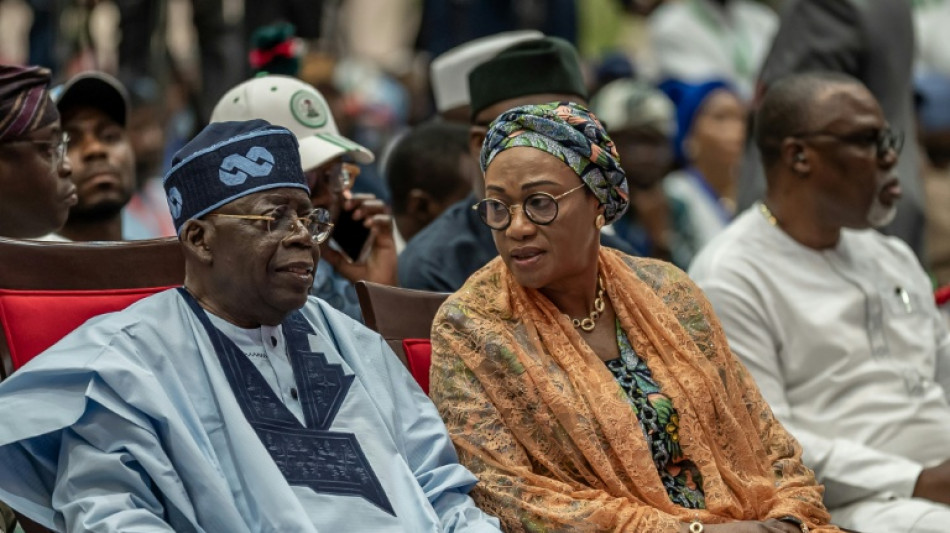
Nigeria clamps down on misinformation after school kidnapping / Photo: © AFP

 Chip industry activists call for South Korea to recognise cancer cases
 Famine-scarred southern Madagascar braces for El Nino
 How the EU regulates lobbyists
 I.Coast refuge offers lifelong care for youngsters scorned as 'sorcerers'

 Indian central bank hikes rates for first time in more than 3 years
 Hotel Blacklist Launches New Accommodation Industry Risk Assessment Tool

 Bangladesh nuclear plant draws hope -- and worry

 US beat Canada 1-0 to wrap up four-win international break

 Turkey, Australia's joint COP31 leadership raises doubts

 For Turkish NGOs, COP31 offers rare space for action

 Sleep, appetite, gene-editing experts contend for Nobel chemistry prize

 Nobel Peace Prize haunted by the 'spectre' of Trump

 Africa launches own credit agency in bid for cheaper borrowing

 US, China, EU: three paths to regulating AI
 Australia's High Court rules against coal mine in landmark climate case
 Australia touts new funds for Pacific infrastructure at Fiji 'pre-COP'

 Eva Marie Saint, Oscar winner of Hollywood classics, dies at 102

 Australia probes app used in cheap smart glasses over privacy fears

 England needed to 'move on' from World Cup pain, says Tuchel

 O'Neill to stay at Celtic after period of "reflection"

 Kane marks 125th England cap with Wembley Nations League double

 Quebec's incoming separatist leader wants to block Crown from swearing-in

 Emmys gala will now stream its premier television awards

 Paramount completes Warner Bros takeover, creating Skydance

 Trump blames France unrest on Islam, migration
Nigerian authorities have arrested at least eight people in recent weeks for spreading false information on social media, as officials threaten tougher penalties following a wave of misinformation linked to a recent school kidnapping.
The abductions on May 15 rocked Nigeria's typically calm southwest, where many had thought they were safe from the mass kidnappings by jihadists and "bandit" gangs that have long rattled the conflict-hit north of the country.
Gunmen abducted at least 46 pupils and staff in a raid on three schools in Oyo state, in what the army called a jihadist attack.
A month later, with the pupils still in captivity, false claims about the headline-dominating incident have found foothold on social media -- just as Africa's most populous country heads for what is expected to be a contentious general election in January.
One false claim said an abducted student had been killed.
"The command has responded to not less than 15 misleading publications," Oyo police spokesman Olushola Alayande told AFP.
"A recurring pattern involves the circulation of sensational claims, recycled videos from unrelated incidents and speculative narratives presented as facts," he said.
Misinformation itself has also turned deadly.
In Lagos, the economic capital, a 24-year-old motorcyclist was killed by a mob after a false claim circulated that bandits were invading the city. Fifteen people have been arrested in connection with the incident.
- Claims target politics, security -
Nigerian President Bola Tinubu, who is seeking a second term in the January election, has repeatedly been the subject of fabricated content.
Earlier this month, a viral audio clip appeared to feature him threatening to allow insecurity to worsen in the southeast unless opposition figure Peter Obi -- who hails from there and is a major challenger for the 2027 race -- withdrew from the election.
Security agencies later dismissed the video as generated by artificial intelligence. Police said a man linked to the post was arrested on June 4.
The region is home to a simmering separatist conflict, making such claims particularly inflammatory -- especially in a country where elected officials have, in other cases, historically backed political violence.
Analysts said that while Nigeria's myriad security crises are real, the approaching elections have incentivised people to amplify and distort the problem.
The military had to push back recently on an AI-generated video, posted to Facebook, purporting to show defence chief Olufemi Oluyede admitting to having run out of ideas to tackle insecurity.
The upcoming election comes as easy access to generative AI tools makes synthetic audio, deepfakes and coordinated campaigns easier to create en masse.
"The most sophisticated use of AI is likely to come from well-resourced political actors," according to Africa Practice, a consultancy with offices in Africa and Europe.
- Critics warn of abuse -
Many of the arrests have been made under Nigeria's Cybercrimes Act, which criminalises sharing false information on social media and prescribes a three-year jail term or a fine of seven million naira (about $5,000).
But experts warn relying on arrests to combat misinformation can infringe on the right to free speech, especially in situations where there is no documented harm.
"In many cases, people share false information because they genuinely believe the information is accurate or because it reinforces their existing beliefs and biases," Olasupo Abideen of Fact Check Africa told AFP.
There are also worries the government could use the law to crack down on news it disagrees with.
In April, Amnesty International Nigeria warned of "attacks on journalists through the manipulation of the Cybercrimes Act".
Abideen said enforcement measures should be complemented with long-term investments in public awareness campaigns and robust fact-checking initiatives.
"An informed and media-literate public remains one of the strongest defences against misinformation; far more effective in the long run than the fear of arrest alone," he said.
P.Anderson--BTB