India learns to live with hotter summers / Photo: © AFP

 Hotel Blacklist Launches New Accommodation Industry Risk Assessment Tool

 Bangladesh nuclear plant draws hope -- and worry

 US beat Canada 1-0 to wrap up four-win international break

 Turkey, Australia's joint COP31 leadership raises doubts

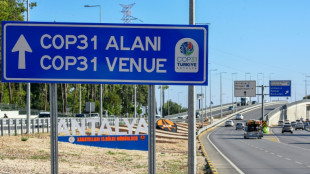 For Turkish NGOs, COP31 offers rare space for action

 Sleep, appetite, gene-editing experts contend for Nobel chemistry prize
 Nobel Peace Prize haunted by the 'spectre' of Trump

 Africa launches own credit agency in bid for cheaper borrowing

 US, China, EU: three paths to regulating AI

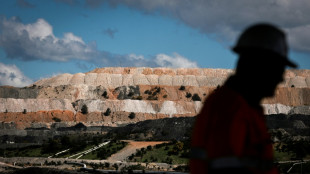 Australia's High Court rules against coal mine in landmark climate case

 Australia touts new funds for Pacific infrastructure at Fiji 'pre-COP'

 Eva Marie Saint, Oscar winner of Hollywood classics, dies at 102

 Australia probes app used in cheap smart glasses over privacy fears

 England needed to 'move on' from World Cup pain, says Tuchel

 O'Neill to stay at Celtic after period of "reflection"

 Kane marks 125th England cap with Wembley Nations League double

 Quebec's incoming separatist leader wants to block Crown from swearing-in

 Emmys gala will now stream its premier television awards

 Paramount completes Warner Bros takeover, creating Skydance
 Trump blames France unrest on Islam, migration

 Apple's Cook praises EU over efforts to protect children online

 Nobel winner Halzen says years of October 'misery' finally over

 Quebec separatist win rattles Carney's unity push

 'Itching' for change: Shiffrin cuts back slaloms this season

 'Gen Z has risen up': Tens of thousands mass for tense France school protests

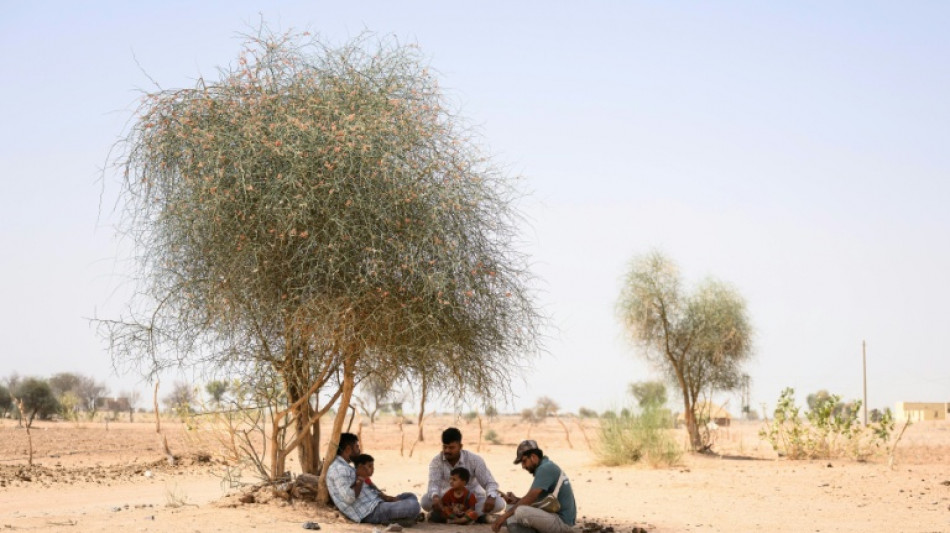
On India's hot plains, scorching summers have become increasingly harder to endure, requiring adaptations and forcing life into the hours of dark before the sun turns punishing.
"We try to adjust, but the traditional ways to combat heat are not working," said 26-year-old herdsman Sawai Bhati Singh, who lives outside the desert city of Jaisalmer, in the western state of Rajasthan.
"Every year the heat is increasing."
His home, made of thick stone blocks with few windows, helps keep some of the furnace-like heat out. But temperatures inside are still stifling.
The South Asian country is no stranger to scorching summers, but years of scientific research have found climate change is causing heatwaves to become longer, more frequent and more intense.
Temperatures in Singh's village of Sanwata hit 45C in early June, as is often during the summer. The highest temperature recorded in the area has been 49C.
Singh is worried about the health of his two young sons, aged two and four, playing barefoot in the dust.
In a separate kitchen hut with a thatched roof for ventilation, his wife and mother struggle as they cook on a wood fire.
Water is drawn from a nearby well and cooled in bottles wrapped in woven jute string, using evaporation to lower the temperature.
Singh's herd of goats and cattle struggles too.
"They stay in the shade," he said. "The heat impacts the eating, and that lowers their milk."
But temperatures are becoming harder to endure. The family bought their first air cooler, which uses wet fibres, last year.
"We never needed it before, but last year was hot, so we bought one," he said. "Now we have two."
A world away, along the lush green banks of the Yamuna river floodplains near the capital, New Delhi, farmer Bhole Shankar faces a different version of the same crisis.
New Delhi hit 46.5C this summer, still below the sizzling 49.9C record measured in 2024.
"Living on the floodplain feels cooler than being stuck in the middle of houses," 36-year-old Shankar said, standing outside a hut made of plastic sheeting on bamboo poles. "But on some days, day and night feel the same."
Shankar, his wife and their three sons, aged between nine and 16, live beneath the city's power lines -- but their hut is not connected. A solar panel provides enough power to run a small fan, pushing hot air.
The family shifts its routine, working in the fields before dawn, resting in the shade during the fiercest heat, and returning to check crops towards dusk.
The family roll up the tent's plastic wall and sleep on traditional rope-lattice beds, which both allow air to circulate.
"Each passing year feels hotter," he said. "We try to keep in the shade, but when you are a farmer, that's hard."
H.Seidel--BTB