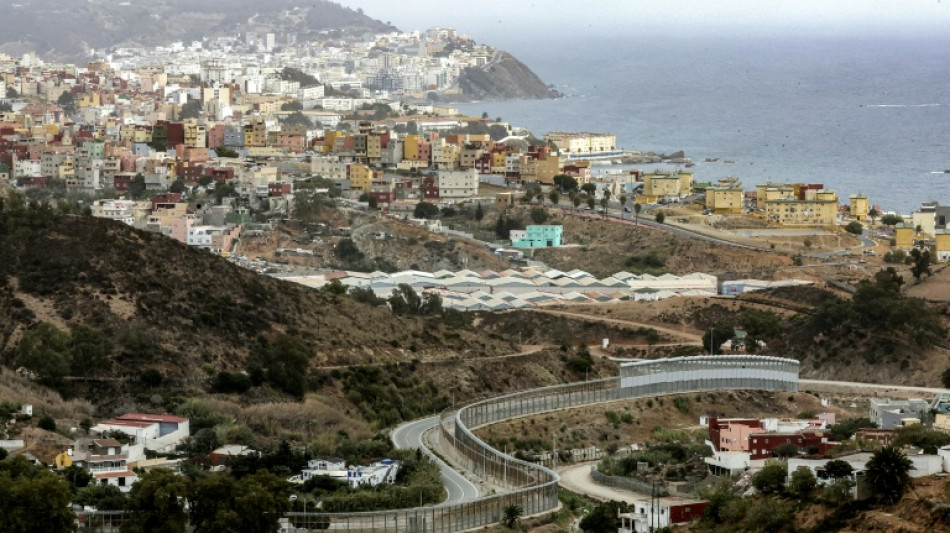
Hundreds of migrants swim to Spain's Ceuta territory from Morocco / Photo: © AFP

 Trump admin finalizes reversal of US fuel economy standards

 US says no China arms sale plans after envoy cites Trump offer

 Dozens kidnapped in two weekend attacks in northern Nigeria

 Next stop the world: Pathirage wins Asian Games javelin gold

 Aster Launches Perpetual Grid Trading 2.0 with Up to 140,000 $ASTER Liquidity Mining Campaign

 Seoul says North Korean mines 'highly suspected' as cause of DMZ blast

 Russia pummels Kyiv in latest deadly daytime attack

 Wartime Ukraine works to keep its railways on track

 Boy among 3 dead in migrant Channel crossing accident: French authorities

 SGFX Creates a Standout Brand Experience at Forex Expo Dubai 2026

 Pope urges Europe to help combat 'deceit and lies' in international ties

 Injured Buttler to miss England ODI series in Pakistan
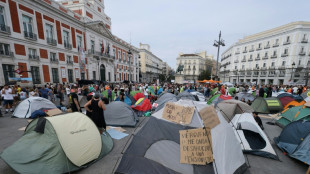 Madrid housing protesters vow to maintain pressure on government

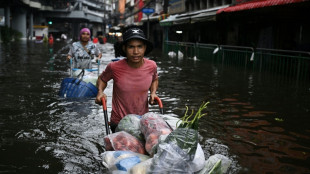 In kayaks or waist-deep in floodwater, shoppers return to Bangkok markets

 UK police probes Iran link to air base bomb scare: media

 Eala blasts into Asian Games quarters in just 55 minutes

 Taiwan gender-row boxer Lin Yu-ting guarantees Asian Games medal

 Comedian on trial for allegedly insulting Erdogan in standup show

 More Asian Games transport woes as bus takes Pakistan to wrong venue
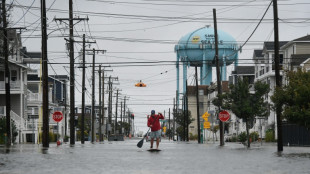
 Death toll in South Africa bar shooting rises to 18

 Aide to Venezuelan opposition leader returns from exile

 Messi and Alcaraz love it, now padel takes step closer to Olympics

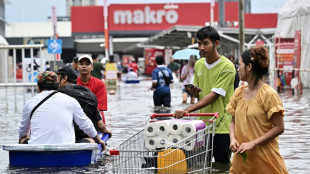 Tolls mount in Thailand, Myanmar floods

 Why India's opposition wants top poll official out

 PU Prime Strengthens UAE Momentum with Strong Showing at Forex Expo Dubai 2026

Hundreds of migrants entered the Spanish north African exclave of Ceuta on Thursday, AFP reporters saw, many of them having swum by sea around the frontier fence.
Migration from Morocco into Spain's two north African territories, Ceuta and Melilla, has long been a politically sensitive issue between the two countries, as thousands cross the border at times.
AFP reporters saw a stream of adults and children, most of them wet, entering the town. Discarded flotation rings and clothes had been left on the shore near where the frontier barrier meets the sea.
The president of Ceuta, Juan Vivas, said Wednesday that 1,500 migrants had come to Ceuta by sea in the past few days.
"We are in a situation of total humanitarian and social emergency," he said in comments broadcast Thursday by Spanish television.
Earlier, he had said that the reception centres were saturated as the number of people entering was more than 200 a day.
"There is no more room for anyone," he said.
Officials could not immediately be reached on Thursday to give more recent figures.
- Gathering in Morocco -
Migrants walked cheerfully through the streets of Ceuta, thanking the Spanish police and calling out: "Bye bye, Morocco, hello Spain."
Police and Civil Guards in Ceuta appeared to do little to intervene, though some officers attempted to direct the arrivals to the local migrant reception centre.
"It really breaks my heart to see so many people suffering, and who knows how many have actually drowned along the way," one young man, a local resident, told AFP.
"To be honest, I don't understand why they come to Spain, why they're led to believe that there's a future here," he added.
"When they arrive, they're faced with the harsh reality that they have nothing, and that people treat them as if they were nobody."
On the Moroccan side of the border, an AFP reporter on Thursday afternoon saw hundreds of people including children gathered near the border between Ceuta and the local town of Fnideq, waiting to cross into the Spanish territory.
Some of them said they had come after hearing rumours that the border was going to be opened on Thursday morning.
Moroccan authorities did not comment.
The crossings coincided with Morocco's Throne Day, a national festival.
- 'Immediate response' promised -
Spain's Prime Minister Pedro Sanchez said on X that his government was "focussed on providing an immediate response to the crisis in Ceuta.
"We are mobilising all necessary resources, working with Moroccan and international authorities, and preparing the necessary measures to restore normality as soon as possible."
Sanchez spoke with Vivas, who described "with complete clarity and starkness the seriousness of the situation", Ceuta's regional government said in a statement.
Interior Minister Fernando Grande-Marlaska will travel to Ceuta on Friday "to monitor the situation", said a ministry statement.
The ministry vaunted "Spain's exemplary cooperation with Morocco in all areas, including on migration", pointing the finger at human-trafficking networks.
It said the two countries would implement "measures for the transfer" to Morocco "as soon as possible, of all the people who have entered Ceuta illegally".
It said the government had increased its resources "to guarantee security and control of migration as well as the necessary humanitarian aid, so that no lives are put in danger at sea".
A foreign ministry source speaking to AFP played down the impact of Sanchez's recent visit to Algeria, with which Morocco has a long-standing dispute over the territory of Western Sahara and other issues.
The source insisted relations were "not at all affected" by the trip.
Sanchez's right-wing political rivals immediately pressured him on Thursday over the migrant arrivals.
"The government cannot look the other way regarding its duties because we are facing a national security crisis," said opposition Popular Party leader Alberto Nunez Feijoo on X.
Far-right Vox party leader Santiago Abascal on X blamed Sanchez personally for the migrant influx in Ceuta.
Ceuta and Melilla have Europe's only two land borders with Africa.
G.Schulte--BTB