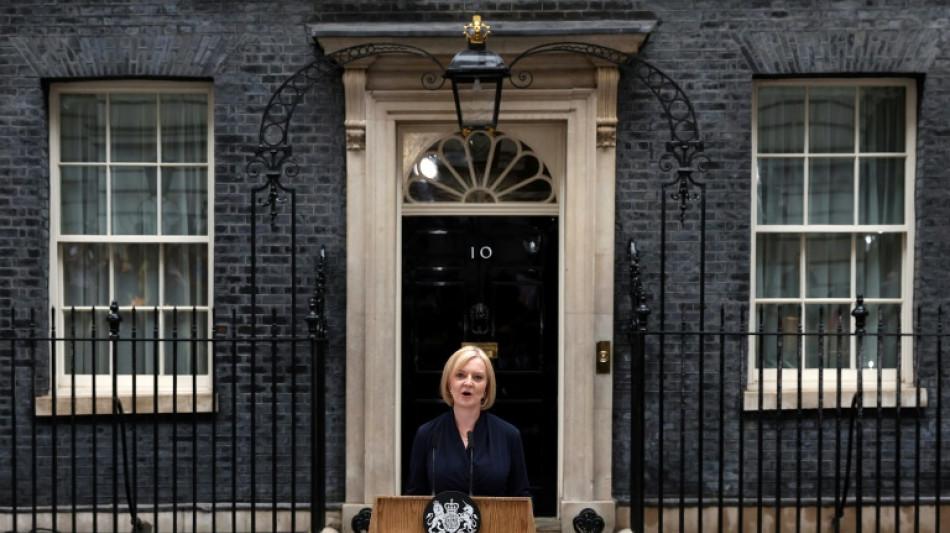
Markets brace as UK's new PM readies 'bold' economic action / Photo: © AFP

 How a glacier collapse may have caused Nepal-Tibet disaster

 Harmovest Capital Strengthens Global Financial Services Through Technology and Compliance

 Nvidia to buy AI platform Hugging Face for $12.9 bn: report

 Palace intrigue in Uganda as succession battle heats up

 'Housing First' approach gets Swedish city's homeless off streets

 Czech duo Muchova and Mensik win US Open mixed doubles title

 Japan's 'polka dot queen' artist Yayoi Kusama dies aged 97

 Nepal-Tibet disaster: what we know

 China deploys record number of ships around Taiwan as pressure grows

 Ruthless Bayern target treble as rivals reboot on Bundesliga return

 What experts know so far about Nepal's deadly floods
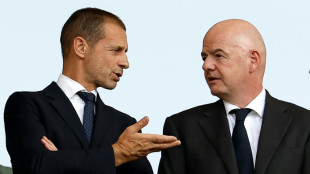 UEFA set to withdraw FIFA boycott threat ahead of Champions League draw

 Sumo moves to beat Japan summer heat as temperatures rise
 'Be more honest': Markets crave clarity from cryptic Fed chair

 Climate change leaves its mark on America's largest reservoir

 CIA director warned Russia not to attack NATO members: US media
 Search for missing after Nepal-Tibet floods kills at least 160
 Meta, US states agree $18 bn settlement in landmark teen safety case

 What scientists know so far about Nepal's deadly floods

 US general visits Colombia to discuss war on drugs

 Meta settlement puts social media industry on notice: 'There will be more'
 NFL owners approve record Seahawks sale

 Nigerian armed groups net nearly $6 mn in ransoms: study

 Savio scores on debut as Spurs advance in League Cup

 Mbappe hits treble as Real Madrid thrash Real Sociedad

Britain's new Prime Minister Liz Truss is getting down to business fast with plans for a big-spending offensive to rein in soaring energy prices, putting her on collision course with nervous financial markets.
In the Conservative race to succeed Boris Johnson, Truss overcame warnings from former finance minister Rishi Sunak that her plans for debt-financed tax cuts risked inflaming double-digit inflation.
Undaunted, Truss declared from the steps of 10 Downing Street Tuesday that tax cuts would indeed form part of her package to address economic turmoil stoked by Russia's war in Ukraine and the pandemic aftermath.
"I have a bold plan to grow the economy through tax cuts and reform," she told the nation.
"I am confident that together we can ride out the storm," she added, after heavy rain almost forced her speech indoors.
But another kind of storm, imperilling Britain's ability to borrow cheaply, awaits if the markets reject Truss's plans.
Those plans reportedly include a pandemic-sized package worth up to £130 billion ($150 billion) to freeze energy bills for households and businesses, many of whom risk going to the wall this winter.
On the bond markets, the UK's 10-year borrowing rate rose above 3.0 percent on Tuesday, for the first time since 2014.
The pound, weighed by fears of a looming recession in Britain, has been falling against the dollar faster than other major currencies.
The sterling has lost more than six percent against the dollar since early August as surveys showed Truss on track to beat Sunak.
Deutsche Bank strategist Shreyas Gopal warned of the potential for a debt crisis similar to the 1970s, when the UK had to turn to the International Monetary Fund (IMF) for a bailout.
That helped destroy the political credibility of the then Labour government, ushering in more than a decade of Conservative rule under Margaret Thatcher.
"If investor confidence erodes further, this dynamic could become a self-fulfilling balance-of-payments crisis whereby foreigners would refuse to fund the UK external deficit," Gopal said.
- 'Serious questions' -
Geoffrey Yu from BNY Mellon Markets said: "This sets the UK up for some serious questions on fiscal credibility -– it is already being tested in bond markets.
"However, we think fears of unfunded tax cuts and energy subsidies precipitating a fiscal collapse are not justified," he added.
Kwasi Kwarteng, before he was named as Truss's chancellor of the exchequer, sought to placate the markets on Monday in the Financial Times.
"I want to provide reassurance that this will be done in a fiscally responsible way," he wrote of her plans.
"Liz is committed to a lean state and, as the immediate shock subsides, we will work to reduce the debt-to-GDP ratio over time," Kwarteng added, after the ratio ballooned to over 95 percent during the pandemic.
Some in the markets are willing to give Truss and Kwarteng the benefit of the doubt, arguing the energy plan expected on Thursday could prove the right fix for a pressing emergency.
"For the near-term this seems an effective way to bring greater certainty and relieve the (interest rate) pressure on the Bank of England," IG senior market analyst Joshua Mahony said.
"But the long-term consequence will undoubtedly result in another pile of debt that will ultimately need paying through higher taxes," he cautioned.
J.Horn--BTB