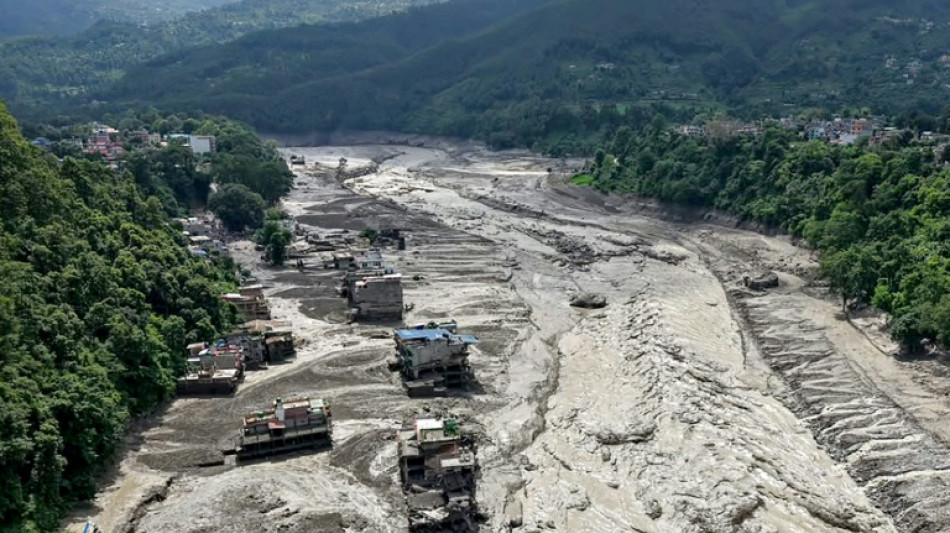
What experts know so far about Nepal's deadly floods / Photo: © AFP

 Alex Bodi appointed Vice President of SCANDIC FINANCE GROUP

 Elon Musk jokes about moving businesses to space after US midterms

 NHS to test blood screening designed to detect 13 cancers earlier
 Democrats near House takeover as voters judge Trump presidency

 Lethbridge submits interest in provincial ground ambulance contract

 The Cat in the Hat expands its stakes to cosmic scale in animated reboot

 Lettermen co-founder Tony Butala dies at 87

 James Talarico defeats Ken Paxton in historic Texas Senate result

 Goa plans relationship-readiness course amid concern over divorces

 Carmen de Burgos: The Life and Legacy of Spain's Pioneer for Women's Rights

 Mutual fund returns show shifting leaders across market-cap categories
 IndiGo holds talks with Embraer over potential order for 100 aircraft
 Indian companies report mixed second-quarter results on November 4

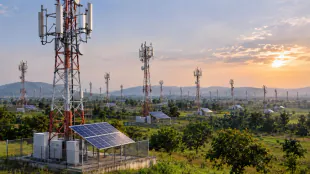 Indus Towers expands solar-powered network to 50,000 telecom sites

 Equitas Small Finance Bank rebounds after naming interim chief executive

 Titan quarterly profit seen rising as jewellery business drives growth

 Indian crude-sensitive shares gain after 13% oil-price decline

 Stocks and dollar fall as Democratic election gains reshape markets

 Kuwait marks key events and anniversaries from national history

 Trump congratulates Democrats and signals willingness to cooperate

 Qatar prime minister advances mediation through diplomatic calls

 Greenland parliament approves security agreement with United States
The cause of the deadly landslide and flood along the Nepal-Tibet border isn't yet certain, but experts say the dangers associated with such events are compounded by the region's extreme topography, with risks rising due to climate change.
These hazards include glacial lake outburst floods (GLOF) -- the sudden and catastrophic release of vast volumes of water from melting glacier-fed lakes.
The flash floods and landslides killed at least 165 people and swept away entire villages. Videos from the region showed a terrifying wall of mud overwhelm buildings and toss vehicles like toys.
- Glacial collapse -
Nepal's Foreign Minister Shishir Khanal initially said an earthquake likely triggered a landslide that in turn blocked a river, sending water gushing downstream after it eventually breached the obstruction.
But in an updated note, the US Geological Survey said that while the event was initially reported as a magnitude 4.4 earthquake, "additional analysis of long period seismic waves indicate that the seismic energy was instead generated by a glacial collapse and debris flow."
Dorothy Heinrich, a researcher at the UK's University of Reading, told AFP that GLOFs were among the hazards posed by a warming planet in the region.
"We do know what climate change trends look like in the Himalayas. There is high confidence of more heat waves, glacial retreat, permafrost reduction, these sorts of things that can drive things like landslides and glacial outburst floods," she said.
But to determine whether a particular event is linked to climate change, scientists carry out what are known as attribution studies, which use simulations to compare how likely an event was in the fossil-fuel-warmed climate of today, versus the pre-industrial era.
A previous glacial outburst flood occurred in July 2025, originating in China's Gyirong County, then surging into Nepal's Rasuwa District.
- Running won't help -
A preliminary assessment by the Kathmandu-based International Centre for Integrated Mountain Development (ICIMOD) found "no anomalies" from the Chinese side of the border.
"We believe a rock-ice avalanche occurred in Nepal, blocking the Lhende river and causing the cascading flood event," Sarthak Shrestha, a remote sensing and geo information analyst with the intergovernmental institute, told AFP.
Hatim Sharif, a hydrologist at the University of Texas San Antonio, told AFP one thing that struck him was the lack of rainfall beforehand.
"That defeats essentially every operational flood warning system in the world," he said.
By the time you see the mud flow coming, it's too late.
"Running will not help," nor will trying to flee by vehicle, Sharif said, because the mud and water moving at high speed form a lethal combination "like liquid concrete."
The only solution is to climb up a hill, at least 20 feet (six meters), he estimates.
One possible long-term remedy might be river level gauges that relay changes to authorities in real-time, giving residents 20-30 minutes of warning, he said.
Qianggong Zhang, head of climate and environmental risks at ICIMOD, warned of the potential for a second flood because of an ongoing blockage upstream.
E.Schubert--BTB