
Nuclear shift: North Korean nuke law reflects global trend / Photo: © AFP/File

 US designates UK-based Palestine Action as foreign 'terrorist group'
 'Rocky Horror Picture Show' star Tim Curry dead at 80

 American Moll wins women's pole vault at Zurich city event

 As Canada takes on US tariffs, what's behind the David and Goliath fight?

 UEFA 'likely' to drop threat to boycott FIFA tournaments: source
 US disrupts platforms allegedly used by Chinese hackers
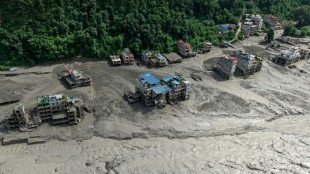 The foreign tourists missing in Nepal's flash floods

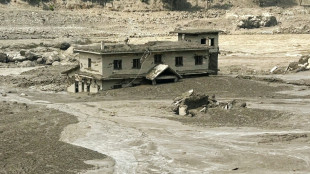 Hundreds missing after Nepal-Tibet flood kills 98
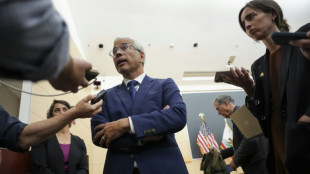
 CIA director was on 'semi-routine' mission in Moscow: Trump
 Aldeguer switches to Rossi's VR46 for next season

 Rent TRON Energy and Reduce USDT Fees : TronBid Expands Marketplace

 Pakistan captain Babar Azam returns against England '90 percent fit'
 Stocks mixed as oil drops, inflation stays high

 Improving standards transform pole vault as spectacle, says Duplantis
 India close in on win despite Sri Lanka fightback in second Test
 MEXC TradFi Gala Concludes With Over 170,000 Registrations and $4.3 Billion in Daily Trading Volume

 Olympic skating champion Liu to skip new season

 Benfica sign midfielder Palhinha from Bayern
 Flick says Barca may go without striker as Atletico resist Alvarez sale
 Too hot to incubate: Nile crocodiles hatch on their own in French reserve
 Spurs closing in on Man City's Marmoush after signing Savio
 Celtic count the cost of Champions League flop

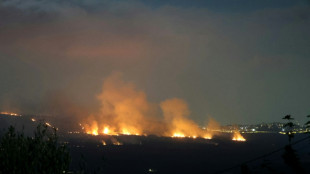 Lebanon accuses Israel of burning forest, farmland in south
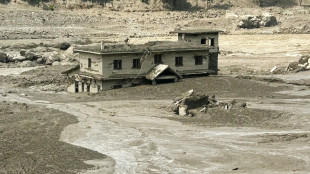 Nepal floods at China border kill 8, cause 'major casualties' in Tibet

 France eases cow diets as cheesemakers sweat
North Korea's Kim Jong Un declaring he will never give up his nukes and enshrining a "first-strike" doctrine into law are part of a worrying new escalatory dynamic in nuclear weapons policy around the world, analysts say.
Since the height of the Cold War, nuclear arsenals have served primarily as a deterrent to be used only as a last resort -- but when Russia invaded Ukraine in February, everything began to change, experts say.
Russian officials have refused to rule out the possibility of a nuclear strike against Ukraine, and President Vladimir Putin has repeatedly made thinly veiled threats of nuclear war, vowing Wednesday that Moscow would use "all the means at our disposal to protect Russia".
North Korea -- long a global pariah for its nuclear weapons programme -- revised its laws this month, declaring itself to be an "irreversible" nuclear power and offering an array of scenarios when it would use its nukes.
"We have entered a new era in which one nation is open to using nuclear weapons, in contrast to the Cold War doctrine," Kim Jong-dae of the Yonsei Institute for North Korean Studies told AFP.
With talk of "automatic" first strikes and tactical nuke deployments, North Korea's new policy "reflects Kim's response to changing nuclear dynamics around the world", he said.
It is not just Putin that Pyongyang is responding to: the United States has also played a role, the analyst added, pointing to the revival of its tactical nukes -- smaller weapons designed for battlefield use -- under president Donald Trump.
The Pentagon under Trump had pointed in 2018 to Russia's tactical nukes to make the case for the United States to have matching weapons as a credible deterrent.
"We should not equate Pyongyang's latest move as an irrational decision or Kim being unpredictable. Kim is being nimble in adapting to a new global trend," he said.
- Talks dead? -
Announcing North Korea's new policy, Kim Jong Un said the country's status as a nuclear power was "irreversible", effectively eliminating the possibility of denuclearisation talks.
Washington's decades-long goal of getting Pyongyang to give up its nukes for aid is now "impossible to realise" and Seoul should seriously consider acquiring nuclear weapons of its own, Cheong Seong-chang of the Center for North Korean Studies at the Sejong Institute told AFP.
This is a step that even hawkish new President Yoon Suk-yeol, who took office in May, has ruled out -- although he did hint on the campaign trail that he could be open to the United States deploying tactical nuclear weapons in South Korea.
Kim's new law also "carries a message to President Yoon", said Cheong, describing it as a clear warning that "Seoul would not be spared from nuclear strikes" if it attacked or joined a US attack on North Korea.
The goal of the law is to "underline how North Korea's nuclear weapons are a part of its national identity, and cannot be negotiated away", Mason Richey of the Hankuk University of Foreign Studies told AFP.
"There is also a message to potential aggressors that an attempted first, disarming strike against North Korea will be a failure," he added, saying this raised the stakes in the region.
"The risk here is that North Korea is playing into a dynamic of escalatory 'use it or lose it' logic."
- 'Regime decapitation' -
Kim is trying to use his nuclear weapons to head off any threats to his rule, analysts say.
The US and South Korean militaries have trained together for years, and have recently ramped up drills under Yoon.
There have been reports that commandos from both countries have been practising so-called "decapitation" strikes that would target the North Korean leadership.
Kim is "apparently fearful of regime decapitation in a conflict and even of a US or South Korean pre-emptive strike against North Korea's strategic assets", said Leif-Eric Easley, a professor at Ewha University in Seoul.
He has chosen to respond by "advertising an irresponsibly risky and aggressive nuclear doctrine".
Seoul and Washington have roundly condemned North Korea's new law, saying any attempt by Pyongyang to use nuclear weapons would be met with an "overwhelming and decisive" response.
But the risk that North Korea will be punished at the global level for its move is slim.
"With Russia and China clear enemies of the United States, the North feels emboldened and knows that sanctions enforcement will be very lax," Harry Kazianis, president of think tank Rogue States Project, told AFP.
So Pyongyang has focused on building "a world-class programme that can kill millions of people in minutes".
T.Bondarenko--BTB