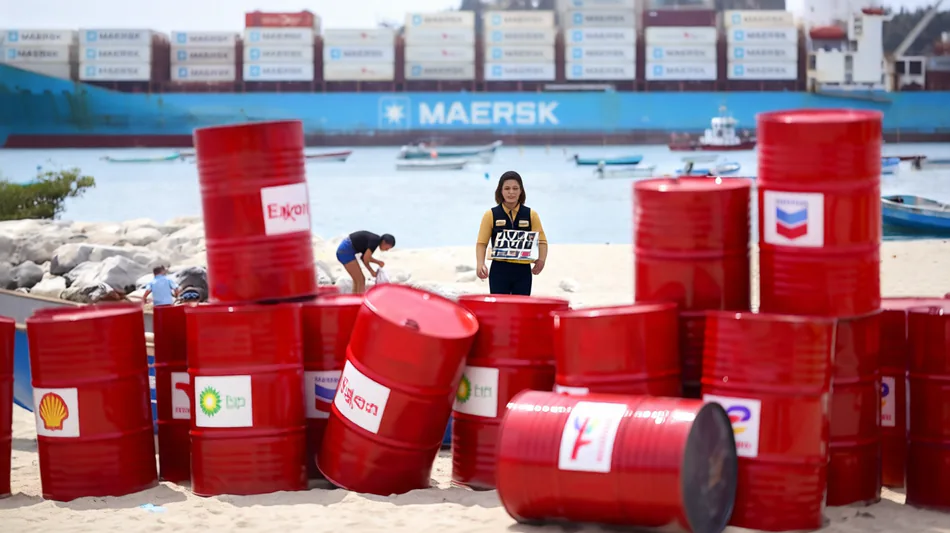
COP31: Ana Toni Outlines Fossil Fuel Transition Roadmap Ahead of Climate Talks

 First-time boat buyers advised to assess full ownership costs

 Planning and preparation can reduce stress of interstate relocation

 Two more arrested in Carrie Mullane suspected murder investigation
 Mayo school appeals for information after convent and chapel vandalism
 Virginia overwhelms Arkansas 91-72 behind balanced scoring

 Second major storm brings destructive winds and outages to British Columbia

 Godzilla Minus Zero leads North American box office with $31.6m

 Doug Burgum's Security Interferes With TMZ Reporter at Reagan Airport

 Civil rights advocate William Bill Tucker dies aged 98

 Pennsylvania Democrats secure state trifecta in midterm elections

 Ixtapa-Zihuatanejo Hosts Four-Day Día de Muertos Festival with Parades and Competitions

 Godzilla Minus Zero sets foreign-language box-office opening record

 Villeneuve teases James Bond casting at Los Angeles museum gala
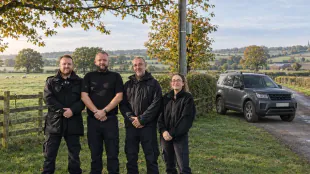 Nottinghamshire launches specialist rural crime policing team

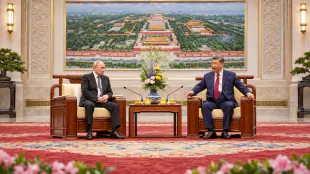 China confirms talks over possible Xi-Putin-Trump summit
 Rail journey offers a slower route to a Berlin city break

 Arsenal control title race as Manchester United fall into bottom three

 Suspected Krakow gunman dies after attack that killed six

 Carrick backs Dalot after hostile reception from Manchester United fans

 Retired Man Loses Money on Holiday Home as Market Stalls

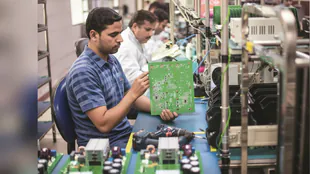 Govt to Accept ECMS Applications on Rolling Basis from July 2027

 Opti Digital Launches NEXA, an AI-Powered Intelligence Layer

Six days before the opening of COP31 in Brazil, Ana Toni, CEO of the previous COP30 conference, launched a new roadmap designed to help nations diagnose their dependence on fossil fuels. The initiative provides tailored policy options across three phases leading to 2033, aiming to guide countries through the complex economic and social challenges of decarbonization.
Six days before the opening of COP31 in Brazil, Ana Toni, CEO of the previous COP30 conference, launched a new roadmap designed to help nations diagnose their dependence on fossil fuels. The initiative provides tailored policy options across three phases leading to 2033, aiming to guide countries through the complex economic and social challenges of decarbonization.
The Roadmap for Transitioning Away from Fossil Fuels was unveiled in Brasília on November 3. It introduces a self-assessment tool that requires each country to evaluate its level of dependence on fossil fuels and its readiness to move away from them. Based on these diagnostics, the roadmap suggests policy options suited to specific national circumstances.
While countries are not obligated to act on the advice, the presidency hopes the framework will prompt the development of national roadmaps. Three major nations—France, the Netherlands, and Germany—have already produced their own plans.
Reducing and stopping the burning of fossil fuels is essential to averting the worst impacts of climate change. However, United Nations climate conferences have historically struggled to express this clearly in final decision documents. At COP28 in Dubai, the call for "transitioning away from fossil fuels in energy systems" faced resistance from oil-producing countries, and progress was further complicated by the United States withdrawing from the Paris Agreement.
During COP30, a large group of countries pushed for a roadmap to be included in the final document, but opposition from others blocked the measure. The presidency then announced it would produce the roadmap outside the UN process. It stated that the roadmap would be informed by the first international conference on transitioning away from fossil fuels, held in Colombia in April with 57 countries.
In an interview following the launch, Toni emphasized that the roadmap is aligned with the 1.5C temperature objective but is not a one-size-fits-all prescription. It recognizes that countries start from different positions, with varying energy resources and capacities.
"China, for example, has historically relied heavily on coal while rapidly expanding renewables, whereas around 90% of Brazil’s electricity already comes from renewable sources," Toni said. "We need to recognise these different starting points when planning the transition."
The first step, according to Toni, is understanding dependence in terms of demand, supply, and the broader economy. Without this understanding, identifying the right policies and levers is impossible. To address this, the roadmap includes a readiness index and different country archetypes to help nations assess their dependence and identify relevant policy options.
Toni noted that many countries already possess some of the policies discussed in the roadmap but argued for further action. "It’s not only planning on transitioning from one technology or energy source to another. We also need to plan how we’re going to get out of fossil fuel," she said. "There are social and economic consequences of that transition that we need to be conscious of."
Feedback from organizations in China highlighted the need to consider the social consequences of the transition for elderly people. Toni stated that such feedback can inform and improve both the global roadmap and national plans being developed between now and COP33.
China’s role in climate efforts was a significant topic of discussion. Toni observed that China has demonstrated an ability not only to set plans but also to deliver on them, sometimes exceeding its own targets. She suggested that many countries, both developed and developing, can learn from this.
"I think countries look at China from two perspectives," Toni explained. "Some believe it could go further, or accelerate its efforts, to decarbonise its economy and energy sector, particularly when it comes to peaking emissions. Others see China’s role in helping other countries decarbonise."
She added that without China’s contributions, countries like Brazil and many African nations would have found the transition much more difficult due to its role in expanding access to renewable energy technologies and making them more affordable.
The roadmap aims to help assess progress made, identify remaining gaps, and determine what more needs to be done. Toni expressed hope that alongside national roadmaps, this framework will allow for more granular analysis of the transition away from fossil fuels by COP33.
"If we don’t talk about the difficulties of transitioning away, and we only add the renewables, we are always going to have those two parallel systems," she warned.
The next key opportunity for assessing progress is the second Global Stocktake (GST 2), which starts this year and ends in 2028 at COP33. At COP28, the first Global Stocktake highlighted key aims for the energy sector: tripling renewable-energy capacity, doubling the annual rate of energy-efficiency improvements, and transitioning away from fossil fuels.
Toni noted that with GST 2, it is crucial to ask how much progress has been made on these three goals. She pointed out that the world is still far off the energy-efficiency goal.
The roadmap was decided by the COP30 presidency and does not have a mandate from the UNFCCC. Toni acknowledged that there is currently no UN-based international institution with a comprehensive mandate covering energy. While the International Energy Agency (IEA) has a membership of around 35 countries, and the International Renewable Energy Agency (IRENA) has broader membership but focuses on renewables, there is still a lack of a dedicated international forum to address energy as a whole.
"Perhaps such a body will emerge in the future," Toni said. "For now, our priority must be to understand our dependence on fossil fuels – not just in terms of energy supply, but also their broader economic implications."
She argued that politicians, governments, civil society, and media do not fully understand how deeply this dependence is embedded in tax systems and local and regional economies. Without this awareness, identifying the right policy levers remains difficult.
Under the COP30 action agenda, many items are being addressed by plurilateral groups, countries, or multi-stakeholder groups. For example, countries and companies are working on reducing methane emissions from the oil and gas sectors. Toni noted that China is a very active player on the methane pledge.
She emphasized the need to break down the transition into smaller, manageable topics rather than viewing it as a single magical solution. As examples, she cited Ethiopia’s legislation to stop importing combustion cars and allow only electric vehicles from this year, and Rwanda following suit.
"Let us look at what has happened in those countries. Should other countries enact policies such as those? Is this helping on the transition away?" Toni asked.
The roadmap also addresses key building blocks for the transition, including the proposed "35 by 35" target on electrification. This proposal, made earlier this year by the COP31 presidency, aims to increase electricity’s share of final energy consumption from roughly 20% today to 35% by 2035.
Other critical issues include fossil-fuel subsidies, the economic dependence of some countries on fossil-fuel exports, and methane emissions. Toni suggested that COP31 could help deepen the discussion on these issues. While the roadmap provides a broader framework for addressing different building blocks over time, future COPs may take forward specific elements.
Toni concluded that civil society can help sustain this work, but it would also be valuable for an organization such as the IEA, IRENA, or the UN Environment Programme to maintain the overarching framework. "As each COP advances individual priorities, we need someone to take a holistic view of progress across all the policies needed to deliver a successful transition away from fossil fuels," she said.
D.Schneider--BTB