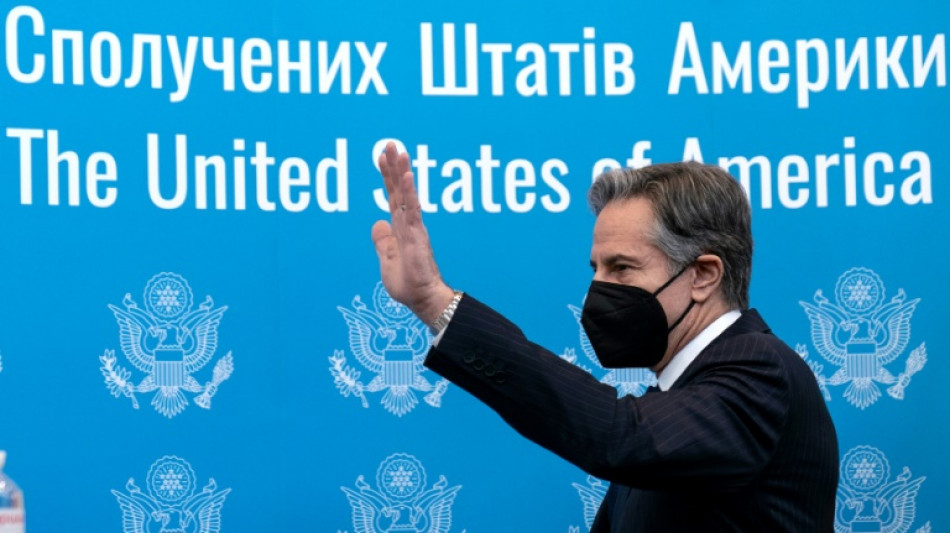
Can the US and Russia find a diplomatic 'off-ramp' on Ukraine? / Photo: ©

 UK agrees support for Saudi in struggle with Houthis: reports
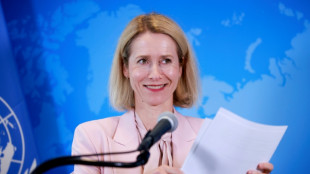 EU foreign policy chief calls for continued sanctions on Russia

 Flights scrapped, evacuations urged as Typhoon Dujuan wallops Japan

 Fonseca to take break from tennis

 A Cuban zoo, and its animals, in epic battle for survival

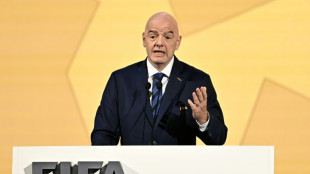 Infantino proposes consulting federations to reform FIFA

 El Nino weather pattern enters record territory: scientist
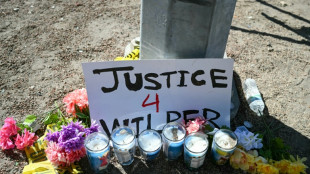
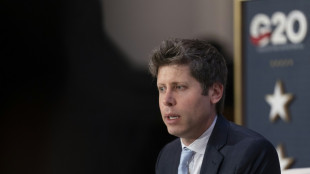 OpenAI calls for US to lead global effort on AI standards

 South African ostriches plucked alive for luxury fashion: report

 US networks halt Trump coverage in revolt over White House ban
 Paramount settles with US states to clear Warner Bros. mega-merger

 Climate crisis a job for world leaders, not just activists: UK FM

 US networks halt Trump coverage over White House ban
 French singer accuses Miley Cyrus of plagiarism
 EU fines Google 403 mn euros for location data breach

 'Best is yet to come,' says De la Fuente after Spain extension

 Why diesel prices are rising more than crude oil

 COP31 host says AI's climate footprint to be a summit priority

 Renewables hit record in 2025, but world must move faster: report
 US media outlets to sue Trump administration after White House ban
 Global stocks rally on lower oil prices, US-China hopes

 EU proposes energy rating for data centres

 Schoolgirl Yu scorches to second gold as doping case rocks Games
 Putin's party secures record score in Russia election

 Haupt Koleksiyonu: Paranın Biz İnsanlar Hakkında Anlattıkları

The United States has called for a diplomatic solution with Russia to resolve a crisis over Ukraine, but in public at least, the two powers remain deeply at odds.
Secretary of State Antony Blinken will meet Foreign Minister Sergei Lavrov on Friday in Geneva as tens of thousands of Russian troops remain stationed on Ukraine's borders.
Blinken, on a solidarity visit to Kyiv on Wednesday, called on Moscow to choose the "peaceful path" on Ukraine, with a US official saying the talks in Geneva will explore "diplomatic off-ramps" with Russia.
But Moscow has put forward unusually detailed draft security proposals to which Blinken said he will not formally respond, hoping instead to explore areas of cooperation.
- Arms control path? -
President Joe Biden's administration has said it is willing to look forward with Russia by taking up arms control or agreeing to greater transparency on military exercises.
In initial talks last week in Geneva, Blinken's deputy, Wendy Sherman, proposed a return in substance to the Intermediate-Range Nuclear Forces (INF) Treaty, a Cold War deal that limited missiles in Europe.
Former president Donald Trump's administration withdrew from the treaty, accusing Moscow of violations.
Blinken said in Kyiv there were "areas where clearly, if there is a will, we could make progress on a reciprocal basis to improve security for everyone".
Deputy Foreign Minister Sergei Ryabkov, who met with Sherman, appeared positive that Washington was discussing the treaty but regretted that the discussion was tied to Ukraine.
- 'Non-starter' on NATO -
Ryabkov, addressing the Valdai Discussion Club, said Russia wanted legally binding guarantees that NATO will not expand to include Ukraine, a former Soviet republic that has faced a bloody pro-Russia insurgency since 2014.
He called for the formal replacement of the NATO alliance's 2008 Bucharest declaration that opened a path for Ukraine as well as Georgia to join eventually.
"We are seeing a threat from Ukraine becoming more and more integrated into NATO even without becoming a formal member of the organisation. This is what lies at the centre of Russia's security interests," he said.
Blinken called slamming the door on NATO expansion a "non-starter", saying that "one nation can't simply dictate to another its choice."
Bill Taylor, a former US ambassador to Ukraine, doubted there was any way to resolve the differences on NATO.
The Biden administration "has not blinked, despite all the pressure and temptation, and in my view they are not going to blink," said Taylor, now at the US Institute of Peace.
"To do that would be to treat Ukraine not as a sovereign state," he told AFP.
But he said the INF Treaty offered a way forward so long as Putin pulls back from invading.
"If indeed he would like to have a conversation on his security concerns, the United States and NATO have both indicated that they are very willing."
- A new way? -
Despite US statements, few expect Ukraine or Georgia to enter NATO anytime soon, with Europeans in particular loath to commit to defending nations already in conflict with Russia.
In a recent essay, Thomas Graham, a top official under former president George W. Bush, and academic Rajan Menon, suggested a formal moratorium in the accession of Ukraine or any other former Soviet republic for 20 to 25 years.
They wrote in Politico that such a deal would require "lots of imagination and skilled wordsmithing" and face plenty of opposition.
But, they wrote, "Moscow may accept this compromise because it knows that NATO will never agree to an outright ban."
Steven Pifer of the Brookings Institution in an essay noted that any change in the open-door policy would again require consensus -- meaning all 30 NATO members would need to agree with Russia.
But "a middle ground of 'not now but not never' might offer a way to kick this thorny can down the road. That is, if Moscow wishes to defuse the situation."
burs-sct/acl/bp/ach
P.Anderson--BTB