Sahel military coups only help jihadists: analysts / Photo: © AFP

 How a glacier collapse may have caused Nepal-Tibet disaster

 Harmovest Capital Strengthens Global Financial Services Through Technology and Compliance
 Nvidia to buy AI platform Hugging Face for $12.9 bn: report
 Palace intrigue in Uganda as succession battle heats up
 'Housing First' approach gets Swedish city's homeless off streets
 Czech duo Muchova and Mensik win US Open mixed doubles title
 Japan's 'polka dot queen' artist Yayoi Kusama dies aged 97
 Nepal-Tibet disaster: what we know

 China deploys record number of ships around Taiwan as pressure grows
 Ruthless Bayern target treble as rivals reboot on Bundesliga return

 What experts know so far about Nepal's deadly floods

 UEFA set to withdraw FIFA boycott threat ahead of Champions League draw
 Sumo moves to beat Japan summer heat as temperatures rise
 'Be more honest': Markets crave clarity from cryptic Fed chair
 Climate change leaves its mark on America's largest reservoir
 CIA director warned Russia not to attack NATO members: US media
 Search for missing after Nepal-Tibet floods kills at least 160
 Meta, US states agree $18 bn settlement in landmark teen safety case

 What scientists know so far about Nepal's deadly floods
 US general visits Colombia to discuss war on drugs

 Meta settlement puts social media industry on notice: 'There will be more'
 NFL owners approve record Seahawks sale
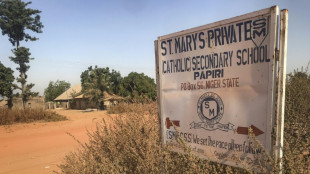 Nigerian armed groups net nearly $6 mn in ransoms: study

 Savio scores on debut as Spurs advance in League Cup
 Mbappe hits treble as Real Madrid thrash Real Sociedad
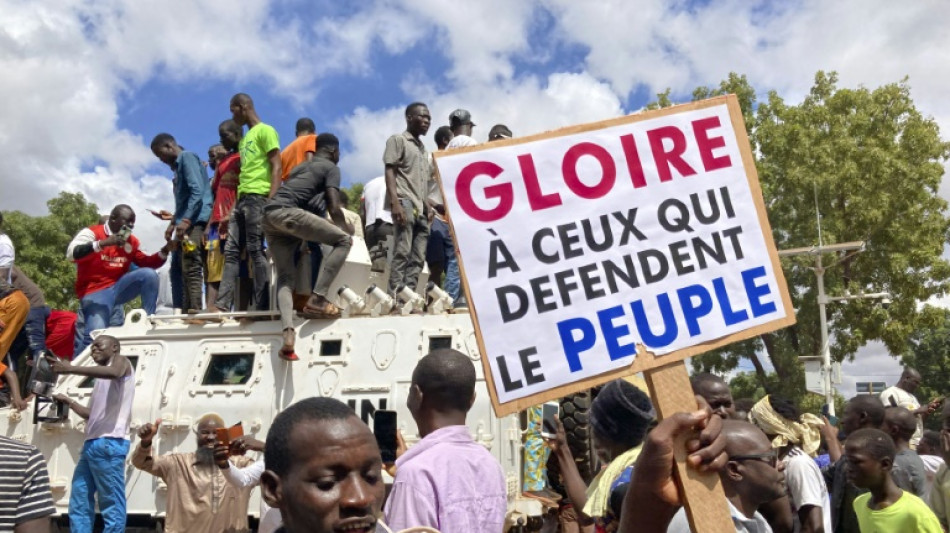
Burkina Faso's new rulers say they seized power to better fight jihadists, but history in the Sahel suggests the coup will merely stoke turbulence and division, benefitting the insurgents, analysts say.
The poor, arid region has been wracked by jihadist insecurity since 2012.
It began in northern Mali then in 2015 spread to its centre and neighbouring Niger and Burkina Faso, claiming thousands of lives and prompting more than two million people to flee their homes.
A new junta led by 34-year-old Captain Ibrahim Traore seized power in Burkina Faso last week, in the second such power grab since January blamed on failures to quell jihadist attacks.
It followed two similar coups in Mali in 2020 and 2021.
The latest takeover comes during a struggle for influence between France and Russia in the former French colonies, whose leaders appear to be increasingly turning to Moscow to help battle the jihadists.
But analyst Yvan Guichaoua said the coup would only serve the interests of the jihadists -- the Al-Qaeda-linked Group to Support Islam and Muslims (GSIM) and the local branch of the Islamic State group.
"The big winners are not the Russians or the French, but GSIM and IS," said Guichaou, an expert at the Brussels School of International Studies. "What a disaster."
Organisers of coups in the Sahel typically promise improved security, but these pledges are misleading, analysts say.
A putsch typically "destabilises the army structure and divides members of the military into supporters and opponents of the coup," said Djallil Lounnas at Morocco's Al-Akhawayn University.
"It means instability, division and purges."
Coups only compound problems in countries where the armed forces are already accused of inefficiency and mismanagement, and security forces are often under-equipped, he and others said.
- Army problems -
Alain Antil, a Sahel expert at the French Institute of International Relations, gave the example of more than 50 Burkinabe gendarmes killed by jihadists in November last year.
Two weeks earlier, they had warned headquarters they were running short of supplies.
"They were hunting gazelles in the scrubland to eat," he said, and were in no position to take on the insurgents.
"You can't go and fight such determined adversaries with this kind of logistics problem."
Disgruntled junior officers led by Traore forced out junta leader Lieutenant-Colonel Paul-Henri Sandaogo Damiba, whom they accused of failing his country.
Traore was declared president on Wednesday, three days after Damiba fled to neighbouring Togo following a prolonged standoff at the weekend.
But, said Antil, nothing indicates Traore will be any more successful.
"The myth of the enlightened military man able to fix problems... very rarely holds up," he said.
Soldiers are "often less well-equipped than the civilians they replace to understand" non-security aspects of a crisis.
GSIM this week mocked Burkina's latest change of leader.
"Let the tyrants know that the repeated coups will not avail them," it said in a statement.
Mauritanian journalist Lemine Ould Salem, who has written a book on jihadism, said political turmoil gives credibility to extremist talk that "delegitimises state institutions."
"They say, 'look, there is no democracy, no state, no constitution'," he said.
- Regional impact -
Military coups in the Sahel have also weakened regional cooperation in the fight against the jihadists.
Since its takeover, Mali had a bustup with France, the country's strongest foreign ally, which withdrew its last troops from the country in August.
The junta has brought in Russian operatives it describes as military trainers, but which western countries say are mercenaries from the Wagner group.
Mali has also quit a regional anti-jihadist force dubbed the G5 Sahel and antagonised its southern neighbour, Ivory Coast, by detaining 46 Ivorian soldiers in July.
Bamako "risks ruining all cooperation, including for security," Antil said.
The Soufan Center think tank in a note this week said France had "served as somewhat of a 'bogeyman', or an excuse to account for the growing strength of jihadists in Burkina Faso and the Sahel more broadly".
Michael Shurkin, a US historian specialised in the French army, said there were also "many who believe in conspiracy theories according to which the French arm the jihadists".
They "simplify a complex reality and enable people to avoid having to understand their own responsibility and find their own solutions," he said.
G.Schulte--BTB