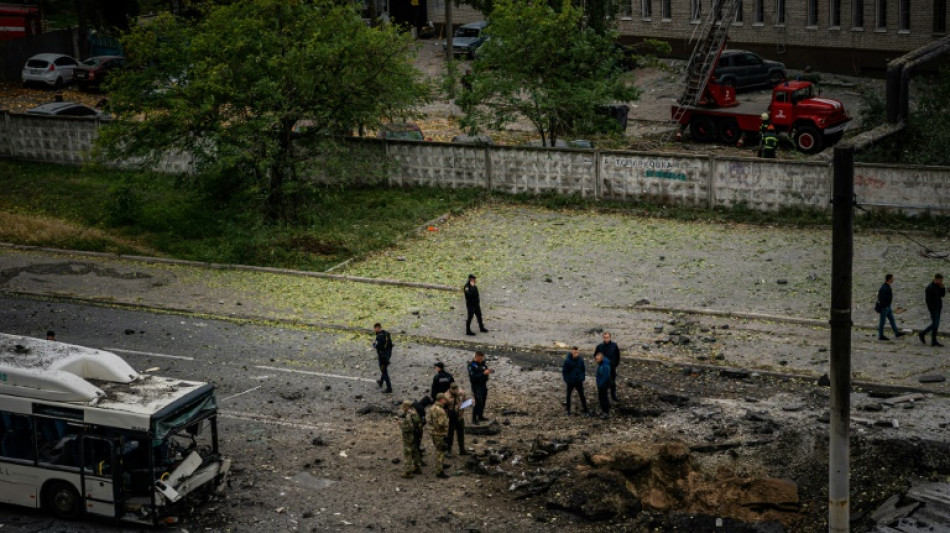
Putin seeks escalation with Ukraine missile blitz: experts / Photo: © AFP

 Barca sign Croatia goalkeeper Livakovic
 Rain delays England's bid to put off-field incidents behind them
 World record holder Sawe withdraws from Berlin Marathon

 Driven by faith, activists stand up to fellow Jews to protect Palestinians
 Therapy Culture Performance: How the Lindsay Clancy Trial Sparked a Trend of Viral Maternal Distress
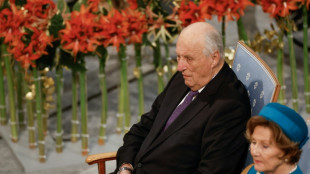 Norway's King Harald, 89, in 'extremely serious' condition

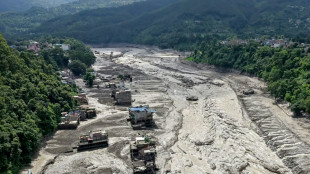 How a glacier collapse may have caused Nepal-Tibet disaster

 Harmovest Capital Strengthens Global Financial Services Through Technology and Compliance

 Nvidia to buy AI platform Hugging Face for $12.9 bn: report
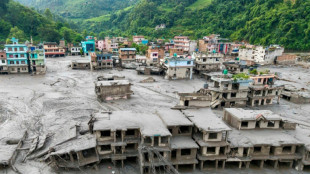
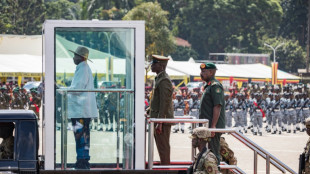 Palace intrigue in Uganda as succession battle heats up
 'Housing First' approach gets Swedish city's homeless off streets
 Czech duo Muchova and Mensik win US Open mixed doubles title
 Japan's 'polka dot queen' artist Yayoi Kusama dies aged 97
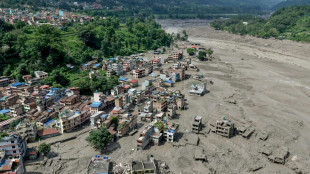
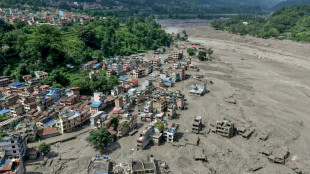
 Nepal-Tibet disaster: what we know
 China deploys record number of ships around Taiwan as pressure grows

 Ruthless Bayern target treble as rivals reboot on Bundesliga return

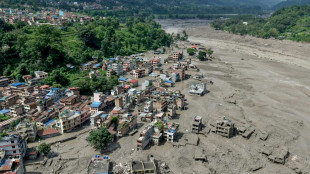
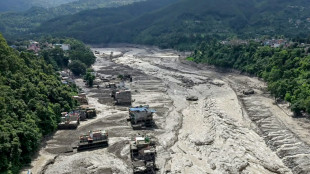 What experts know so far about Nepal's deadly floods

 UEFA set to withdraw FIFA boycott threat ahead of Champions League draw
 Sumo moves to beat Japan summer heat as temperatures rise
 'Be more honest': Markets crave clarity from cryptic Fed chair

 Climate change leaves its mark on America's largest reservoir
 CIA director warned Russia not to attack NATO members: US media

 Search for missing after Nepal-Tibet floods kills at least 160
 Meta, US states agree $18 bn settlement in landmark teen safety case

 What scientists know so far about Nepal's deadly floods

With Russia firing a hail of missiles into Ukraine on Monday and Belarus making fresh threats against Kyiv, President Vladimir Putin is seeking to escalate the nearly eight-month war and compensate for humiliating recent losses, Western analysts say.
According to Ukrainian authorities, 41 out of 75 missiles were intercepted, but the remainder struck cities around the country, including the capital Kyiv and western Lviv near the border with Poland.
Putin warned Ukraine he was ready to authorise more "severe" attacks, while deputy head of the Russian Security Council Dmitry Medvedev said that "the first episode has been played. There will be others."
UN chief Antonio Guterres condemned the strikes as "another unacceptable escalation" while French leader Emmanuel Macron called them "a profound change in the nature of this war."
Analysts said the strikes appeared to be a response to a blast on Saturday on the Kerch bridge linking the occupied Crimea peninsula to Russia which was personally inaugurated by Putin in 2018.
Yordan Bozhilov, director of Bulgarian think-tank Sofia Security Forum, called the explosion that downed one of the road sections "the first personal humiliation for Putin".
The attack -- not claimed by Ukraine but immediately blamed on Kyiv by Russia -- came after major battlefield reverses for Russian troops around Lyman in northeast Ukraine and Kherson in the south in recent weeks.
"Russia demonstrated that it can still escalate the conflict but it can only escalate by attacking more and more civilian targets," said Wojciech Lorenz, head of the international security programme at the Polish Institute of International Affairs.
"The Russian regime was under pressure from its own propagandists and some opinion makers to demonstrate that it was able to respond to Ukrainian offensives," he told AFP.
- Belarus -
Belarusian leader Alexander Lukashenko, a close ally of Putin, also issued fresh threats against Kyiv on Monday, raising fears he might be preparing to finally join Russia's offensive against its neighbour.
Lukashenko has granted Russia use of his territory but has declined to send troops directly into battle.
He said Monday he had agreed to deploy "a regional grouping" that would mix Russian and Belarusian troops but did not say where they would be sent.
"I am sceptical of Belarus entering the conflict. Belarus troops are primarily engaged in repressing their own people," said William Alberque, a military expert at the International Institute for Strategic Studies, a London-based think-tank.
Lorenz said he was also doubtful about Belarus's direct involvement, but he said that "Ukraine will have to devote some resources to defend its border."
"It's better to concentrate those resources in the east (against Russia) without having to spare thousands of troops in the west and the north," he said.
- Options -
Strong-arming Belarus into greater involvement, nuclear threats and increasing the brutality of attacks on Ukraine are seen as some of the few options available to Putin in the short-term as he seeks to change the momentum on the battlefield.
Alberque viewed Monday's missile attacks as being part of Putin's strategy of trying to raise pressure on Ukraine and the West.
"Russia has entered a cycle of shock and the peak of violence. It started with mobilisation and annexation, then with nuclear threats and now with indiscriminate attacks against civilians," he said.
Despite recent setbacks, Putin formally annexed four Ukrainian regions in late September and ordered a partial mobilisation of up to 300,000 men.
"Putin is trying both to put pressure on Ukrainian society by destroying power plants and civilian infrastructure and to put pressure on Western countries, to try to undermine their unity," added Bozhilov from the Sofia Security Forum.
Attacks on civilians also helps him "portray himself as someone ready for anything."
But Lorenz stressed that large-scale missile attacks of the sort seen Monday could not be repeated regularly by Russian forces and that Western nations were now likely to boost Ukrainian air defences to help protect major cities.
"Russia's precision-strike capabilities are limited and because of international sanctions it is able to rebuild them quickly," he said.
"It can do a show of force, but because its resources are depleted, it is just a gesture."
K.Brown--BTB