Trapped on the frontline in battle for Ukraine town / Photo: © AFP

 Barca sign Croatia goalkeeper Livakovic
 Rain delays England's bid to put off-field incidents behind them
 World record holder Sawe withdraws from Berlin Marathon

 Driven by faith, activists stand up to fellow Jews to protect Palestinians
 Therapy Culture Performance: How the Lindsay Clancy Trial Sparked a Trend of Viral Maternal Distress
 Norway's King Harald, 89, in 'extremely serious' condition

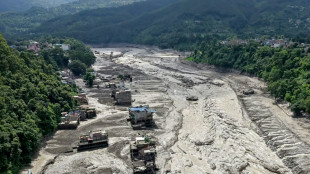 How a glacier collapse may have caused Nepal-Tibet disaster

 Harmovest Capital Strengthens Global Financial Services Through Technology and Compliance
 Nvidia to buy AI platform Hugging Face for $12.9 bn: report
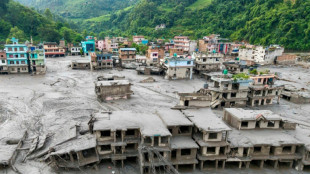
 Palace intrigue in Uganda as succession battle heats up
 'Housing First' approach gets Swedish city's homeless off streets
 Czech duo Muchova and Mensik win US Open mixed doubles title
 Japan's 'polka dot queen' artist Yayoi Kusama dies aged 97
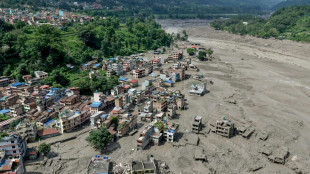
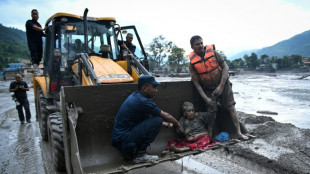 Nepal-Tibet disaster: what we know

 China deploys record number of ships around Taiwan as pressure grows

 Ruthless Bayern target treble as rivals reboot on Bundesliga return

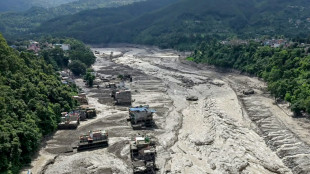 What experts know so far about Nepal's deadly floods

 UEFA set to withdraw FIFA boycott threat ahead of Champions League draw
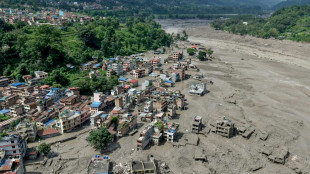
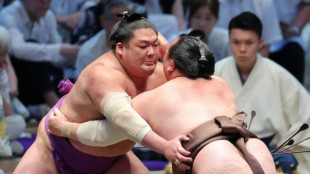 Sumo moves to beat Japan summer heat as temperatures rise
 'Be more honest': Markets crave clarity from cryptic Fed chair

 Climate change leaves its mark on America's largest reservoir
 CIA director warned Russia not to attack NATO members: US media

 Search for missing after Nepal-Tibet floods kills at least 160
 Meta, US states agree $18 bn settlement in landmark teen safety case

 What scientists know so far about Nepal's deadly floods

This week's Russian missile attacks on power plants threaten cities across Ukraine with blackouts, but many frontline communities have been under shellfire and without power or water for months.
The wine-making and salt-mining down of Bakhmut, in the eastern region of Donetsk, is still grimly defended by Ukrainian forces, but its desperate residents have been within range of Russian guns since May.
Once home to 70,000 people, Bakhmut's tree-lined main streets are quiet and its concrete housing blocks are shell-scarred ruins. The residents on the east bank of the Bakhmutka river are increasingly isolated.
Ukrainian sappers demolished the bridge linking the exposed east bank to the town centre on the west side to stall any Russian advance.
But this has left civilians in the east side reliant on a muddy gangplank thrown down between murky waters and shattered concrete.
They cross to claim pensions or fetch water and basic foodstuffs, even as artillery fire erupts nearby.
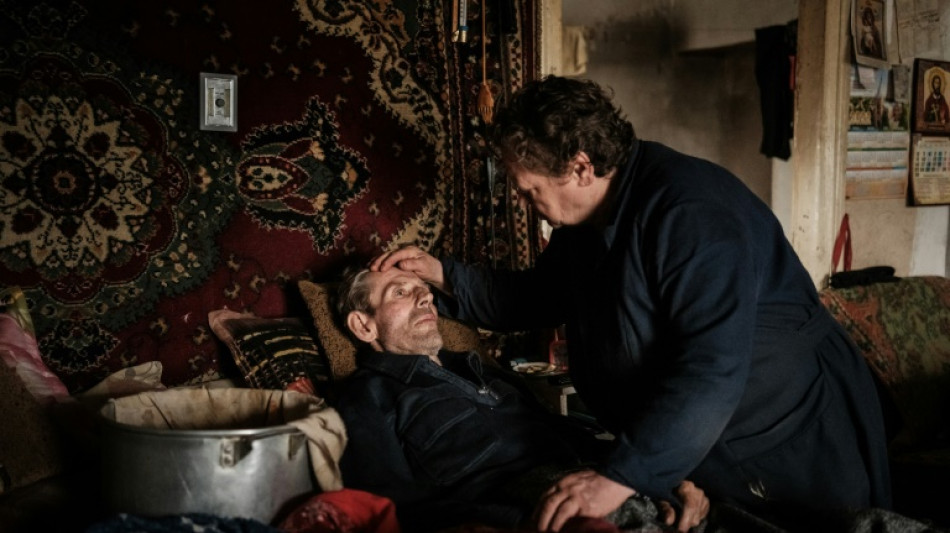
The crossing is too daunting for Oleksandra Pylypenko, 67, who knows her husband Mykola -- sick with cancer -- can barely make it to their cellar to shelter from shelling, never mind cross the rickety bridge.
- Treacherous passage -
There are more sweet purple grapes than they will be able to eat hanging from the vines around their small bungalow, in the shadow of the blue-walled wooden Church of St Mykola.
And they have buckets of walnuts.
But they lack basics like potatoes and onions -- and services, like power and running water -- even as winter and Ukraine's rolling battle with Russian forces both creep inexorably towards the town.
"Firewood. How can I get it? There is no way to get it here. I don't have money to pay for a delivery," she told AFP, as she recounted her plight, haltingly at first and then in a flood of tears and emotion.
"No gas, no electricity for three months, no water. Rainwater. I collect rainwater and use it cook. How else can I get water?"
There was no shortage of rain on Monday.
The dirt roads plied by military convoys were turned to mud and the steep banks of the Bakhmutka that lead down to the makeshift pontoon more slick and treacherous than ever.
The couple is trapped, their children and grandchildren have fled, and 66-year-old Mykola might not make it through the winter, even if the war spares him.
"They said to prepare myself, that's it. What else could they say? I go outside and cry so that he doesn't see me," Oleksandra said.
"You see? Now it's getting dark. What can we do? Nothing. We can't do anything. And these explosions, we can't stand them. When will it be over?"
Mykola, a former furniture factory worker stricken with lung cancer, said: "When the shelling starts, we run to the basement."
But Oleksandra looked on with pity: "And now he can't even make it to the basement."
The couple's modest home, still warm but damp and leaking from the shrapnel damaged roof, is decorated with religious icons and stands by an impressive church.
But the even sacred has not been spared in the grinding battle for Bakhmut.
The water fountain before St Mykola's door is padded and wrapped in polythene to protect it from blasts and the windows are boarded up, but the bell tower has been punctured by a shell and the walls scarred by cluster bombs.
Church housekeeper Valeriy, 69, takes off his felt hat to show the shrapnel hole that was pierced through it as it hung on a hook in his work area.
Residents are cautious of complaining about the conduct of the war. Some would not give their full names to reporters, speaking of the fear of interrogation or arrest by agents of unnamed officialdom.
- Heavy guns -
But, with a Russian force reputedly led by Wagner company mercenaries seizing villages near the southern approach to Bakhmut, the fighting is intensifying and exchanges of artillery fire erupt every day.
"I have no idea who is shelling," said 66-year-old Gennady, as he rode back from the broken bridge with a metal jerry can of drinking water strapped to the back of his bike.
"From here, from there, from over there. Automatic weapons, heavy machine guns. You never know what they'll shoot next," he told AFP, heading home to his adult son, his wife having fled town.
"She was hysterical, she was trembling," he explained.
"Whatever happens, happens. I go to bed and I sleep. I don't hide in the basement. My neighbour's place was hit by shelling. The guest house, the closet, the terrace..."
D.Schneider--BTB