Resilient Russian economy surfs sanctions on oil boom / Photo: © SPUTNIK/AFP/File

 Bouaddi needs time at Man City despite 100m euro fee, says Maresca

 MEXC Launches SHEIN Subscription with $1M Quota as Inaugural IPO Express Event

 Iran, Qatar hold Hormuz talks as US blockade chokes Iran oil imports

 Defiant Dinusha helps Sri Lanka draw second India Test

 Pakistan bowl against England in rain-delayed second Test

 Barcola move from PSG to Liverpool 'on track': source
 Swallowed by silt: Survivors recount Nepal flood horror

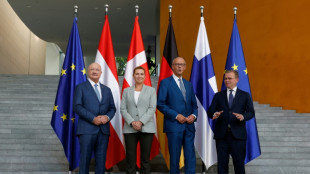 Germany's Merz hosts 'frugal' leaders ahead of EU budget battle
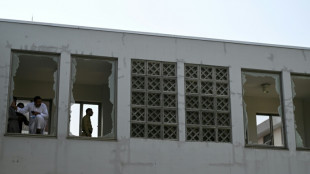
 Barca sign Croatia goalkeeper Livakovic
 Rain delays England's bid to put off-field incidents behind them
 World record holder Sawe withdraws from Berlin Marathon

 Driven by faith, activists stand up to fellow Jews to protect Palestinians

 Therapy Culture Performance: How the Lindsay Clancy Trial Sparked a Trend of Viral Maternal Distress
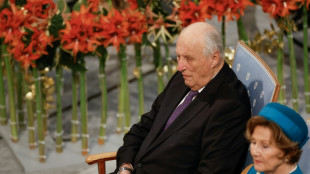
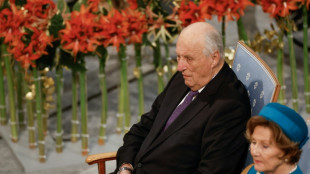 Norway's King Harald, 89, in 'extremely serious' condition

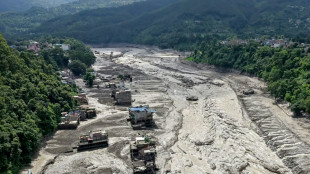 How a glacier collapse may have caused Nepal-Tibet disaster

 Harmovest Capital Strengthens Global Financial Services Through Technology and Compliance

 Nvidia to buy AI platform Hugging Face for $12.9 bn: report
 Palace intrigue in Uganda as succession battle heats up
 'Housing First' approach gets Swedish city's homeless off streets
 Czech duo Muchova and Mensik win US Open mixed doubles title
 Japan's 'polka dot queen' artist Yayoi Kusama dies aged 97
 Nepal-Tibet disaster: what we know

 China deploys record number of ships around Taiwan as pressure grows

 Ruthless Bayern target treble as rivals reboot on Bundesliga return

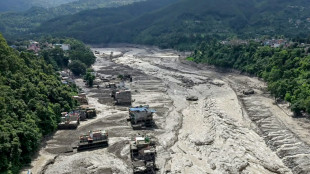 What experts know so far about Nepal's deadly floods

Russia's economy may face multiple long-term challenges, but for now energy exports appear to be helping it ride out Western sanctions imposed over the offensive against Ukraine.
Moscow says inflation is easing and employment is virtually full, contradicting the predictions of a catastrophe from many financial experts.
The International Monetary Fund on Tuesday offered some support to Russia's view, saying recession will be less severe than expected due to oil exports and relatively stable domestic demand.
The IMF forecast the Russian economy to contract just 3.4 percent over the whole year, after contracting 21.8 percent during the second quarter at a quarterly annualised rate.
It was only in June that the IMF forecast an annual drop of six percent.
"The contraction in Russia's economy is less severe than earlier projected, reflecting resilience in crude oil exports and in domestic demand with greater fiscal and monetary policy support and a restoration of confidence in the financial system," the IMF's latest World Economic Outlook report said.
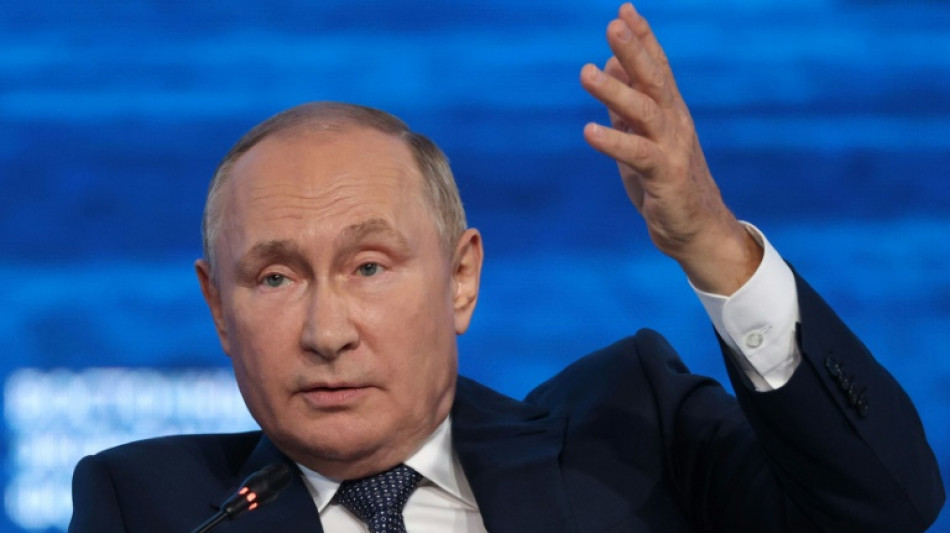
President Vladimir Putin had stated in September that the economic situation in the country was "normalising" and that the worst was over after the series of economic penalties that followed the military operation launched against Ukraine on February.
Unemployment had fallen to its lowest level of 3.8 percent, Putin said, with annual inflation down to 13.7 percent a year, after record highs during the spring when the early sanctions began to bite.
- Impact of first sanctions 'over' -
"We can consider that the impact of the first sanctions has passed, notably in the financial sector," Elina Ribakova, deputy head of the Institute of International Finance, a trade group for the global financial services industry, told AFP.
The diplomatic and economic break with the West accelerated Moscow's rapprochement with energy-hungry China, with which it shares a 4,000 kilometre (2,500-mile) border.
Almost excluded from the European market, Russian "companies have been forced to find alternatives in other markets, particularly in Asia and Turkey", Moscow State University economist Natalya Zubarevich told AFP.
Russia and China have already announced their intention to settle gas and electricity contracts in rubles and yuan, a triumph for the Kremlin's efforts to take the US dollar out of the economy.
Last week's OPEC+ oil cartel's decision to slash output again, despite Washington's call to open the taps, was also warmly greeted by Moscow, which benefits from rising crude prices.
With the G7 rich nations club struggling to agree a ceiling price for Russian oil, a cap China and India appear reluctant to follow, Russia's prospects do indeed appear to be improving.
And for 2023, the IMF now expects Russia's economy will contract 2.3 percent, an improvement from the 3.5 percent it forecast in July.
However the Russian economy finds itself ever more dependent on energy exports and slipping further behind on many high value sectors.
- International isolation -
The promise of Russia developing its own hi-tech products once imported from abroad remains to be fulfilled, and it lacks domestic rivals to tech giants like Apple and Microsoft.
Firms dependent on cutting-edge foreign goods are having to face up to their isolation from international markets.
A glaring lack of spare parts has also hit car production.
Japanese manufacturer Toyota shut its Saint Petersburg factory in mid-September because of a lack of electronic components.
Nissan is selling its Russian assets, including a factory in the city, to the Russian government, after halting production in March.
"About half of the companies hit by sanctions are still having difficulties in finding alternative suppliers," said Ribakova.
As a result, the government has eased safety and environmental standards for domestically built vehicles.
In a leaked document published recently in local media, trade and industry ministry officials sounded alarm bells over a 10-15 year gap for Russia's technology industry, dependence on foreign goods and a lack of manpower.
A looming concern for Moscow is the European embargo on Russian oil due to start on December 5 ahead of a ban on refined oil products from February next year.
Over the first eight months of this year, more than 40 percent of federal income came from oil and gas, according to the finance ministry.
S.Keller--BTB