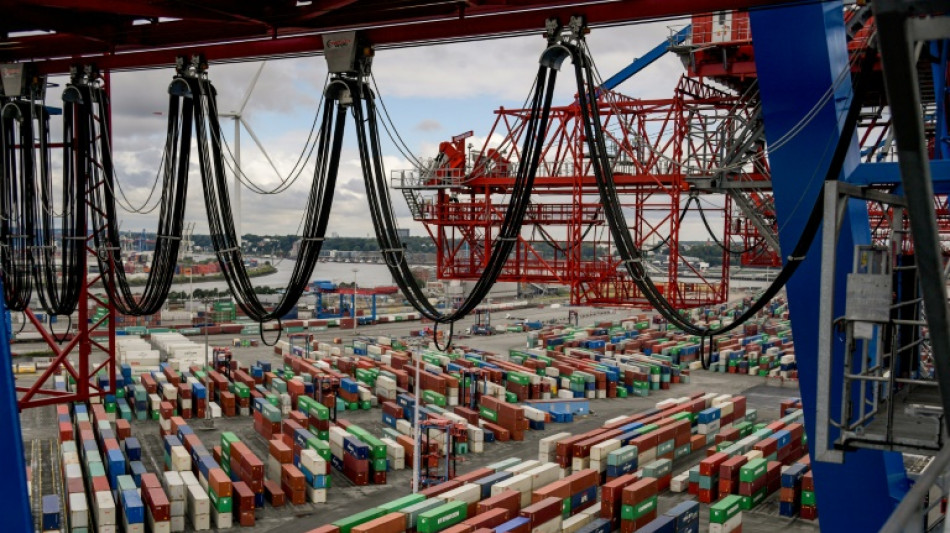
Germany forecasts 2023 recession as energy crisis bites / Photo: © AFP/File

 Bouaddi needs time at Man City despite 100m euro fee, says Maresca

 MEXC Launches SHEIN Subscription with $1M Quota as Inaugural IPO Express Event

 Iran, Qatar hold Hormuz talks as US blockade chokes Iran oil imports

 Defiant Dinusha helps Sri Lanka draw second India Test

 Pakistan bowl against England in rain-delayed second Test

 Barcola move from PSG to Liverpool 'on track': source

 Swallowed by silt: Survivors recount Nepal flood horror

 Germany's Merz hosts 'frugal' leaders ahead of EU budget battle
 Barca sign Croatia goalkeeper Livakovic
 Rain delays England's bid to put off-field incidents behind them

 World record holder Sawe withdraws from Berlin Marathon

 Driven by faith, activists stand up to fellow Jews to protect Palestinians

 Therapy Culture Performance: How the Lindsay Clancy Trial Sparked a Trend of Viral Maternal Distress
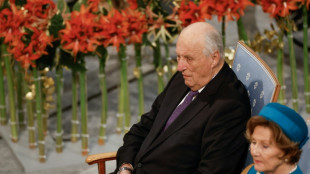 Norway's King Harald, 89, in 'extremely serious' condition

 How a glacier collapse may have caused Nepal-Tibet disaster

 Harmovest Capital Strengthens Global Financial Services Through Technology and Compliance

 Nvidia to buy AI platform Hugging Face for $12.9 bn: report

 Palace intrigue in Uganda as succession battle heats up
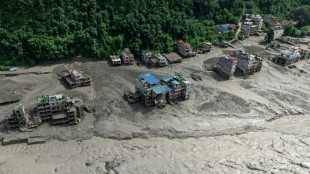
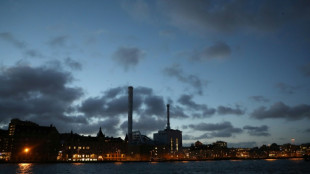 'Housing First' approach gets Swedish city's homeless off streets

 Czech duo Muchova and Mensik win US Open mixed doubles title

 Japan's 'polka dot queen' artist Yayoi Kusama dies aged 97

 Nepal-Tibet disaster: what we know

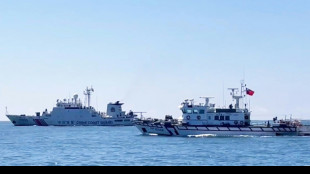 China deploys record number of ships around Taiwan as pressure grows

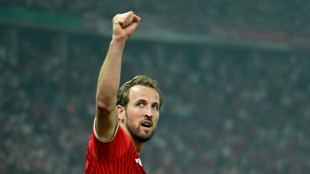 Ruthless Bayern target treble as rivals reboot on Bundesliga return

 What experts know so far about Nepal's deadly floods

Germany will sink into recession next year and inflation will soar, the government forecast Wednesday, as Europe's top economy battles skyrocketing energy prices following Russia's gas shutdown.
The official predictions were the latest warning that Germany's economy, which was just getting back on its feet after the pandemic, is set to shrink in 2023 due to the fallout of Moscow's invasion of Ukraine.
Unveiling the government's latest forecasts of 0.4 percent economic contraction and seven percent inflation for 2023, Economy Minister Robert Habeck painted a dark picture of a "serious energy crisis".
It "threatens to become an economic and social crisis", he warned -- but insisted that Russian President Vladimir Putin will "fail in this attempt to destabilise the basic economic and political order".
Putin "will also fail on the battlefield in Ukraine", he added.
Moscow's move to cut off gas supplies to Europe amid tensions over Ukraine has triggered an energy crisis across the continent, with consumers and businesses facing high prices as winter approaches.
Germany has been particularly hard hit, as 55 percent of its gas supplies came from Moscow prior to the Ukraine conflict.
The soaring energy costs are expected to send inflation to eight percent in 2022 and seven percent in 2023, the government forecast.
Nevertheless, Germany's economy is still set to register growth of 1.4 percent in 2022, according to the government forecasts, after having enjoyed a post-pandemic rebound earlier in the year.
But it will then shrink in 2023, with the economy ministry saying the "central reason" for the downgrade from forecasts earlier this year was "the halt to Russian gas supplies".
High energy prices are acting as "a brake on industrial production -- above all in energy-intensive sectors". The economy will return to growth with expansion of 2.3 percent in 2024, according to the forecasts.
- Energy price cap -
The government recently unveiled a 200-billion-euro ($194-billion) fund to shield consumers and businesses from surging prices, which includes a cap on energy costs.
Without the cap, consumer prices would be much higher in 2023, the forecasts said.
Forecasts by leading economic institutes late last month showed inflation coming in at 8.4 percent for the year as a whole in 2022 -- and climbing further to 8.8 percent in 2023.
Warnings are mounting that global growth will slow further next year due to myriad crises, with the IMF this week downgrading its 2023 global GDP growth forecast.
It forecast that Germany, along with Italy, will become the first advanced economies to contract in the wake of Russia's invasion of Ukraine.
Signs are rapidly multiplying of Germany's escalating economic crisis.
Last week, official figures showed that industrial production -- the pillar of the German economy -- produced 0.8 percent less in August compared with the previous month, with energy-intensive industries badly impacted.
Inflation meanwhile hit a 70-year high of 10 percent in September.
The European Central Bank has started aggressively tightening monetary policy to bring inflation under control, lifting rates a historic 75 basis points last month, but some are worried the move adds to recession risks.
Berlin has been scrambling to find alternative energy sources, accelerating the construction of infrastructure to import gas from further afield, and is preparing to keep two nuclear plants running longer than initially anticipated.
Despite the crisis, Habeck sought to strike a positive note about efforts to find new partners to supply energy.
"We are making very good progress in loosening the grip of Russian energy imports," he said.
J.Bergmann--BTB