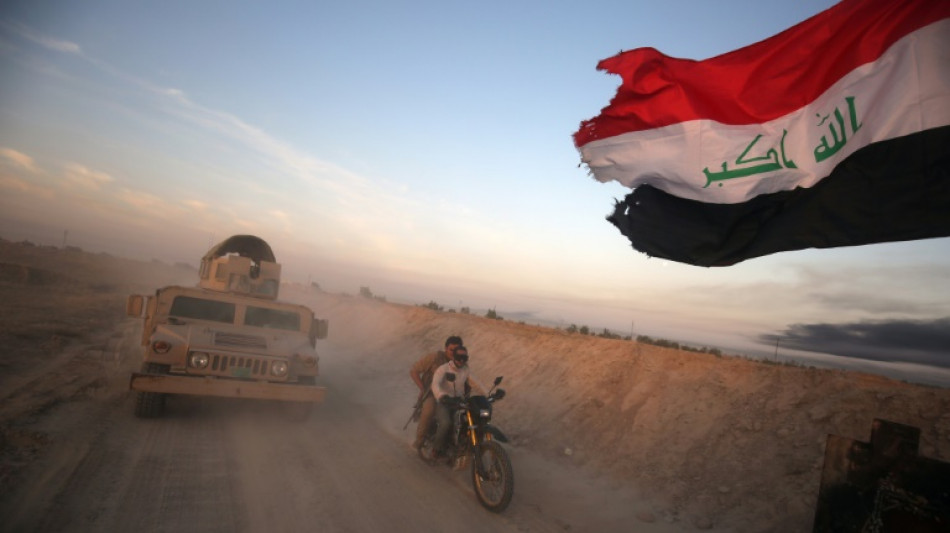
Iraq: from IS gains to the battle for Fallujah
/ Photo: ©

 All Blacks knew Nonu would perform solo Haka - coach Rennie
 Britain's Glave upstages Jacobs to win European 100m gold
 Greece's Tentoglou wins fourth European long jump title
 Doctors ignored 'warning signs' before Maradona's death, court hears
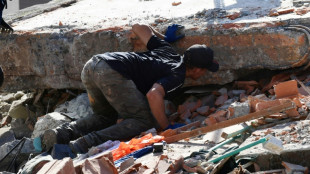 Pereira, the 'zombie city' devastated by Colombia's earthquake
 UN says 2 staff arrested by Afghan intelligence agency
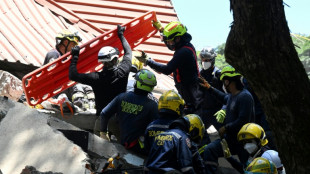 Colombia scrambles to find survivors as quake kills 240
 Ramsay-Peaty out of medals as Italy's Martinenghi wins European gold
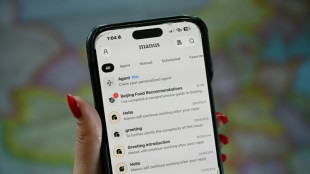 AI firm Manus to resume 'independent' operations after China blocks Meta deal
 Caught between great powers: the cautionary tale of Manus
 Heatwave hits evicted families sleeping rough in Rome

 US company stokes Greenland tensions by unloading drilling gear

 Cambridge academic in plagiarism row publishes memoir
 LeBron's Sixers hope to spoil Knicks party on NBA opening night
 UK 'on course' to record warmest summer for second year in a row
 Spotify to launch badge identifying AI music

 New plastic treaty document criticised for weaker ambition
 Hungary parliament approves Orban-critic judge as president
 Ebola outbreak in DR Congo kills more than 2,000
 ChargeAfter Powers BYLD Finance Expansion into Consumer Financing for Equipment Retailers

 MEXC Upgrades RealStocks With Three New Features to Enhance U.S. Stock Trading Experience

 Israel demolishes home of slain Palestinian involved in deadly West Bank clash
 Liverpool fans seek clarity on Bezos bid to buy stake

 Solar eclipse sparks scramble for protective glasses across Europe
 Oil prices jump as US-Iran deal hopes falter

Events in Iraq from the breakthrough by Islamic State group (IS) fighters in 2014 to the government counter-attack.
2014: Jihadist breakthrough
On January 4, Iraq loses its first key town since the US-led invasion of 2003. Fighters from the Islamic State of Iraq and the Levant (ISIL) and allies capture Fallujah and parts of Ramadi, west of Baghdad.
The vast Anbar province that surrounds the two towns is predominantly Sunni Muslim and fiercely resisted US troops when they occupied Iraq.
On June 9, ISIL captures Mosul, the second largest Iraqi city in the north, and declares an Islamic caliphate on June 29, calling itself the Islamic State group.
The jihadists also control Tikrit, home town of late dictator Saddam Hussein north of Baghdad, and large parts of the country up to Iraqi Kurdistan. IS drives out tens of thousands of Iraqi Christians and Yazidis, a Kurdish-speaking non-Muslim minority that lives around Sinjar near the border with Syria.
On August 8, the United States launches air strikes against IS and a month later has created a coalition to target the group in Iraq and Syria.
2015: Counter-offensives
On March 31, Iraqi troops and Shiite militias backed by neighbouring Iran recapture Tikrit.
By May 17 however, IS completely controls Ramadi, the capital of Anbar province which stretches west to Syria where IS has declared a de-facto capital in Raqa.
Later in the year, Iraqi forces and coalition air strikes begin driving IS back, and by mid-October they have recaptured Baiji and its strategic refinery north of Baghdad.
Kurdish forces backed by air strikes recapture Sinjar on November 13, severing an IS supply route between Iraq and Syria. Coalition strikes intensify after November 13, when attacks claimed by IS kill 130 people in France.
On December 27, Iraqi forces say they have liberated Ramadi, their biggest victory against IS to date. But the city is not totally cleared until February 9, 2016.
2016: Fallujah and Mosul
The government focuses on recapturing Fallujah and Mosul, IS's last strongholds in Iraq.
Officials have vowed to drive the jihadists out in 2016, but Washington is more cautious, evoking the fall of Mosul late this year or in early 2017. Observers say Fallujah is more of a priority for the Baghdad government.
In April, Washington says it will send attack helicopters and another 200 soldiers to train and assist Iraqi troops, bringing the total number of US military personnel in Iraq to more than 4,000.
On March 24, the army and allied militia begin an offensive in the northern Nineveh province around Mosul, making slow progress. On May 29, Kurdish peshmerga fighters backed by the international coalition recapture several villages east of Mosul.
To the south, coalition-backed Iraqi troops begin to squeeze Fallujah in March and capture Heet and Rutba, towns which control supply routes between Iraq and Syria.
On May 23, they begin an offensive to retake Fallujah, where several tens of thousands of civilians are trapped.
IS strikes back with suicide attacks in Baghdad and elsewhere, but is now estimated to control just 14 percent of Iraq, down from a peak of 40 percent in 2014.
On May 30, elite troops begin a three-pronged dawn assault on Fallujah.
K.Thomson--BTB