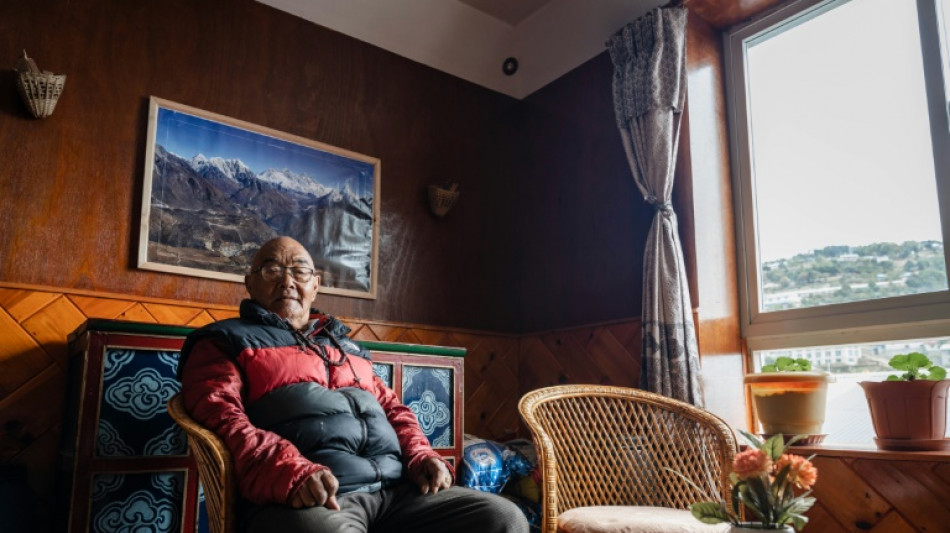
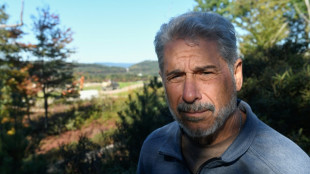
Kanchha Sherpa: The last of the first on Everest / Photo: © AFP

 Saudi airport closure disrupts life in kingdom's capital

 Ramaphosa tells South Africa to prepare for loss of US-Africa trade deal

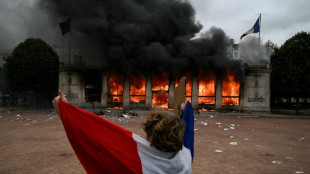
 France presses resale platforms to remove 'stolen' goods after unrest
 Yamal v PSG: Ballon d'Or backdrop to Champions League showdown

 Araujo says too soon to talk about permanent Liverpool move

 US wants to be 'strong partner' for central Asia: Rubio

 'Special' to face friend Perez in Champions League, says Liverpool's Iraola
 Monitor says Indonesia fires have burned nearly two million hectares

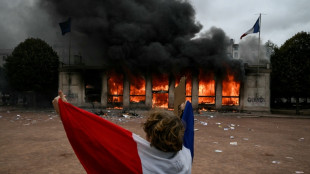
 French PM says could declare state of emergency over unrest 'if needed'
 Albanian PM warns of 'red line' after days of unrest

 Putin, Xi and Trump could meet at APEC summit: Kremlin

 Microsoft exits data centre deal in blow to UK AI ambitions

 European stocks retreat as France violence spreads

 North Korea warns 'grave situation' prevailing along border
 Raya proud of Arsenal's 'incredible' reaction after third straight win

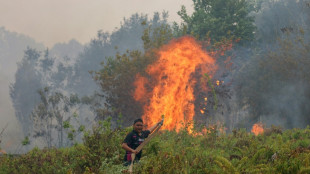 Indonesia fires have burned nearly two million hectares: monitor

 Australian lawmaker 'critically' hurt in attack, officials say

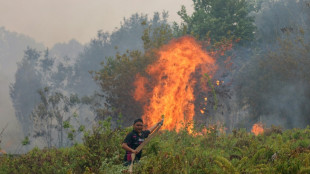 Indonesia fires burned over 1.9 mn hectares through September: monitor
 Asian tech stocks mixed after Wall St losses, eyes on earnings

 China's third-quarter growth narrowly beats forecasts
 Asian stocks start week on back foot, tracking tech-led Wall St losses
 China growth narrowly beats forecasts

 Faith and fury: Texas Senate rivals offer contrasting visions
 Women await justice for police killings in Brazil
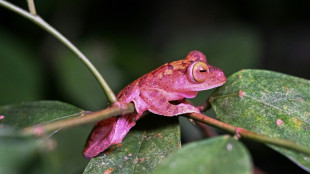 The painstaking task of cataloguing the world's species

Nonagenarian Kanchha Sherpa is the last surviving member of the 1953 expedition that saw Edmund Hillary and Tenzing Norgay Sherpa become the first humans to summit the world's highest mountain.
But his journey to prominence began in the opposite direction: at 19, he ran away from his home in Namche Bazaar -- now the biggest tourist hub on the route to the Everest base camp -- to Darjeeling in India, looking for Tenzing in hopes of finding work.
The future co-summiteer had already established himself in the hilly Indian region, which was the starting point for expeditions at the time as Nepal had only recently opened to foreigners.
At first, the teenager did chores at his mentor's house.
Months later he found himself back in his home region as a member of the British expedition, for just a few Nepali rupees (now a few US cents) a day.
The team first gathered in Kathmandu, then walked for days to the base camp, carrying tents, food and other equipment.
While today's climbers follow a well-trodden route set by experienced Nepali guides, Sherpa remembers the team navigating the pristine mountain on their own.
In oversized clothes brought by the British, the Nepalis would sing songs as they ferried supplies to ever-higher camps.
Although he had no mountaineering training, Sherpa climbed beyond 8,000 metres on Everest.
Now 90, he was tired and not available to speak to AFP ahead of Monday's anniversary, but his grandson quoted him as saying: "The happiest part was when Tenzing and Hillary summited."
- 'Opened our eyes' -
Seven decades later, hundreds follow the pioneering duo's footsteps to the summit of Everest every year, fuelling a multi-million dollar mountaineering industry.
Thousands more arrive in Nepal to get a glimpse of the breathtaking Himalayas.
Over the decades, the term "Sherpa" became synonymous with high-altitude guiding as they became the backbone of mountaineering, bearing huge risks to carry equipment and food, fix ropes and repair ladders.
Sherpa worked in the mountains for two decades more, until his wife asked him to stop his dangerous journeys.
But in a 2019 interview with local channel YOHO TV he said: "Tenzing and Hillary opened our eyes and made development possible here. Life was very hard before. There were no means to earn a living."
He has witnessed the transformation of the Everest region first-hand.
"After the Everest summit, tourism grew here exponentially. Due to that our lifestyle has changed and so has our income," he said at the weekend, as quoted by his grandson Tenzing Chogyal Sherpa.
The most important change has been the education of Sherpa children, the former climber said.
"They now have the option to study and as a result of that they can be whatever they want -- like a doctor or an engineer or even a scientist like my grandson," he said.
"I would never have imagined such a thing being possible during my days. That is a benefit of the growing tourism and mountaineering."
He now leads a foundation in his name, to support families who cannot afford to send their children to school.
But he added: "I fear that the Sherpa youths are getting too influenced by Western culture and might slowly forget the Sherpa culture and language."
G.Schulte--BTB