LGBT football fans fight for safe space in Brazil stadiums / Photo: © AFP

 Malawi's fuel shortages, record prices deepen economic crisis

 Rubio hosts G20 ministers as Iran, Ukraine wars divide members

 From minerals to AI, EU and Canada to forge new alliance
 Fire pollution killed 3,560 people in Indonesia in September: report
 Ian Wright and Jamie Carragher split on Liverpool-Arsenal prediction

 The Duskbloods delayed as Nintendo Switch 2 release moves to 2027
 Russia turns to NATO countries for prosthetics amid war-related shortages

 Researchers on island encounter giant spider legs emerging from a burrow

 Britain's King Charles lands in ex-colony Guyana
 Arsenal assess Bukayo Saka fitness concerns before Liverpool meeting

 £10,000 garden project transforms a UK home into a miniature Greece

 Forest destruction tests Armenia-Azerbaijan peace push
 Deal still eludes nations on final day of UN nature talks
 Teen rallies take to the streets across Italy
 Netanyahu bloc finishes ahead in Israel vote, but well short of majority

 Rural US hospitals, collateral victims of Trump politics
 How Trump could interfere in US midterm elections
 As Republicans downplay abortion for midterms, four US states to vote
 No. 4 Indiana looks to revive offense against improving Minnesota
 Police close investigation into Hayden Panettiere death after coroner ruling

 Australian mushroom killer loses appeal, has sentence extended
 Lethbridge students learn how city transit and transportation systems work
 India highlights defence ties with Japan and Australia at Cebu meetings

 Horoscope for October 30, 2026: communication and patience shape the day
 Amazon cloud business accelerates but shares drop on profit miss
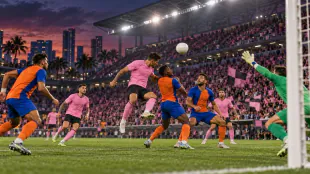
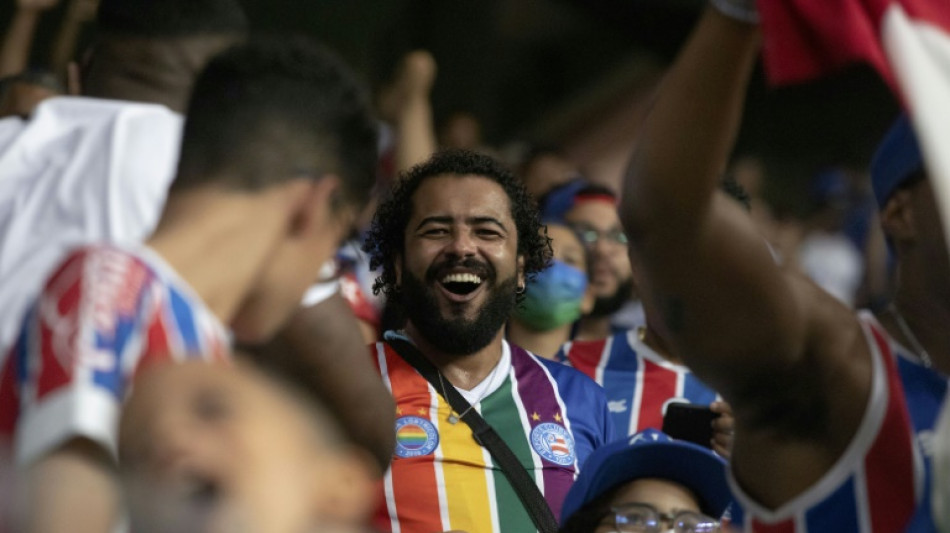
Wearing a rainbow T-shirt and earrings, Ona Ruda struts confidently through the Arena Fonte Nova football stadium, home to his beloved Bahia team and one of Brazil's LGBT fan bases.
However, his cool demeanour is not the norm for football fans who dare to display their homosexuality in Brazilian stadiums.
Ruda, a dark-haired, bearded man with heavy tattoos, knows he is lucky.
The club in northeastern Salvador is a rare safe space for gay fans who often steer clear of football stadiums for fear of coming under attack.
"Before, no one could come here. Today we exist, so we go, and some go with their friends, their family. The great triumph is that these people no longer need to hide that they are LGBT when they go to the stadium," the 32-year-old, who works in communications, tells AFP.
Ruda founded the Torcida LGBTricolor fan collective in September 2019 with the support of EC Bahia, currently a second-division team, which has become known for its progressive attitude.
The team is currently awaiting a possible sale to the City Group, which owns Manchester City.
The group of supporters counts only 15 members, a far cry from other massive Brazilian fan groups. However, the fact that they can go to the stadium waving rainbow flags and wearing rainbow T-shirts, is no small matter.
In other Brazilian football stadiums, homosexual fans are forced to fly under the radar to avoid homophobic chants, insults, hostile looks, and even assaults.
Brazil records violent incidents against the LGBT community daily. In 2021, at least 16 cases of homophobia were recorded in football stadiums, according to a report from Canarinhos LGBT, an organization of football fans seeking to combat discrimination in the sport.
"As a trans man, I feel proud and welcomed in these stands. This is our place, experiencing football," said another Bahia fan, Antonio Ramos, a 28-year-old gastronomy student.
- 'Masculinity, virility, machismo' -
Although almost all top Brazilian football clubs have at least one LGBT fan group, most of which emerged in the past decade, the vast majority keep their presence to social media.
Fear of actually going to the game reigns. However, they also face threats and attacks on social media.
"I think these days the organized fan base still feels uncomfortable towards these groups. In general, these organized groups are still dominated by normative masculinity, virility, machismo, which are often associated with homophobia," explains Luiza Aguiar dos Anjos, the author of several books about gay fans in Brazil.
Aside from Bahia, only the fans of Vasco da Gama in Rio de Janeiro (Vasco LGBTQ+), venture to the football field without needing to hide their sexual orientation.
Others seek refuge individually among groups of fans who label themselves anti-fascist, such as Tribuna 77 of Gremio in Porto Alegre.
The team from the capital of Brazil's southernmost state gave rise to one of the world's first homosexual fan collectives, called "Coligay", between 1977 and 1981.
LGBT football fans measure their strength according to their number of online followers, and many are known for their political activism.
"These fan groups are as interested in rallying their team as they are in changing football and their own clubs, to become more inclusive," added Dos Anjos.
- 'Hatred towards minorities'-
Carlos Costa, who works as an assistant in an e-commerce business, has followed the Palmeiras team from Sao Paulo since 1997. He says he has always sensed a homophobic atmosphere in the stands.
As a child, he went to games with his uncles. Now, he is hoping his LGBT fan collective PorcoIris, which was created on Twitter in 2019, will be able to attend games openly from 2023.
However, he warns, it will depend on how "civilized" Brazilians are by then, especially if far-right President Jair Bolsonaro is re-elected on October 30.
"Unfortunately, we are going backwards ... with a lot of hatred towards minorities," said the 30-year-old.
For now, around 30 active members of PorcoIris are resigned to attending Palmeiras matches without any LGBT symbols, separately, and in different stands.
Gleison Oliveira, 28, a salesman, hopes that at some point, male football will follow the example of female teams where homosexuality is no longer taboo.
"Imagine a future in which we can express ourselves with the Palmeiras shirt and go to stadiums without feeling any sort of repression," he said.
B.Shevchenko--BTB