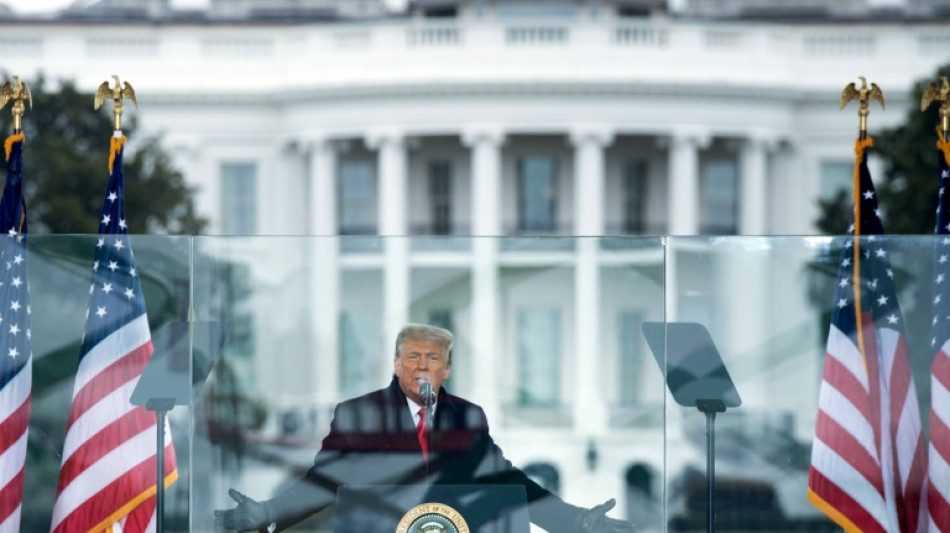
How Trump could interfere in US midterm elections / Photo: © AFP/File

 Charity crowdfunds millions to buy historic English estate

 'Diabolical' Halloween festivities banned in Honduran towns
 Everton boss Moyes backs 'club decision' to drop Grealish for Newcastle tie
 DoorDash shares rise as Instacart slips following $17 billion takeover plan

 Japanese star Forever Young goes for rare Breeders Cup Classic repeat

 Inter Miami stay third after 2-2 draw with FC Cincinnati

 Inkle buys Finally bookkeeping unit and expands India-based workforce

 PI Industries plans Indian launch of Pioxaniliprole insecticide this rabi season
 Small-market Brewers upend big-spenders as baseball lockout looms
 ISRO schedules NVS-03 navigation satellite launch for Friday

 Antonelli struck with illness ahead of Mexico GP

 Google drags down US stocks as Lagarde signals early ECB exit
 Kuwait minister and Blind Association discuss support for visually impaired people

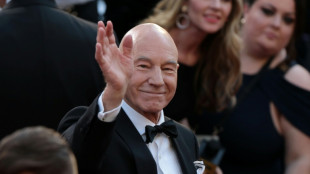 'Star Trek', 'X-Men' star Patrick Stewart dead at 86

 Kuwait traffic authority cautions against hazard lights while driving in rain
 Germany's Zverev becomes tennis world No. 1

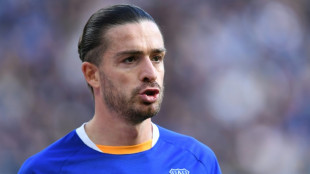 Grealish dropped for Everton's League Cup tie after disciplinary breach

 Kuwait National Guard official visits member injured during training

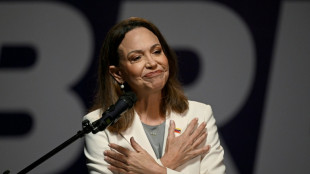 Machado says Trump opened 'floodgate to freedom' for Venezuela

 CNN Global Perspectives prepares Doha debut with international speaker lineup

 Qatar Olympic Academy completes record sports management course
 Jazeera Paints showcases housing solutions at Build Your House 2026 in Qatar

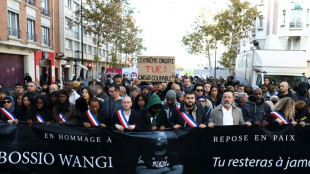 French shooting suspect targeted Muslims, Africans: prosecutor

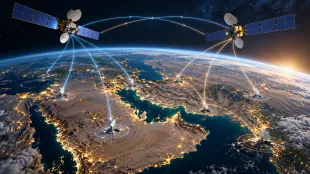 Es’hailSat and Arabsat agree broader satellite and broadcasting cooperation

 Qatar and Russia outline plans to expand strategic partnership

State officials who run US elections are bracing for further intervention by President Donald Trump's administration in next week's midterms -- fearing federal authorities could disrupt voting, challenge ballot counts or try to block unfavorable results.
Trump, whose Republicans face an uphill battle to keep control of Congress, has repeatedly questioned the integrity of US elections and urged his party to "nationalize" voting in at least 15 places.
The White House says it is protecting election security, and many of the feared scenarios remain hypothetical. The US Constitution gives the president no direct role in running elections, and federal courts have so far rebuffed the administration's main legal challenges.
Here are the key potential flashpoints:
- Before election day -
Voter eligibility: The Justice Department has sued 30 states and the District of Columbia to obtain their voter registration lists, saying it needs them to find non-citizens. It has lost more than two dozen of those cases.
It has also demanded that ballots be set aside from about 20,000 people in California and more than 400 in Washington state whom it suspects are non-citizens.
A federal judge rejected the California request on Wednesday, saying it would wreak havoc on an election already underway. Washington state has also refused the demand.
Studies have repeatedly found non-citizen voting to be exceptionally rare.
Pressure on officials: The Justice Department has warned election officials in every state that they could face prosecution if they knowingly allow non-citizens to vote.
And Trump on Monday offered $1 million for information leading to a voter fraud conviction, without giving details.
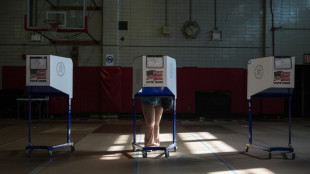
- At polling stations -
Federal monitors: The Justice Department plans to send around 1,000 election monitors to all 50 states -- its largest deployment ever.
Monitoring is a decades-old practice, but Democrats and voting rights groups fear monitors could intimidate voters. The department says they will be unarmed, barred from interfering with voting and drawn from neither the FBI nor Immigration and Customs Enforcement (ICE).
Immigration agents and troops: Advocates fear ICE operations near polling stations could deter voters in immigrant communities.
The administration says it is not planning operations targeting polling places, although Homeland Security Secretary Markwayne Mullin has said ICE agents could serve warrants there.
Trump has declined to rule out declaring a national emergency or invoking the Insurrection Act, which allows the president to deploy troops at home.
A Civil War-era law bars troops and armed federal agents from polling places, and legal experts say an emergency declaration would not give the president power over elections.
- Counting the votes -
Seizing election materials: Federal agents could seek warrants or subpoenas for ballots, voting machines or records -- potentially disrupting the count.
In January, the FBI seized ballots and other 2020 election records in Fulton County, Georgia, a focus of Trump's false claims that he won that year.
Election officials warn that similar action during an active count could undermine safeguards tracking how ballots are handled.
Challenging the count: Trump could allege fraud involving mail-in ballots, voting machines or votes counted after election night, fueling demands for recounts or attempts to halt counting.
But the US Supreme Court ruled in June that states may count mail ballots postmarked by election day that arrive afterward, and courts can intervene against unlawful disruption.
- After election day -
Blocking certification: The Justice Department has sued Alaska to delay certification of its Senate race if Republican incumbent Dan Sullivan narrowly loses to Democrat Mary Peltola, citing a second candidate named Dan Sullivan who it says is trying to confuse voters, which he denies.
Trump said he ordered the lawsuit.
Experts say federal law does not allow the department to block certification, which courts can compel officials to carry out.
Challenging Democratic victories: Trump could pressure state officials to dispute results, as he did after losing the 2020 election.
Experts warn unresolved disputes could also delay the seating of newly elected lawmakers in January.
But courts have repeatedly upheld states' authority over elections, and Democrats and voting rights groups have assembled legal teams to fight any interference.
Y.Bouchard--BTB