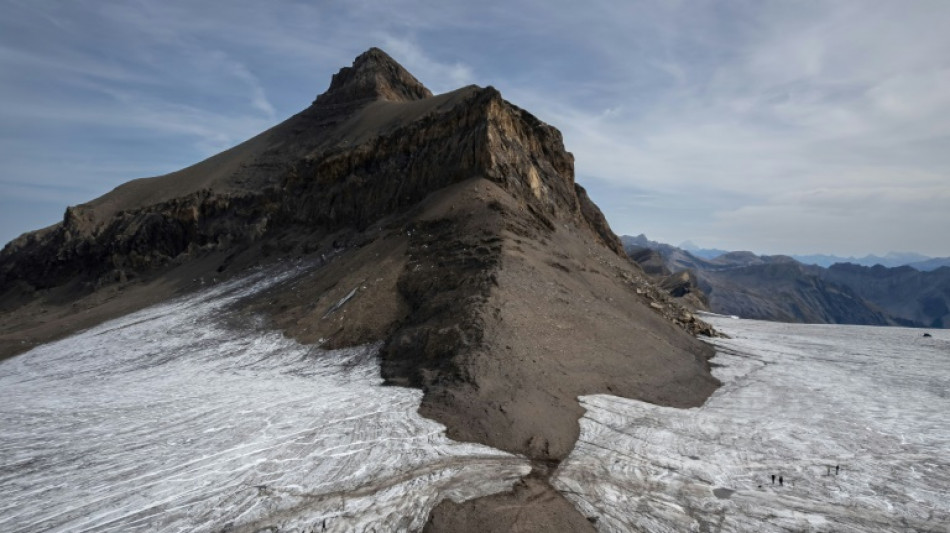
All regions experienced water extremes in 2021: UN / Photo: © AFP

 Inside the Venezuelan prison meant to 'drive you insane'

 UK king braces as memoir by Diana's brother goes on sale

 No green light to lift EU sanctions on Russian oligarchs, talks to resume

 UK agrees support for Saudi in struggle with Houthis: reports
 EU foreign policy chief calls for continued sanctions on Russia

 Flights scrapped, evacuations urged as Typhoon Dujuan wallops Japan

 Fonseca to take break from tennis

 A Cuban zoo, and its animals, in epic battle for survival

 Infantino proposes consulting federations to reform FIFA

 El Nino weather pattern enters record territory: scientist
 OpenAI calls for US to lead global effort on AI standards
 South African ostriches plucked alive for luxury fashion: report

 US networks halt Trump coverage in revolt over White House ban

 Paramount settles with US states to clear Warner Bros. mega-merger

 Climate crisis a job for world leaders, not just activists: UK FM

 US networks halt Trump coverage over White House ban
 French singer accuses Miley Cyrus of plagiarism

 EU fines Google 403 mn euros for location data breach

 'Best is yet to come,' says De la Fuente after Spain extension

 Why diesel prices are rising more than crude oil

 COP31 host says AI's climate footprint to be a summit priority

 Renewables hit record in 2025, but world must move faster: report

 US media outlets to sue Trump administration after White House ban
 Global stocks rally on lower oil prices, US-China hopes

 EU proposes energy rating for data centres

All regions of the world saw water extremes last year -- both floods and droughts -- and billions of people had insufficient freshwater, the United Nations said on Tuesday.
Large areas of the planet recorded drier than normal conditions in 2021, the UN's World Meteorological Organization said in its first annual State of Global Water Resources report.
The report assesses the effects of changes in the climate, environment and society on the Earth’s freshwater resources -- limited supplies that are under growing demand -- so they can be managed better.
"The impacts of climate change are often felt through water -- more intense and frequent droughts, more extreme flooding, more erratic seasonal rainfall and accelerated melting of glaciers -- with cascading effects on economies, ecosystems and all aspects of our daily lives," said WMO head Petteri Taalas.
"And yet there is insufficient understanding of changes in the distribution, quantity and quality of freshwater resources."
Some 3.6 billion people face inadequate access to freshwater at least one month per year. That is forecast to rise to more than five billion by 2050, the report said.
Between 2001 and 2018, 74 percent of all natural disasters were water-related, according to UN studies.
In 2021, all regions saw devastating water extremes, the report said.
There were record-breaking floods in western Europe and the Amazon, while water levels in rivers in Paraguay and southern Brazil dropped to an all-time low.
The report assessed streamflow -- the volume of water flowing through a river -- over a 30-year period.
Drops in water volumes were twice as widespread as rises.
Major river basins in the Americas and central Africa saw water volumes shrink. Rivers in northern India and southern Africa saw above average increases.
- Frozen resources -
Terrestrial water storage -- all water on the land surface and in the subsurface -- shrank more than it grew, the report said.
Negative hotspots included Patagonia, the Ganges and Indus headwaters, and the southwestern United States.
"Some of the hotspots are exacerbated by (over-extraction) of groundwater for irrigation. The melting of snow and ice also has a significant impact in several areas, including Alaska, Patagonia and the Himalayas," the WMO said.
The world’s biggest natural reservoir of freshwater is the cryosphere -- glaciers, snow cover, ice caps and permafrost -- and changes to this reservoir affect food production, health and the natural world, the report said.
Around 1.9 billion people live in areas where drinking water is supplied by glaciers and snow melt but these glaciers are melting increasingly fast, it stressed.
It urged authorities to speed up the introduction of drought and flood early warning systems to help reduce the impact of water extremes.
O.Lorenz--BTB