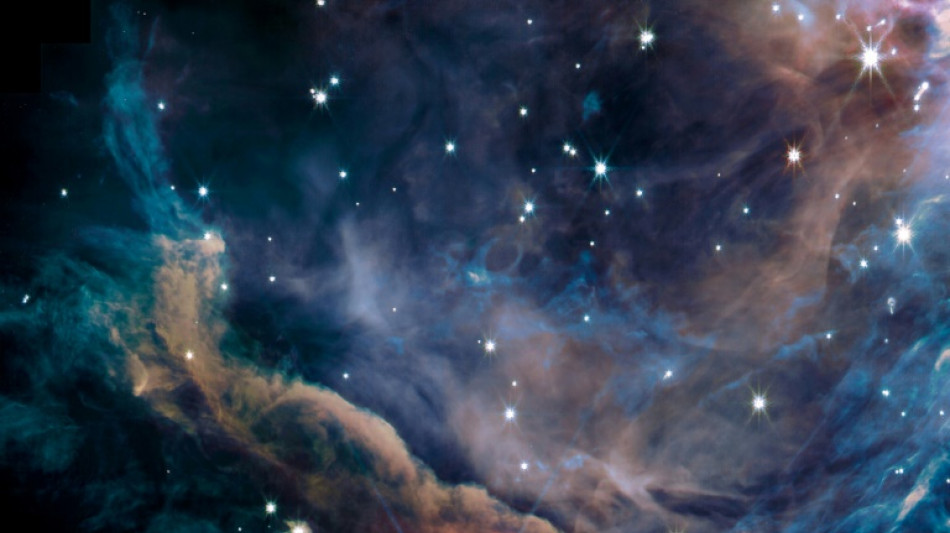
Webb telescope promises new age of the stars / Photo: © NASA/ESA/CSA/AFP/File

 Inside the Venezuelan prison meant to 'drive you insane'

 UK king braces as memoir by Diana's brother goes on sale

 No green light to lift EU sanctions on Russian oligarchs, talks to resume

 UK agrees support for Saudi in struggle with Houthis: reports

 EU foreign policy chief calls for continued sanctions on Russia

 Flights scrapped, evacuations urged as Typhoon Dujuan wallops Japan

 Fonseca to take break from tennis

 A Cuban zoo, and its animals, in epic battle for survival

 Infantino proposes consulting federations to reform FIFA

 El Nino weather pattern enters record territory: scientist

 OpenAI calls for US to lead global effort on AI standards

 South African ostriches plucked alive for luxury fashion: report

 US networks halt Trump coverage in revolt over White House ban
 Paramount settles with US states to clear Warner Bros. mega-merger

 Climate crisis a job for world leaders, not just activists: UK FM
 US networks halt Trump coverage over White House ban
 French singer accuses Miley Cyrus of plagiarism

 EU fines Google 403 mn euros for location data breach

 'Best is yet to come,' says De la Fuente after Spain extension

 Why diesel prices are rising more than crude oil

 COP31 host says AI's climate footprint to be a summit priority

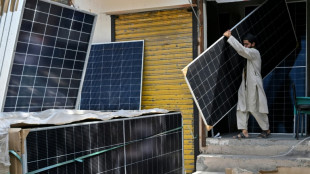 Renewables hit record in 2025, but world must move faster: report

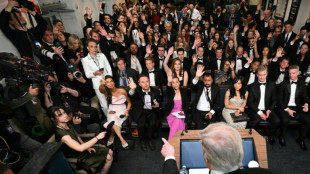 US media outlets to sue Trump administration after White House ban

 Global stocks rally on lower oil prices, US-China hopes

 EU proposes energy rating for data centres
The James Webb Space Telescope lit up 2022 with dazzling images of the early universe after the Big Bang, heralding a new era of astronomy and untold revelations about the cosmos in years to come.
The most powerful observatory sent into space succeeds the Hubble telescope, which is still operating, and began transmitting its first cosmic images in July.
"It essentially behaves better than expected in almost every area," said Massimo Stiavelli, head of the Webb mission office at the Space Telescope Science Institute, in Baltimore.
Already scientists say the Webb telescope, now orbiting the sun at a million miles (1.6 million kilometres) from Earth, should last 20 years, twice its guaranteed lifetime.
"The instruments are more efficient, the optics are sharper and more stable. We have more fuel and we use less fuel," said Stiavelli.
Stability is vital for the clarity of the images.
"Our requirement was similar to that of Hubble, in terms of pointing accuracy. And we ended up being seven times better," the mission office chief added.
Public appetite for the discoveries has been fed by the colouring of the telescope's images.
Light from the most distant galaxies has been stretched from the visible spectrum, viewable by the naked eye, to infrared -- which Webb is equipped to observe with unprecedented resolution.
This enables the telescope to detect the faintest glimmers from the distant universe at an unprecedented resolution, to see through the veil of dust that masks the emergence of stars in a nebula and to analyse the atmosphere of exoplanets, which orbit stars outside our solar system.
- 18 petals -
"The first year (of observation) is a way to test out the tool for the small rocky planets in the habitable zone that could potentially be like Earth," said Lisa Kaltenegger, associate professor in Astronomy at Cornell University.
"And the tests are beautiful. They're spectacular."
Webb blasted off aboard an Ariane 5 rocket at the end of 2021 crowning a 30-year project at the US space agency NASA.
It took 10,000 people and 10 billion dollars to put the 6.2-tonne observatory into space.
En route to final orbit, Webb deployed a five-layer sunshield the size of a tennis court followed by a 6.5 metre primary mirror made up of 18 hexagonal, gold-coated segments or petals.
Once calibrated to less than a millionth of a metre, the 18 petals began to collect the light pulsing stars.
Last July 12, the first images underlined Webb's capabilities unveiling thousands of galaxies, some dating back close to the birth of the Universe, and a star nursery in the Carina nebula.
Jupiter has been captured in incredible detail which is expected to help understand the workings of the giant gas planet.
- 'Too many' galaxies -
The blue, orange and grey tones of the images from the "Pillars of Creation", giant dust columns where stars are born, proved captivating.
Scientists saw the revelations as a way of rethinking their models of star formation.
Researchers using the new observatory have found the furthest galaxies ever observed, one of which existed just 350 millions years after the Big Bang some 13.8 billion years ago.
The galaxies appear with extreme luminosity and may have started forming 100 million years earlier than theories predicted.
"In the distant Universe, we have an excess of galaxies compared to models," David Elbaz, scientific director for astrophysics at France's Alternative Energies and Atomic Energy Commission, told AFP.
Another surprise has been that where Hubble essentially observed irregular shaped galaxies, the precision of the Webb telescope produces magnificent spiral galaxies similar to our own.
This has led to musings over a potential universal model which could be one of the keys to star formation.
Webb also opened up a profusion of clusters of millions of stars leading, which could be the potential missing link between the first stars and the first galaxies.
In the field of exoplanets, Webb honed in on a faraway gas giant called WASP-96 b, which was discovered in 2014.
Nearly 1,150 light-years from Earth, WASP-96 b is about half the mass of Jupiter and zips around its star in just 3.4 days
Webb provided the first confirmation that carbon dioxide is present in the atmosphere of Wasp 39-b.
But for Stiavelli, "Some of the big things either haven't been observed yet, or haven't been revealed yet."
I.Meyer--BTB