-
 Rams bounce back as Giants reel from Dart injury
-
Shin Ohashi: Junk food-loving teen and Japan's next big swimming hope

-
 In Bangladesh, Pakistan's Jinnah photo stirs anger
-
Stocks rise on AI buzz, drop in oil prices

-
 Two New Zealand naval ships transit Taiwan Strait
-
China's robot dancers limber up for America's Got Talent final

-
 Zidane gets down to work as France start new era
-
Despite military might, Saudi struggles to crush the Houthis

-
 Inside the Venezuelan prison meant to 'drive you insane'
-
Trump to tout deals, defend Iran war in UN speech

-
 UK king braces as memoir by Diana's brother goes on sale
-
Sri Lanka to issue verdict in landmark Easter attack trial

-
 No green light to lift EU sanctions on Russian oligarchs, talks to resume
-
Macron says talks with Trump on Red Sea, Ukraine 'constructive'

-
 UK agrees support for Saudi in struggle with Houthis: reports
-
Green policies just good politics, says UK minister

-
 EU foreign policy chief calls for continued sanctions on Russia
-
Bardot auction in Paris fetches nearly one million euros

-
 Flights scrapped, evacuations urged as Typhoon Dujuan wallops Japan
-
No timeline on Daniels injury return, says Commanders coach

-
 Fonseca to take break from tennis
-
British Columbia sues OpenAI in US court over Canada school shooting

-
 A Cuban zoo, and its animals, in epic battle for survival
-
French star Batum retires after 18-year NBA career

-
 Infantino proposes consulting federations to reform FIFA
-
Zidane leads first France training session

-
 El Nino weather pattern enters record territory: scientist
-
Man shot by ICE agent in Texas detained with bullet inside him: lawyer
-
 OpenAI calls for US to lead global effort on AI standards
-
California declares state of emergency ahead of El Nino
-
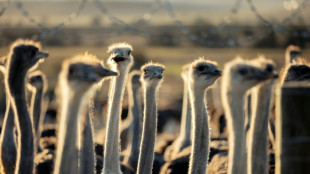 South African ostriches plucked alive for luxury fashion: report
-
South Africa arrests three more suspects, after nine women murdered

-
 US networks halt Trump coverage in revolt over White House ban
-
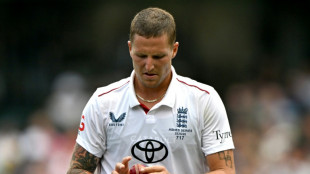
Carse needs time away from England, says captain Brook
-
 Paramount settles with US states to clear Warner Bros. mega-merger
-
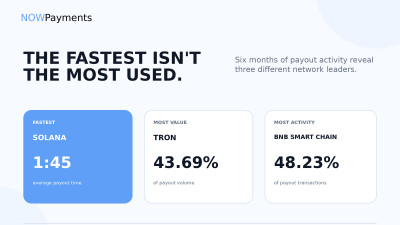
NOWPayments Releases Cross-Chain Payout Data Revealing Key Performance Benchmarks Across TRON, BNB Chain, and Solana
-
 Climate crisis a job for world leaders, not just activists: UK FM
-
British Museum bans photos of Bayeux Tapestry as crowds linger

-
 US networks halt Trump coverage over White House ban
-
COP31 host says AI climate footprint to be a summit priority
-
 French singer accuses Miley Cyrus of plagiarism
-
Berlin's far-left vote winners reject anti-semitism charges

-
 EU fines Google 403 mn euros for location data breach
-
Mancini eager for 'new adventure' on Italy return
-
 'Best is yet to come,' says De la Fuente after Spain extension
-
Mbappe says having Zidane as France coach 'like a film'

-
 Why diesel prices are rising more than crude oil
-
Palmer, Rice out of England Nations League squad

-
 COP31 host says AI's climate footprint to be a summit priority
-
German auto workers stage mass protests in bid to save jobs

Europe's new Vega-C rocket lost shortly after lift-off
Europe's new Vega-C rocket was lost shortly after lift-off from French Guiana overnight with two satellites on board, in the latest blow to European space efforts.
The failure on Tuesday night threatens to ground the Vega-C, which would leave Europe without a short-term way to launch satellites into orbit after delays to the Ariane 6 rocket and cancelled Russian cooperation over the Ukraine war.
The rocket had been trying to bring into orbit two Earth observation satellites built by Airbus, which were intended to join an existing network capable of capturing high-quality images of any point on the globe several times a day.
If it had been successful, it would have been the first commercial launch of the Vega-C since its inaugural flight on July 13.
"The mission is lost," Stephane Israel, head of commercial launch service provider Arianespace, said from the Kourou Space Centre in French Guiana, a French department on South America's northeast coast.
Ten minutes after lift-off, at 10:47 pm local time (0147 GMT Wednesday), the launcher's trajectory deviated from its programmed route and communications were lost, Arianespace said.
An "anomaly occurred" in the second stage of the launcher, "ending the Vega-C mission", the company said.
The rocket was launched over the Atlantic Ocean and had shot past 100 kilometres (62 miles) altitude and was more than 900 kilometres north of Kourou.
- No debris -
It was not immediately clear whether the rocket's destruction device was activated or whether it crashed into the sea.
Arianespace found there was no debris fallout after lift-off.
"Data analysis is under way to determine the reasons for this failure," it added.
A press briefing is scheduled for noon on Wednesday in Kourou.
Airbus did not comment when contacted by AFP.
Peter Beck, the CEO of US launch service provider Rocket Lab, said he was sorry to hear of the failed launch.
"Small launch is way harder than most people think. I am sure the excellent Vega team will resolve the issue quickly," he tweeted.
- Postponed launch -
The satellites on board were the last two to complete the Pleiades Neo constellation, which is planned to be able to take very high-resolution images of anywhere on Earth.
The launch was originally scheduled for November 24 but was postponed for a month due to a faulty component.
Arianespace's Israel told AFP they had to change a piece of equipment linked to the payload fairing, a type of nose cone, which was not believed to be related to Tuesday's launch failure.
The Vega-C is the newest version of the Vega rocket system, which has launched 20 times since 2012, failing twice.
Arianespace said the error on Tuesday occurred during the Zephiro 40 stage, which was specifically developed for the Vega-C, unlike many other parts of the launcher.
Vega-C's prime contractor is the Italian aerospace firm Avio, whose share price plunged 9.45 percent after 10:00 am.
The Vega-C is billed as the smaller precursor to the future Ariane 6, which the European Space Agency (ESA) hopes will enable Europe to become more competitive in the rapidly expanding satellite market.
- Major setback -
Around 24,500 satellites are expected to be launched by 2021, almost five times as many in the past decade, according to advisory firm Euroconsult.
Tuesday's failure is a major setback for the ESA, which has 22 member states and is responsible for European launcher programmes.
Global competition in the market has intensified in recent years, with Elon Musk's SpaceX taking a giant lead.
European hopes have been pinned on the Ariane 6 rocket, but the postponement to the end of 2023 of its inaugural flight, which had been initially planned for 2020, has dashed the ESA's expectations.
Europe's space sector has been further weakened by Russia's invasion of Ukraine, which put an end to its cooperation with Moscow.
In response to sanctions imposed on Moscow by the European Union, Russia suspended space launches from French Guiana with its Soyuz rocket launchers and withdrew its technical personnel.
In the absence of an alternative, ESA has been forced to turn to SpaceX to launch two scientific missions.
Vega-C is currently scheduled to carry out 12 missions, including some previously planned to launch on Soyuz rockets.
J.Bergmann--BTB