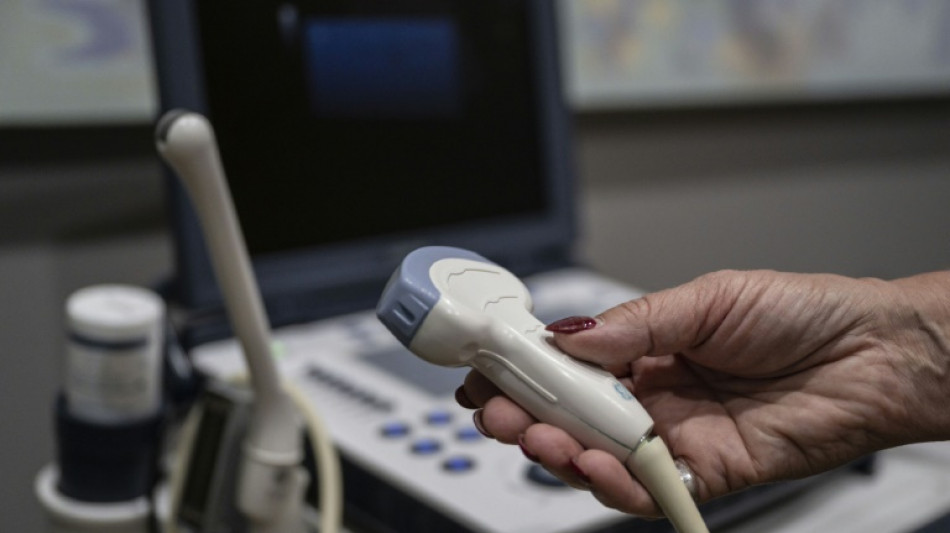
AI better than humans at key heart test: study / Photo: © AFP/File

 Marchand 'stressed' about racing Japanese rivals at LA Olympics
 Mobile boat clinics bring healthcare to India's remote islands

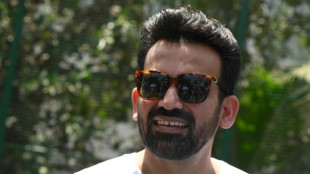 Former India paceman Zaheer Khan named Chennai coach in IPL

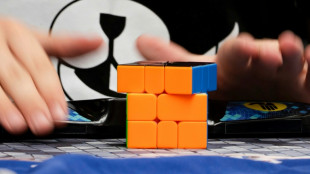 Six-year-old Chinese girl sets world record with Rubik's Cube

 Swimming prodigy Yu, 13, says 'interviews way harder than racing'

 Star coaches make their bows as Nations League returns

 Rams bounce back as Giants reel from Dart injury

 In Bangladesh, Pakistan's Jinnah photo stirs anger

 Two New Zealand naval ships transit Taiwan Strait

 Zidane gets down to work as France start new era

 Inside the Venezuelan prison meant to 'drive you insane'

 UK king braces as memoir by Diana's brother goes on sale

 Akkodis and Hamburg Public Transport Association Showcase hvv mia at InnoTrans 2026, Demonstrating the Future of AI-Powered Mobility

 Macron says talks with Trump on Red Sea, Ukraine 'constructive'

 Green policies just good politics, says UK minister

 Bardot auction in Paris fetches nearly one million euros

 No timeline on Daniels injury return, says Commanders coach

 British Columbia sues OpenAI in US court over Canada school shooting

 French star Batum retires after 18-year NBA career

 Zidane leads first France training session

 Man shot by ICE agent in Texas detained with bullet inside him: lawyer

 California declares state of emergency ahead of El Nino

 South Africa arrests three more suspects, after nine women murdered

 Carse needs time away from England, says captain Brook
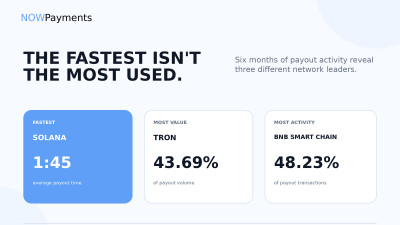 NOWPayments Releases Cross-Chain Payout Data Revealing Key Performance Benchmarks Across TRON, BNB Chain, and Solana

Artificial intelligence is better than humans at assessing heart ultrasounds, the main test of overall cardiac health, the most rigorous trial yet conducted on the subject found on Wednesday.
While previous research has illustrated the potential power of AI models for reading medical scans, the authors of the new US study said it is the first blinded, randomised clinical trial for heart health.
"There's a lot of excitement around AI," but rigorous evaluation remains critical, the study's senior author David Ouyang told AFP.
This successful trial "really strengthens the argument that now we're ready for primetime," added the cardiologist at the Cedars-Sinai Medical Center in Los Angeles.
Heart ultrasounds, also known as echocardiograms, are carried out on patients by sonographers, who usually give an initial assessment of the scan before handing it over to a cardiologist.
The new study, published in the journal Nature, pitted an AI model against sonographers to see who would give the most accurate initial assessment.
Both assessed the ultrasound for what is called left ventricular ejection fraction, which measures the heart's ability to pump blood out to the body in the space of a heartbeat.
The test is the main way to measure how well a heart is functioning. It is used to tell if patients have had a heart attack or if they will be able to undertake serious treatments such as implanting a defibrillator.
For the study, nearly 3,500 heart ultrasounds were randomly split between sonographers and the AI model.
Their assessments were then evaluated by cardiologists, who did not know which ones came from humans and which from the AI model.
- 'Exciting' -
The cardiologists made a substantial change in more than 27 percent of the sonographer assessments -- and in nearly 17 percent of those done by the AI model, the study found.
"The AI was faster, more precise, and indistinguishable by the cardiologists," Ouyang said.
There is a "tremendous shortage" of sonographers in the United States and across the world, and this would save them valuable time, he added.
The AI model, called EchoNet-Dynamic, was trained on nearly 145,000 echocardiograms and uses what is called deep learning to process large amounts of data.
The researchers are currently applying for the method to be approved by the Federal Drug Administration, and hope to do the same in the European Union and elsewhere soon, Ouyang said.
Patricia Pellikka, a cardiologist at the Mayo Clinic in the United States not involved in the research, told AFP the study was "exciting" and that the integration of AI tools will increase efficiency and standardisation.
French cardiologist Florian Zores said that the study was well conducted but the technology would not be as useful in France, where cardiologists give the initial assessments of heart ultrasounds.
L.Dubois--BTB