Archaeologists discover 'prison bakery' in ancient Pompeii / Photo: © POMPEII ARCHAEOLOGICAL PARK/AFP

 Macron urges world to choose UN over 'law of the jungle'

 All-rounder Jacks stars as England beat Sri Lanka in 1st ODI
 Man City peg back Bayern to start Women's Champions League
 Trump beats 'America first' drum at UN as allies tread carefully
 Snedeker backs Spaun for Ryder Cup after Presidents snub

 French prosecutors probe secret filming of women with smart glasses

 Trump renames AI "super intelligence," rejects international oversight

 Trump rejects international regulation of AI

 How is the EU approaching record fuel prices?

 Sri Lanka's Colombage strikes on debut as England dismissed for 265 in first ODI

 Hurricane Polo strengthens to top category 5 off Mexico

 11 hurt as teen opens fire outside school in western Turkey

 UN chief says 'Big Oil' treats atmosphere as open sewer

 Tunisia says 2026 summer hottest on record

 England's Rashid out of Sri Lanka ODIs with hand injury

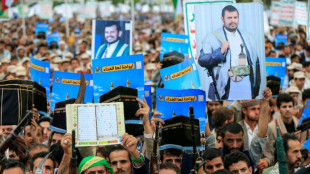 Houthis accuse Saudi Arabia of deadly strikes as thousands flee

 Stocks climb as oil slides, AI buzz returns

 India cricketers win in style as Afghan savours 'special' Games silver

 La Liga president hits out at Real Madrid refereeing 'conspiracy' claims

 MEXC Launches “Real Stocks, Real Friends” with Rewards for Bringing Friends to Wall Street

 Mbappe continues media push for Ballon d'Or recognition

 Stocks rise on AI buzz, oil prices cool

 India narrowly survive huge scare against minnows Japan

 Missing F-35 fighter parts 'not sensitive', says Australia minister

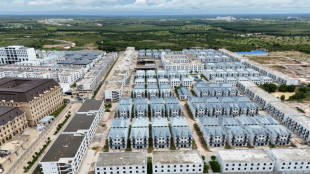 Cambodia showcases scams crackdown with global conference

Archaeologists excavating the ancient Roman city of Pompeii have uncovered a "prison bakery" where slaves and blindfolded donkeys were kept locked up underground to grind grain for bread, officials said this week.
Underneath a house in the ruins they found "a cramped room with no view of the outside world and with small windows high in the wall, with iron bars, to let the light in", the Archaeological Park of Pompeii announced on Friday.
Archaeologists deduced they had found a "prison bakery", the UNESCO World Heritage Site near Naples, southern Italy, said on its website.
They also discovered "indentations" in the floor "to coordinate the movement of the animals, forced to walk around for hours, blindfolded".
The house, on the 44-hectare site that is currently under excavation, was divided into a residential area "decorated with exquisite Fourth Style frescoes" and a "productive quarter", the bakery.
Three skeletons were discovered in one room of the bakery, showing that the house was inhabited.
The bakery, where slaves and animals were forced to perform the backbreaking task of turning the millstones, had no doors or communication with the outside world.
- 'Shocking' side of ancient world -
"It is, in other words, a space in which we have to imagine the presence of people of servile status whose freedom of movement the owner felt the need to restrict," wrote Pompeii director Gabriel Zuchtreigel in a scholarly article.
"It is the most shocking side of ancient slavery, the one devoid of both trusting relationships and promises of manumission, where we were reduced to brute violence, an impression that is entirely confirmed by the securing of the few windows with iron bars."
The public can view more evidence of this harsh daily life in an exhibition called "The Other Pompeii: Ordinary Lives in the Shadow of Vesuvius" which opens at the Palestra Grande in Pompeii on December 15.
"(The exhibition is) dedicated to that myriad of individuals often forgotten by the historical sources, such as the slaves, who constituted the majority of the population and whose labour contributed in an important way not only to the economy, but also to the culture and social fabric of Roman civilization," the Pompeii authorities said.
Pompeii was devastated when nearby Mount Vesuvius erupted almost 2,000 years ago in 79 AD.
The ash and rock helped preserve many buildings almost in their original state, as well as forming eery shapes around the curled-up corpses of victims of the disaster, thought to number around 3,000.
Pompeii is the second most visited tourist destination in Italy after the Colosseum in Rome.
M.Furrer--BTB