Tintin comic new edition addresses racism controversy / Photo: © AFP

 Macron urges world to choose UN over 'law of the jungle'

 All-rounder Jacks stars as England beat Sri Lanka in 1st ODI

 Man City peg back Bayern to start Women's Champions League

 Trump beats 'America first' drum at UN as allies tread carefully

 Snedeker backs Spaun for Ryder Cup after Presidents snub

 French prosecutors probe secret filming of women with smart glasses

 Trump renames AI "super intelligence," rejects international oversight

 Trump rejects international regulation of AI

 How is the EU approaching record fuel prices?

 Sri Lanka's Colombage strikes on debut as England dismissed for 265 in first ODI

 Hurricane Polo strengthens to top category 5 off Mexico

 11 hurt as teen opens fire outside school in western Turkey

 UN chief says 'Big Oil' treats atmosphere as open sewer

 Tunisia says 2026 summer hottest on record

 England's Rashid out of Sri Lanka ODIs with hand injury
 Houthis accuse Saudi Arabia of deadly strikes as thousands flee

 Stocks climb as oil slides, AI buzz returns

 India cricketers win in style as Afghan savours 'special' Games silver

 La Liga president hits out at Real Madrid refereeing 'conspiracy' claims

 MEXC Launches “Real Stocks, Real Friends” with Rewards for Bringing Friends to Wall Street

 Mbappe continues media push for Ballon d'Or recognition

 Stocks rise on AI buzz, oil prices cool

 India narrowly survive huge scare against minnows Japan

 Missing F-35 fighter parts 'not sensitive', says Australia minister

 Cambodia showcases scams crackdown with global conference

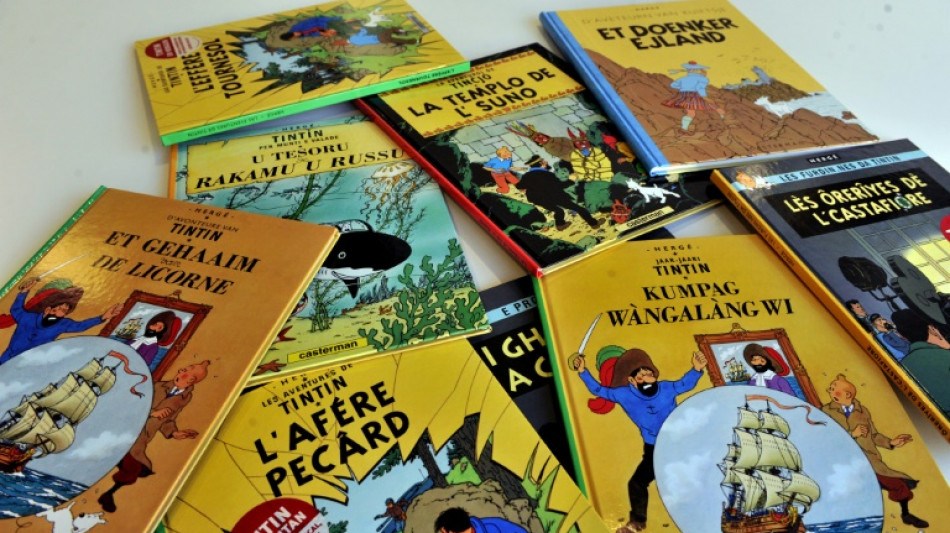
There has been a mixed response from anti-racism groups over a newly modified version of the Tintin comic books, after it was widely criticised over its colonialist depiction of Africans.
"Tintin in the Congo" by Belgian comic strip artist Herge, the second volume of "The Adventures of Tintin", was first published in 1931.
The Belgian Congo -- comprising most of present-day Republic of Congo -- was then a colony of the European country, becoming independent in 1960.
In the comic Tintin, an intrepid reporter, travels to Belgian Congo to report on events there leading to encounters with native people, wild animals and an American diamond-smuggling gangster.
Over recent decades, the comic strip has become increasingly controversial, with critics pointing to its racist and colonialist treatment of the local population.
The new edition, launched in November together with two other books in the Tintin series, carries a preface explaining the colonial context of the time.
It also contains tweaks to the story. At one point, Tintin teaches an African child mathematics, whereas in the original he teaches the child that its home nation is Belgium.
The cover was also changed from the original, showing Tintin facing off against a lion, whereas before he was sitting with a black child.
"This volume goes back to a time, that is thankfully over, where it was acceptable to consider blacks as inferior," said Patrick Lozes, founder of CRAN, a federation of anti-racism associations.
He welcomed the addition of the preface, which he said went "in the right direction".
The preface, written by Philippe Goddin -- head of the Friends of Herge association -- is mostly concerned with defending the record of Tintin's creator in terms of racism.
"He defended himself vigorously against that charge," he wrote. "He happily mocked everybody, whites and blacks."
In an interview with AFP Goddin said "there is a thin line between caricature and racism, he did not cross that line".
Pascal Blanchard, a historian of colonialist propaganda, said he was "surprised" that the publishers did not make a special announcement of the changes, and that the new preface was not mentioned on the cover.
He called the preface "highly debatable".
Claims that Herge's work had simply been a reflection of his time were "facile and false", he said.
Herge himself admitted in 1975 that all he knew about the Belgian Congo was "what people talked about" at the time, saying: "I drew Africans in the pure spirit of paternalism that was prevalent back then."
Herge is considered as one of the leading cartoonists of the 20th century, with a unique style that influenced many artists, including pop artists Andy Warhol and Roy Lichtenstein.
Tintin's adventures have been translated into 130 languages, sold 260 million copies and been made into TV shows and a Hollywood film.
M.Odermatt--BTB