
A whiff of tears reduces male aggression, says study / Photo: © AFP/File

 Macron urges world to choose UN over 'law of the jungle'

 All-rounder Jacks stars as England beat Sri Lanka in 1st ODI

 Man City peg back Bayern to start Women's Champions League

 Trump beats 'America first' drum at UN as allies tread carefully

 Snedeker backs Spaun for Ryder Cup after Presidents snub

 French prosecutors probe secret filming of women with smart glasses

 Trump renames AI "super intelligence," rejects international oversight

 Trump rejects international regulation of AI

 How is the EU approaching record fuel prices?

 Sri Lanka's Colombage strikes on debut as England dismissed for 265 in first ODI

 Hurricane Polo strengthens to top category 5 off Mexico

 11 hurt as teen opens fire outside school in western Turkey

 UN chief says 'Big Oil' treats atmosphere as open sewer

 Tunisia says 2026 summer hottest on record

 England's Rashid out of Sri Lanka ODIs with hand injury

 Houthis accuse Saudi Arabia of deadly strikes as thousands flee

 Stocks climb as oil slides, AI buzz returns

 India cricketers win in style as Afghan savours 'special' Games silver

 La Liga president hits out at Real Madrid refereeing 'conspiracy' claims

 MEXC Launches “Real Stocks, Real Friends” with Rewards for Bringing Friends to Wall Street

 Mbappe continues media push for Ballon d'Or recognition

 Stocks rise on AI buzz, oil prices cool

 India narrowly survive huge scare against minnows Japan

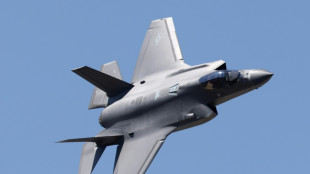 Missing F-35 fighter parts 'not sensitive', says Australia minister

 Cambodia showcases scams crackdown with global conference

Watching someone cry often evokes an emotional response -- but according to a new study published Thursday, human tears themselves contain a chemical signal that reduces brain activity linked to aggression.
The research was carried out by the Weizmann Institute of Science, Israel, and appeared in PLOS Biology, a US science journal. Though it involved female tears, because women made themselves available as donors, it probably isn't a sex-dependent effect, the authors say.
Numerous studies have shown rodent tears contain chemicals serving as social signals they emit on demand -- female mice tears for example reduce fighting among males; and subordinate male mole rats smear themselves in their own tears so that dominant males attack them less.
To find out whether similar effects occurred in humans, a team led by PhD student Shani Agron first exposed 25 male volunteers to either "emotional" tears, or to saline. The volunteers couldn't tell what they were sniffing as both substances are clear and odorless.
The tears were obtained from six female volunteers who watched sad films in isolation and used a mirror to capture the liquid in a vial as it trickled down their cheeks.
"When we looked for volunteers who could donate tears, we found mostly women, because for them it's much more socially acceptable to cry," said Agron in a statement.
She added that since prior research had shown tears reduce testosterone levels in men, and that lowering testosterone has a greater effect on aggression in men than in women, "we began by studying the impact of tears on men because this gave us higher chances of seeing an effect."
They had the volunteers play a computer game that had been well established in prior aggression studies, and involves accumulating money while a fictitious opponent could steal their earnings.
Given the opportunity, the men could get revenge on the other player by causing them to lose money, even though in their own case they would not gain from the opponent's loss.
Such revenge-seeking, aggressive behavior in the game dropped 43.7 percent after men sniffed the tears.
This appeared to mirror what had been observed in rodents, but unlike rodents, humans don't have a structure in their noses called a vomeronasal organ, which was lost during our species' evolution and detects odorless chemical signals.
To find out what was going on, the researchers applied the tears to 62 olfactory receptors in a lab dish and found that four receptors were activated by tears, but not saline.
Finally, the scientists repeated the experiments with the men's brains connected to MRI scanners.
The imaging revealed the prefrontal cortex and anterior insula, which are related to aggression, became more active when men were provoked during the game, but the effect was not as strong if they had sniffed tears.
"We note that crying often occurs in very close-range interactions, to the extent that 'kissing teary cheeks' is a recurring theme across cultures," wrote the authors, adding that emitting chemical signals to prevent aggression was probably even more important among infants, where verbal communication isn't possible.
G.Schulte--BTB