-
 Trump renames AI 'super intelligence' as leaders jostle over dangers
-
Man City hold Bayern to start Women's Champions League, Arsenal win late

-
 Oil prices retreat as markets welcome US-Iran talks
-
Trump threatens Iran with 'hell' but reveals fresh talks

-
 US refusing to give Sudan's de facto leader visa for UN: diplomatic sources, UN
-
Trump signs security deal with Greenland, Denmark at UN

-
 Macron urges world to choose UN over 'law of the jungle'
-
Trump threatens Iran with 'hell' but unveils fresh talks

-
 All-rounder Jacks stars as England beat Sri Lanka in 1st ODI
-
Chile's Atacama Desert blossoms with life after El Nino rains

-
 Man City peg back Bayern to start Women's Champions League
-
Sri Lanka hands 220-year jail terms to 15 convicted of Easter bombings

-
 Trump beats 'America first' drum at UN as allies tread carefully
-
Typhoon Dujuan leaves 7 dead in Japan from landslides, flooding: media

-
 Snedeker backs Spaun for Ryder Cup after Presidents snub
-
Ganna and Borghini lead Italy to mixed relay gold at cycling worlds

-
 French prosecutors probe secret filming of women with smart glasses
-
Drug cocktail killed former child star Hayden Panettiere: coroner

-
 Trump renames AI "super intelligence," rejects international oversight
-
Moldova declares energy, water emergency

-
 Trump rejects international regulation of AI
-
French Holocaust denier jailed for eight months

-
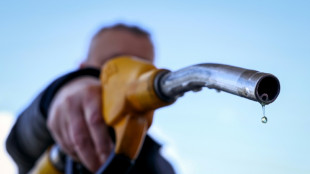 How is the EU approaching record fuel prices?
-
Oil prices slide, AI stock buzz fades

-
 Sri Lanka's Colombage strikes on debut as England dismissed for 265 in first ODI
-
Trump threatens to 'annihilate' Iran in bombastic UN speech

-
 Hurricane Polo strengthens to top category 5 off Mexico
-
Prada's skirts take centre stage as Milan Fashion Week begins

-
 11 hurt as teen opens fire outside school in western Turkey
-
Quoin Pharmaceuticals Announces FDA Fast Track Designation for QRX003 for the Treatment of Peeling Skin Syndrome

-
 UN chief says 'Big Oil' treats atmosphere as open sewer
-
Brazil's Flavio Bolsonaro turns scandal into poll gains

-
 Tunisia says 2026 summer hottest on record
-
Republican senator seeks probe of Trump Jr Russian-funded wedding

-
 England's Rashid out of Sri Lanka ODIs with hand injury
-
Memoir by Diana's brother goes on sale after rocking UK monarchy

-
 Houthis accuse Saudi Arabia of deadly strikes as thousands flee
-
Newcomers South Korea face holders Italy in Davis Cup finals

-
 Stocks climb as oil slides, AI buzz returns
-
Japan's Kojima sounds Marchand warning with Asian Games gold

-
 India cricketers win in style as Afghan savours 'special' Games silver
-
England rugby star Pollock signs new Northampton deal

-
 La Liga president hits out at Real Madrid refereeing 'conspiracy' claims
-
STARTRADER Expands Its Chinese Equity CFD Range with CXMT and Unitree Robotics

-
 MEXC Launches “Real Stocks, Real Friends” with Rewards for Bringing Friends to Wall Street
-
MEXC Expands Opportunity Compass with Stock Trading Handbook to Help Crypto Users Build Investment Knowledge

-
 Mbappe continues media push for Ballon d'Or recognition
-
England paceman Wood retires from international cricket

-
 Stocks rise on AI buzz, oil prices cool
-
Magnificent Mandhana's 79 helps India to Asian Games cricket gold

Private US lunar lander faces failure after 'critical' fuel loss
A historic private mission to land on the Moon faced near-certain failure Monday after the spacecraft suffered a "critical loss" of fuel, dealing a major blow to America's hopes of placing its first robot on the lunar surface in five decades.
Fixed to the top of United Launch Alliance's new Vulcan rocket, which was making its first flight, Astrobotic's Peregrine Lunar Lander blasted off overnight from Florida's Cape Canaveral Space Force Station, then successfully separated from its launch vehicle.
A few hours later, Astrobotic began reporting technical troubles, starting with an inability to orient Peregrine's top-mounted solar panel towards the Sun and keep its onboard battery topped up, due to a malfunction in its propulsion system.
Though engineers "improvised" a way to tilt the spacecraft in the right direction and keep its power going, the company posted on X that the same failure appeared to be the causing "critical loss of propellant."
On Monday night, Astrobotic said it had approximately 40 hours of fuel remaining before Peregrine entered an "uncontrollable tumble."
"At this time, the goal is to get Peregrine as close to lunar distance as we can before it loses the ability to maintain its Sun-pointing position and subsequently loses power," the company said, leaving observers wondering whether they may attempt a crash landing, even if controlled descent was out of the question.
Earlier, they released an image taken from a mounted camera that showed extensive damage to an outer layer of the spacecraft, saying it was evidence of the propulsion system anomaly without explaining further.
Peregrine was supposed to reach the Moon, then orbit for several weeks before landing in a mid-latitude region called Sinus Viscositatis on February 23.
A soft landing on Earth's nearest celestial neighbor has thus far only been accomplished by a handful of national space agencies: the Soviet Union was first, in 1966, followed by the United States, which is still the only country to put people on the Moon.
China has successfully landed three times since 2013, while India was the most recent to achieve the feat last year.
- Pivot to private -
The United States is turning to the commercial sector to stimulate a broader lunar economy and ship its hardware at a fraction of the cost under the Commercial Lunar Payload Services (CLPS) program -- but Astrobotic's apparent failure could lead to criticism of the new strategy.
NASA Administrator Bill Nelson however doubled down, praising the success of ULA's Vulcan rocket on its maiden voyage, which maintained the company's 100 percent success rate in more than 150 launches.
"Spaceflight is a daring adventure, and @astrobotic is making progress for CLPS deliveries and Artemis. @NASA will continue to expand our reach in the cosmos with our commercial partners," Nelson said on X.
NASA paid Astrobotic more than $100 million, while another contracted company, Houston-based Intuitive Machines, is looking to launch in February and land near the Moon's south pole.
The space agency hopes to use such missions to probe the lunar environment, paving the way for its Artemis program to return astronauts to the Moon later this decade, in preparation for future missions to Mars.
- Failure happens -
Controlled touchdowns on the Moon are challenging, with roughly half of all attempts failing.
In the absence of an atmosphere that would allow the use of parachutes, a spacecraft must navigate treacherous terrain using only its thrusters to slow descent.
Private missions by Israel and Japan, as well as a recent attempt by the Russian space agency, have all ended in failure -- though Japan's space agency is targeting mid-January for the touchdown of its SLIM lander launched last September.
In addition to the science instruments it carried for NASA, Peregrine contains more colorful cargo paid for by private customers, such as a physical Bitcoin as well as cremated remains and DNA, including those of Star Trek creator Gene Roddenberry, legendary sci-fi author Arthur C. Clarke, and a dog.
The Navajo Nation, America's largest Indigenous tribe, had objected to sending human remains to the Moon, calling it a desecration of a sacred space. Though they were granted a last-ditch meeting with White House and NASA officials, their misgivings were ultimately ignored.
A.Gasser--BTB