Chip giant TSMC shifts away from hotspot Taiwan with Japan plant / Photo: © AFP

 Voting opens in Alaska's annual Fat Bear Week

 MLS coach axed for telling female ref 'It's a man's game'

 US refuses to give Sudan's de facto leader visa for UN

 Man City hold Bayern to start Women's Champions League, Arsenal win late
 Trump threatens Iran with 'hell' but reveals fresh talks

 Trump signs security deal with Greenland, Denmark at UN

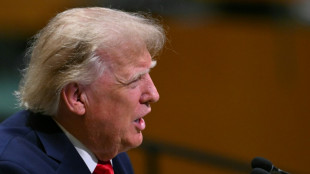 Trump threatens Iran with 'hell' but unveils fresh talks

 Chile's Atacama Desert blossoms with life after El Nino rains

 Sri Lanka hands 220-year jail terms to 15 convicted of Easter bombings

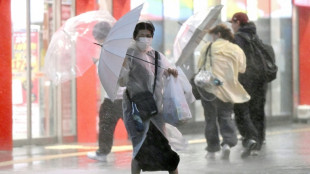 Typhoon Dujuan leaves 7 dead in Japan from landslides, flooding: media

 Ganna and Borghini lead Italy to mixed relay gold at cycling worlds

 Drug cocktail killed former child star Hayden Panettiere: coroner

 Moldova declares energy, water emergency

 French Holocaust denier jailed for eight months

 Oil prices slide, AI stock buzz fades

 Trump threatens to 'annihilate' Iran in bombastic UN speech

 Prada's skirts take centre stage as Milan Fashion Week begins

 Quoin Pharmaceuticals Announces FDA Fast Track Designation for QRX003 for the Treatment of Peeling Skin Syndrome

 Brazil's Flavio Bolsonaro turns scandal into poll gains
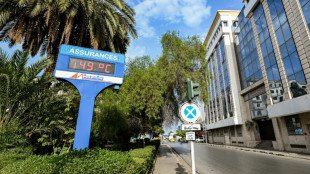
 Republican senator seeks probe of Trump Jr Russian-funded wedding

 Memoir by Diana's brother goes on sale after rocking UK monarchy

 Newcomers South Korea face holders Italy in Davis Cup finals

 Japan's Kojima sounds Marchand warning with Asian Games gold

 England rugby star Pollock signs new Northampton deal

 STARTRADER Expands Its Chinese Equity CFD Range with CXMT and Unitree Robotics

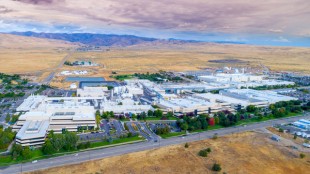
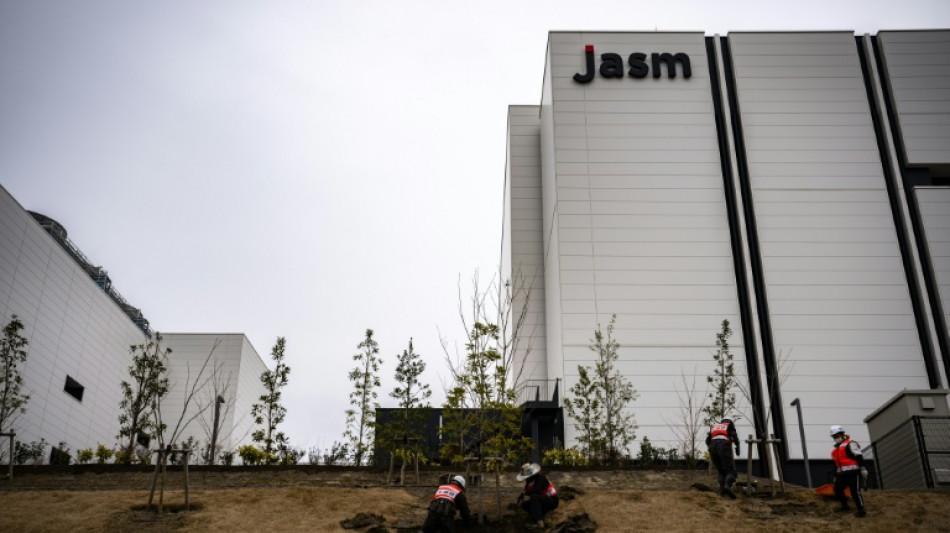
Taiwanese chip giant TSMC is set to open an $8.6 billion plant in Japan on Saturday as the firm moves some of its crucial hardware manufacturing away from its native base.
Taiwan Semiconductor Manufacturing Company, which counts Apple and Nvidia as clients, produces half the world's chips, used in everything from smartphones to satellites and increasingly to power AI technology.
But TSMC's customers, as well as governments concerned about supplies of chips vital to the economy and to defence, want the firm to make more chips away from the self-ruled island.
China's increasing assertiveness towards Taiwan -- which it claims as its own territory and has not ruled out taking by force -- has sparked worries about the world's dependence on the island for chips production and pushed TSMC to diversify where it makes them.
The new plant in Japan is "the most significant TSMC international investment to open in many years", said Chris Miller, author of "Chip War: The Fight for the World's Most Critical Technology".
"It will also solidify the political relationship between Taiwan and Japan at a time when Taiwan is looking to make sure it's got powerful friends that can help it stand up to Chinese pressure," Miller told AFP.
But TSMC's new facility on the southern island of Kyushu is also a coup for Japan as it vies with the United States and Europe to woo semiconductor firms with huge subsidies.
- State sweeteners -
Prime Minister Fumio Kishida will reportedly be among those attending Saturday afternoon's opening ceremony with senior TSMC executives.
Firms like Toshiba and NEC helped Japan dominate in microchips in the 1980s but competition from South Korea and Taiwan saw its global market share slump from more than 50 percent to around 10 percent.
Now Japan is making available up to four trillion yen ($26.7 billion) in state sweeteners to help triple the sales of domestically produced chips to more than 15 trillion yen by 2030.
The new TSMC plant in the town of Kikuyo, for which the government pledged over 40 percent of the costs -- Sony and Denso are also on board -- is just the first.
With "strong" Japanese government support, TSMC this month announced a second facility, to make more advanced chips, and is reportedly eyeing a third and even a fourth.
Others getting state funds include Kioxia, Micron and Rapidus, an ambitious joint venture involving IBM and Japanese firms for state-of-the-art two-nanometre logic chips.
- Welcome banners -
TSMC is building a second factory in the US state of Arizona and plans another in Germany, its first in Europe.
But Japan has the advantage of being geographically closer, has a wealth of experience in the sector and, for the Kikuyo plant at least which took 22 months to build, is fast.
By contrast in the United States, which itself has announced subsidies of $52.7 billion to boost its own sector, the Arizona plant has been delayed and has seen disputes with unions.
"I have seen many factories being built by various companies, but TSMC was built with remarkable speed," Taro Imamura, a local official in Kikuyo, told AFP.
"Everyone in town, from children to the elderly, now knows the words 'chips' and 'TSMC'," Imamura said at Kikuyo's town hall, where a banner reads "We welcome TSMC workers".
The Kumamoto area of Kyushu is already a hub for Japanese semiconductor companies, including makers of machines for chip fabs like Tokyo Electron that are doing brisk business with China.
But as with other sectors in ageing Japan, there are worries about finding enough workers, particularly with local students either leaving or preferring other industries than chips.
Graduates are "more interested in software", Kenichiro Takakura, associate professor at the National Institute of Technology's Kumamoto College, told AFP.
A.Gasser--BTB