The women scientists forgotten by history / Photo: © AFP/File

 Indians living in Japan on stand-by to house Asian Games athletes

 Trump signs bill authorizing sweeping Russia sanctions
 Protesters form human chain at Kennedy Center after Trump threat

 Death toll from attack at police HQ in Pakistan rises to 31
 Trump says Denmark to give US 'permanent control' over Greenland security

 Kennedy Center: future unclear for iconic Washington arts hub
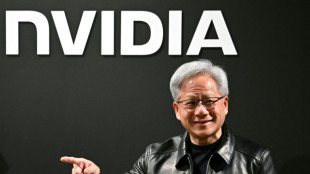
 Trump claims 'infinite' Greenland security deal with Denmark

 Helicopters battle wildfire threatening Ecuador's capital

 Brentford batter Chelsea to undo Alonso's promising start

 Kane hits Bundesliga century as Bayern rout Union

 Trump says CNN, MS NOW, Politico banned from White House

 Hushing and hedging: US companies retreat on climate

 Springboks to face Fiji before 2027 Rugby World Cup

 Nigeria miners struggled to breathe in cell before 37 died: survivors

 McIlroy on the charge at PGA Championship as Reed withdraws
 McIlroy on the charge at PGA Championship

 Crisis-wracked Volkswagen warns of 10-bn-euro hit to profits

 Costa Rica's Grynspan tops third informal poll for UN chief: diplomat

 Stock markets retreat after central bank rate hikes

 Russia labels director of Cannes Grand Prix winner a 'foreign agent'

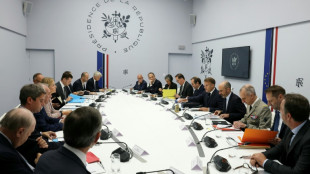 Macron warns of Russian 'hybrid' threat after meeting presidential hopefuls

 UN holds third informal poll for new chief

 Kulusevski return can spark Spurs: De Zerbi

 Shakira to cap off world tour with Madrid 12-gig run

 Isolated Syrian-Druze city blames Damascus for shortages

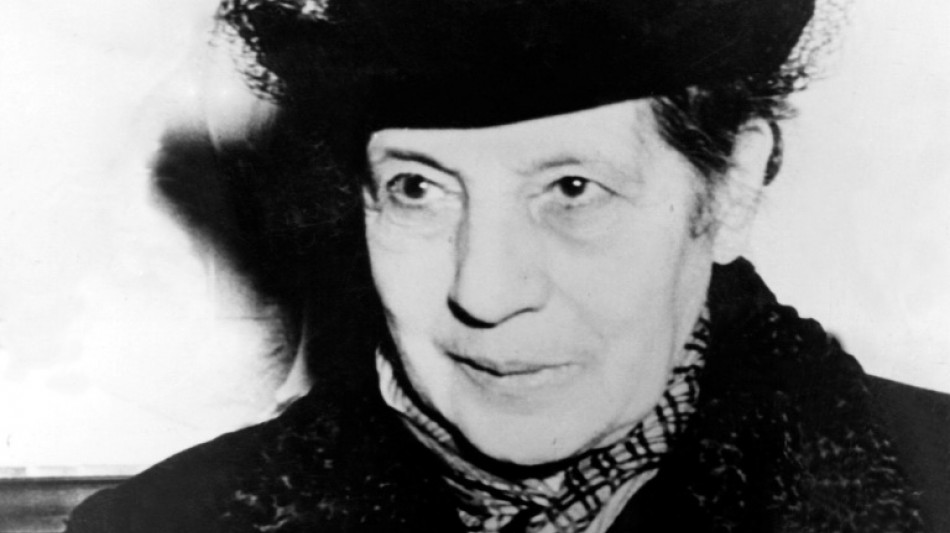
French doctor and researcher Marthe Gautier, who died over the weekend, was one of a long line of women scientists who greatly contributed to scientific discovery only to see the credit go to their male colleagues.
Here are just a few of the women scientists whose work was forgotten by history.
- Marthe Gautier -
Gautier, who died at the age of 96 on Saturday, discovered that people with Down's syndrome had an extra chromosome in 1958.
But when she was unable to identify the exact chromosome with her lower-power microscope, she "naively" lent her slides to geneticist Jerome Lejeune, she told the Science journal in 2014.
She was then "shocked" to see the discovery of the extra chromosome 21 published in research six month later, with Lejeune's name first and hers second -- and her name misspelled.
It was not until 1994 that the ethics committee of France's INSERM medical research institute said Lejeune was unlikely to have played the "dominant" role in the discovery.
- Rosalind Franklin -
British chemist Rosalind Franklin's experimental work led to her famous 1952 X-ray image "Photo 51", which helped unlock the discovery of the DNA double helix.
But Francis Crick and James Watson were working on a similar theory at the time, and their research was published ahead of Franklin's in the same journal, leading many to think her study merely supported theirs.
Crick and Watson won the Nobel Prize for Medicine for the discovery in 1962 -- Franklin had died four years earlier at the age of just 37.
In a letter from 1961 that emerged in 2013, Crick acknowledged the importance of her work in determining "certain features" of the molecule.
- Jocelyn Bell Burnell -
British astrophysicist Jocelyn Bell Burnell discovered the first radio pulsars when she was a postgraduate student in 1967.
But it was her thesis supervisor and another male astronomer who won 1974's Nobel Prize in Physics for the discovery.
- Lise Meitner -
Austrian-Swedish physicist Lise Meitner was one of the key people responsible for discovering nuclear fission, leading to Albert Einstein dubbing her the "German Marie Curie".
However it was her long-term collaborator Otto Hahn who won the 1944 Nobel Prize in Chemistry for the discovery.
- Chien-Shiung Wu -
Chinese-American physicist Chien-Shiung Wu worked on the Manhattan Project and conducted the "Wu experiment", which overturned what had been previously considered a fundamental law of nature -- the conservation of parity.
But again it was her male colleagues who won the 1975 Nobel Physics prize for the research.
Her work earned her the nickname "Chinese Madame Curie".
- And so on -
The list could go -- and the women scientists named above are merely those whose contributions have been belatedly recognised decades later.
The contributions of male scientists' wives, mothers and daughters are also believed to have long been overlooked, including that of Einstein's first wife, mathematician and physicist Mileva Maric.
In 1993 American historian Margaret Rossiter dubbed the systematic suppression of women's contributions to scientific progress the "Matilda effect", after US rights activist Matilda Joslyn Gage.
Even today the role played by women in scientific history is under-represented in school textbooks, French historian Natalie Pigeard-Micault told AFP.
"It gives the impression that scientific research is limited to a handful of women," she said, pointing to how Marie Curie was always an "exceptional" reference point.
M.Odermatt--BTB