Neural networks, machine learning? Nobel-winning AI science explained / Photo: © AFP

 Schoolgirl Yu, 13, fastest again in bid for third Asian Games gold
 Oil prices fall after Trump hails 'good' talks with Iran
 AI political ads warp reality ahead of US midterms
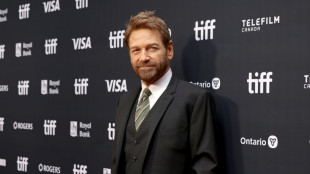 Kenneth Branagh embraces action hero role -- to get in shape
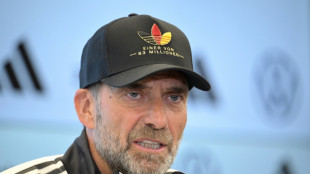 'New one' Klopp promises fresh approach as Germany reign begins
 Milne returns to New Zealand squad for India T20 series
 US-led Americas coalition backs sanctions against crime groups
 'Star Wars' fans and art lovers line up for new Lucas museum
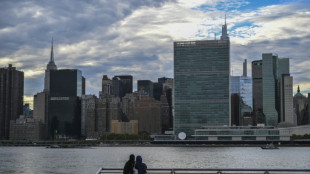
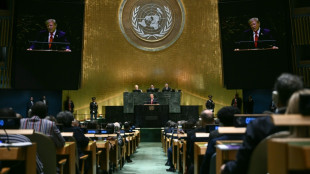 Trump renames AI 'super intelligence' as leaders jostle over dangers
 Oil prices retreat as markets welcome US-Iran talks
 US refusing to give Sudan's de facto leader visa for UN: diplomatic sources, UN
 Macron urges world to choose UN over 'law of the jungle'
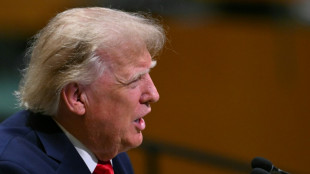
 All-rounder Jacks stars as England beat Sri Lanka in 1st ODI

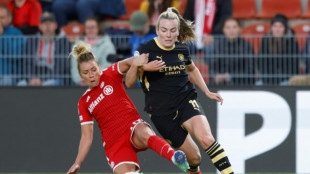 Man City peg back Bayern to start Women's Champions League

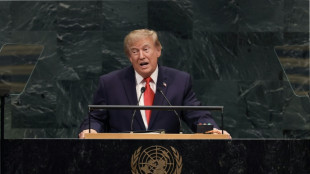 Trump beats 'America first' drum at UN as allies tread carefully
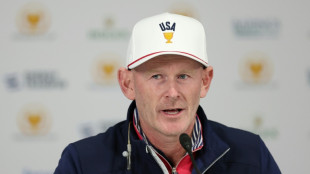 Snedeker backs Spaun for Ryder Cup after Presidents snub
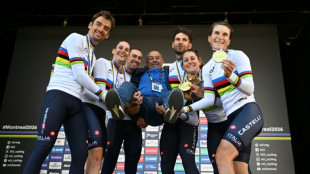
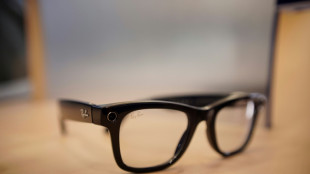 French prosecutors probe secret filming of women with smart glasses
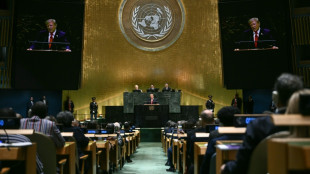 Trump renames AI "super intelligence," rejects international oversight
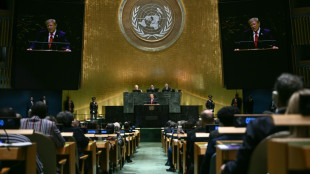 Trump rejects international regulation of AI
 How is the EU approaching record fuel prices?
 Sri Lanka's Colombage strikes on debut as England dismissed for 265 in first ODI
 Hurricane Polo strengthens to top category 5 off Mexico
 11 hurt as teen opens fire outside school in western Turkey

 UN chief says 'Big Oil' treats atmosphere as open sewer
 Tunisia says 2026 summer hottest on record
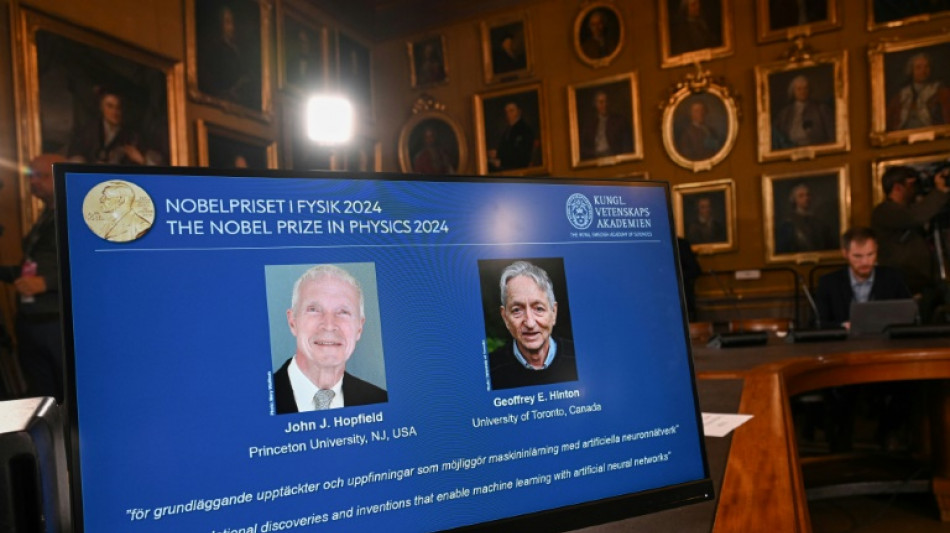
The Nobel Prize in Physics was awarded to two scientists on Tuesday for discoveries that laid the groundwork for the artificial intelligence used by hugely popular tools such as ChatGPT.
British-Canadian Geoffrey Hinton, known as a "godfather of AI," and US physicist John Hopfield were given the prize for "discoveries and inventions that enable machine learning with artificial neural networks," the Nobel jury said.
But what are those, and what does this all mean? Here are some answers.
- What are neural networks and machine learning? -
Mark van der Wilk, an expert in machine learning at the University of Oxford, told AFP that an artificial neural network is a mathematical construct "loosely inspired" by the human brain.
Our brains have a network of cells called neurons, which respond to outside stimuli -- such as things our eyes have seen or ears have heard -- by sending signals to each other.
When we learn things, some connections between neurons get stronger, while others get weaker.
Unlike traditional computing, which works more like reading a recipe, artificial neural networks roughly mimic this process.
The biological neurons are replaced with simple calculations sometimes called "nodes" -- and the incoming stimuli they learn from is replaced by training data.
The idea is that this could allow the network to learn over time -- hence the term machine learning.
- What did Hopfield discover? -
But before machines would be able to learn, another human trait was necessary: memory.
Ever struggle to remember a word? Consider the goose. You might cycle through similar words -- goon, good, ghoul -- before striking upon goose.
"If you are given a pattern that's not exactly the thing that you need to remember, you need to fill in the blanks," van der Wilk said.
"That's how you remember a particular memory."
This was the idea behind the "Hopfield network" -- also called "associative memory" -- which the physicist developed back in the early 1980s.
Hopfield's contribution meant that when an artificial neural network is given something that is slightly wrong, it can cycle through previously stored patterns to find the closest match.
This proved a major step forward for AI.
- What about Hinton? -
In 1985, Hinton revealed his own contribution to the field -- or at least one of them -- called the Boltzmann machine.
Named after 19th century physicist Ludwig Boltzmann, the concept introduced an element of randomness.
This randomness was ultimately why today's AI-powered image generators can produce endless variations to the same prompt.
Hinton also showed that the more layers a network has, "the more complex its behaviour can be".
This in turn made it easier to "efficiently learn a desired behaviour," French machine learning researcher Francis Bach told AFP.
- What is it used for? -
Despite these ideas being in place, many scientists lost interest in the field in the 1990s.
Machine learning required enormously powerful computers capable of handling vast amounts of information. It takes millions of images of dogs for these algorithms to be able to tell a dog from a cat.
So it was not until the 2010s that a wave of breakthroughs "revolutionised everything related to image processing and natural language processing," Bach said.
From reading medical scans to directing self-driving cars, forecasting the weather to creating deepfakes, the uses of AI are now too numerous to count.
- But is it really physics? -
Hinton had already won the Turing award, which is considered the Nobel for computer science.
But several experts said his was a well-deserved Nobel win in the field of physics, which started science down the road that would lead to AI.
French researcher Damien Querlioz pointed out that these algorithms were originally "inspired by physics, by transposing the concept of energy onto the field of computing".
Van der Wilk said the first Nobel "for the methodological development of AI" acknowledged the contribution of the physics community, as well as the winners.
"There is no magic happening here," van der Wilk emphasised.
"Ultimately, everything in AI is multiplications and additions."
O.Bulka--BTB