Latest sandstorm brings Iraq to standstill / Photo: © AFP

 Hong Kong court set to sentence activist Joshua Wong in security case

 Australia raises benchmark rate to highest level in 18 years

 'The Remarried Empress' Cast Discusses Bringing Fantasy Royal Drama to Life

 Asian stocks retreat as AI worries outweigh steep oil-price drop
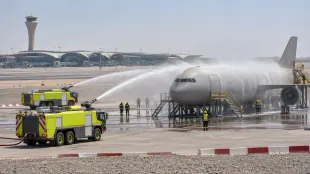 Hamad International Airport stages emergency drills during WATAN 2026

 Global failure to punish attacks leaves journalists at continuing risk

 Researchers Warn 'Bookkeeping Trick' Masks Beef Industry's Methane Emissions

 Climate Change Intensified Atlantic Hurricanes, Study Finds

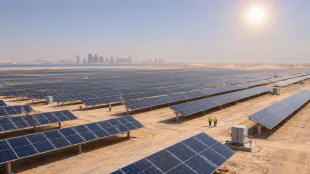 Qatar solar expansion opens scope for technical performance gains

 IXOPAY Announces IXO One, a Modular Payments Platform Built for an Era of Fluid Commerce
Another sandstorm that descended Monday on Iraq sent at least 2,000 people to hospital with breathing problems and led to the closure of airports, schools and public offices across the country.
It is the eighth duststorm since mid-April to hit Iraq, which has been battered by soil degradation, intense droughts and low rainfall linked to climate change.
The last one earlier this month led to the death of one person while 5,000 others had to be hospitalised for respiratory problems.
On Monday a thick cloud of dust enveloped the capital Baghdad in an orange glow and blanketed many other cities including the Shiite shrine city of Najaf to the south, and Sulaimaniyah, in the northern Kurdish autonomous region, AFP correspondents said.
Yellow and orange sand covered building roofs, cars and even crept into homes.
Authorities in seven of Iraq's 18 provinces, including Baghdad, ordered government offices to shut.
But health facilities remained open to assist those most at risk, including the elderly and people suffering from chronic respiratory diseases and heart ailments.
By midday at least 2,000 people were admitted to hospitals across Iraq in need of oxygen, said health ministry spokesman Seif al-Badr.
AFP correspondents saw around 20 patients, most of them elderly men, at Baghdad's Sheikh Zayed Hospital.
One of them was Hadi Saada, 70, lying on his side on a bed in the intensive care unit hooked to a respirator. He struggled to breathe.
- 'Suffocating from dust' -
"It is his third time in hospital" since the sandstorms began in April, said his son Mohammed Saada, adding that his father had a heart condition.
Another patient, Khaled Jassem, 70, was also hooked to an oxygen tank.
"We've been here since 8:00 am... My father has a heart ailment, diabetes, hypertension and is suffocating on the dust," said his son Walid Jassem.
At least 75 people struggling to breathe were admitted Monday to Sheikh Zayed, said Talib Abdelmoneim Nejm, one of the ICU officials.
The sandstorm drastically reduced visibility to just 300 metres (yards) at Baghdad airport, prompting authorities to close airspace and halt flights, state-run INA news agency reported.
Airports in Najaf and Sulaimaniyah were also closed for the day, the agency said.
Schools nationwide were also shuttered and end of year exams postponed to Tuesday. Universities also delayed exams.
The latest sandstorm was expected to gradually dissipate by Monday evening, weather services said.
The Middle East has always been battered by dust and sandstorms but they have become more frequent and intense in recent years.
The trend has been associated with overuse of river water, more dams, overgrazing and deforestation.
Iraq is rich in oil and is known in Arabic as the land of the two rivers -- in reference to the legendary Tigris and Euphrates rivers.
In April, an environment ministry official warned that Iraq could face "272 days of dust" a year over the next two decades.
tgg/hkb/it
E.Schubert--BTB