Jamestown, cradle of America, threatened by rising seas / Photo: © AFP

 Germans vote in elections threatening fresh blow to Merz

 US fears rapid escalation in Mideast after Houthis attack Riyadh

 Japan triathlete Hojo wins first gold of Asian Games

 IOC president impressed by 'beautiful' Asian Games wooden huts

 First Asian Games gold goes to Japan as China's 13-year-old Yu lights up pool

 Data centre command hub keeps AI up and running
 Pope Leo in France: the issues on the table

 Packing for a pope: behind the scenes on foreign trips

 Republicans find transgender issues a powerful political weapon in midterm campaigning

 German state elections threaten new shock waves for Merz

 Chile's Bachelet quits race to be next UN chief

 Raphinha treble fires perfect Barca to win at Sevilla

 Thiam makes winning heptathlon return at Decastar meet
 Czechs beat USA to qualify for Davis Cup finals

 Dortmund sink Stuttgart to climb to Bundesliga summit

 Trump says will not tolerate attempts to slow AI growth

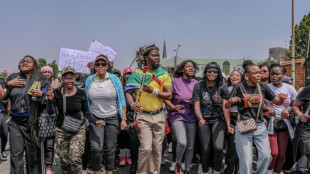 'It has to stop': runners protest women's murders in S.Africa district

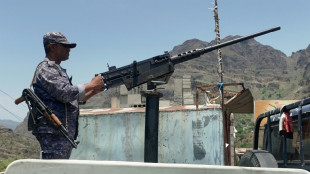 Fire erupts near Riyadh airport as Houthis claim strikes

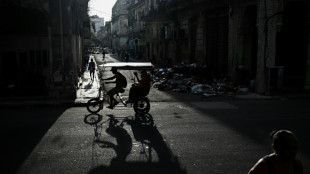 Cuba works to restore power after another blackout

 England thrash Sri Lanka again to return to top of T20 rankings
 Arsenal thrashed by Brighton, sorry Spurs lose again

 South Korea, Austria qualify for Davis Cup finals

 Seare shocks Ingebrigtsen to win world 5km gold

 Brigitte Bardot widower slams sale of star's belongings

 Aston Villa compound Tottenham's misery despite late rally

The waters rose overnight and by morning formed a shallow pond over the grassy field covering a cemetery in Jamestown, one of the founding sites of the American nation.
Curators -- their feet wet from the water -- say it is just the latest in a seemingly endless series of flooding at the first permanent English settlement in North America, a location that was also home to Native American tribes for thousands of years.
Sandbags and tarps provide some protection from the elements, but curators warn that time is running out for Jamestown, which is increasingly under threat from rising sea levels and extreme weather as climate change takes its toll.
"All of the archeological resources that we haven't had a chance to investigate yet could be destroyed," said Michael Lavin, director of collections at Jamestown Rediscovery Foundation, the association in charge of the site in the US state of Virginia.
Earlier this month, the National Trust for Historic Preservation, a leading heritage institution, placed Jamestown on its 2022 list of the country's 11 most endangered historic sites.
- 'Need to do something' -
"We need to do something, and we need to do it now," said Lavin, fording a flooded path to get to his office.
David Givens, director of archeology, has like his colleague worked here for more than 20 years.
"For most of our lives, this is a dry area," he said.
The flooding today has risen by a meter (yard), a level that will be the norm by the end of the century, according to average projections.
"This is a perfect example of sea level rise, climate change and how it's affecting us," said the archeologist.
Sea levels at the mouth of the James River have already risen 18 inches (45 centimeters) since 1927.
Worries run high, given that the site is a distillation of so much American history: in addition to the English settlers, it was home to native American tribes for 12,000 years and, in 1619, was the first place that African slaves were brought in Britain's North American territories.
- Bones 'like sponges' -
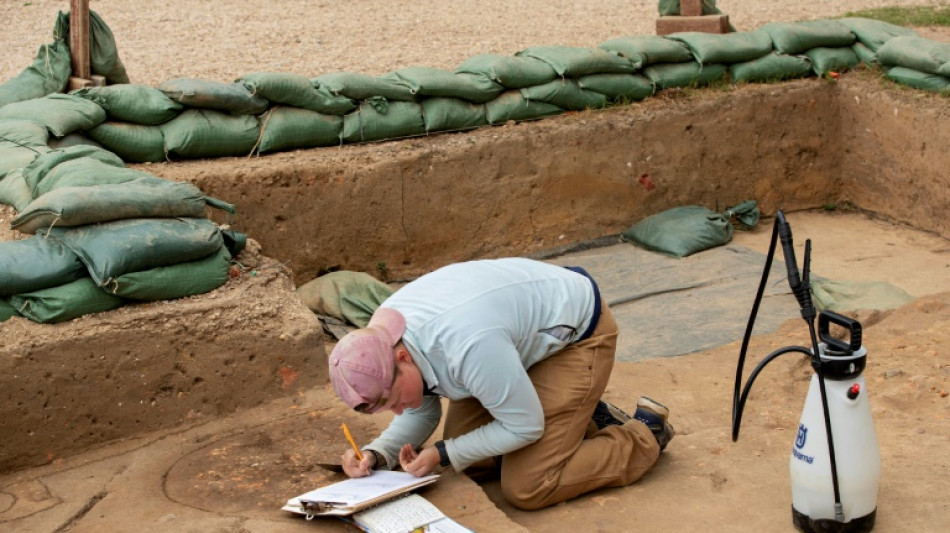
At the foot of the old church, archeologist Caitlin Delmas scrapes at the ground with her trowel, surrounded by the sandbags and tarps that are deployed with each downpour.
"That's also a lot of added stress, because you have to make sure that everything's staying dry," she said.
In 2013, a study of the bones of a young woman found here made it possible to confirm that she had been the victim of cannibalism during a famine the colonists suffered during the winter of 1609-1610.
But such rare discoveries may never be made again: Delmas said recently unearthed bones were "like sponges," and cannot be analyzed due to too much alternation between being dry and wet.
Givens said it is "almost like in war, like a trench and sandbags, because it's a constant fight for us."
"Over time, those archaeology sites will be inaccessible, they'll be eroded from saltwater, inundation," he said, adding: "That's I think what scares me most."
Marcy Rockman, a pioneer in the study of the impact of climate change on cultural resources in US national parks, said cultural heritage sites "have always been affected by storms and wind and rain."
"But it's more that those forces are accelerating. They're intensifying. They're recombining in new ways. They're coming at different times of the year" due to climate change, she said.
In the wide estuary facing Jamestown, a handful of barges are bringing blocks of granite, waiting for more favorable weather to come and reinforce the existing sea wall that was built at the beginning of the 20th century to protect the site from the erosion.
The project, costing more than $2 million, is only a first step: studies are being launched into the flooding, and "it's going to cost tens of millions of dollars," said Lavin.
In Jamestown, the ebb tide has relieved the flooding a little, leaving fish splashing above the old cemetery that has never been properly excavated, and which will soon turn into a swamp if nothing is done.
"Human remains are our data recorders for the past," said Givens. "There's some urgency to studying that."
Katherine Malone-France, head of conservation at the National Trust for Historic Preservation, said in her Washington office that the clock is ticking.
"We have a five year window at Jamestown to begin to seriously mitigate the impacts of climate change," she said. "It's urgent."
G.Schulte--BTB

