Italy marks 30-year anniversary of murder of anti-mafia judge Falcone / Photo: © AFP

 Drones hit Moscow as Russians go to the polls
 New England boss Fleming says 'wrong' to ask Stokes to end retirement
 Germans vote in elections threatening fresh blow to Merz
 US fears rapid escalation in Mideast after Houthis attack Riyadh
 Japan triathlete Hojo wins first gold of Asian Games
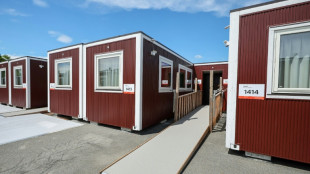 IOC president impressed by 'beautiful' Asian Games wooden huts
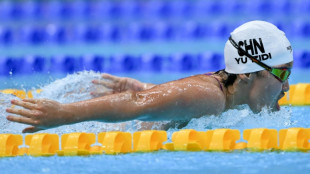
 First Asian Games gold goes to Japan as China's 13-year-old Yu lights up pool
 Data centre command hub keeps AI up and running
 Pope Leo in France: the issues on the table
 Packing for a pope: behind the scenes on foreign trips
 Republicans find transgender issues a powerful political weapon in midterm campaigning

 German state elections threaten new shock waves for Merz
 Chile's Bachelet quits race to be next UN chief
 Raphinha treble fires perfect Barca to win at Sevilla
 Thiam makes winning heptathlon return at Decastar meet
 Czechs beat USA to qualify for Davis Cup finals
 Dortmund sink Stuttgart to climb to Bundesliga summit
 Trump says will not tolerate attempts to slow AI growth
 'It has to stop': runners protest women's murders in S.Africa district
 Fire erupts near Riyadh airport as Houthis claim strikes
 Cuba works to restore power after another blackout
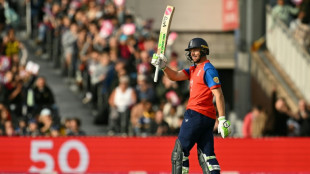 England thrash Sri Lanka again to return to top of T20 rankings
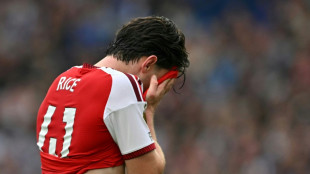
 Arsenal thrashed by Brighton, sorry Spurs lose again
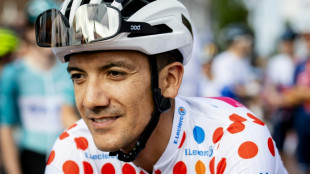
 South Korea, Austria qualify for Davis Cup finals
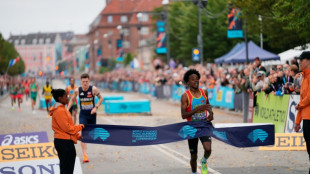 Seare shocks Ingebrigtsen to win world 5km gold
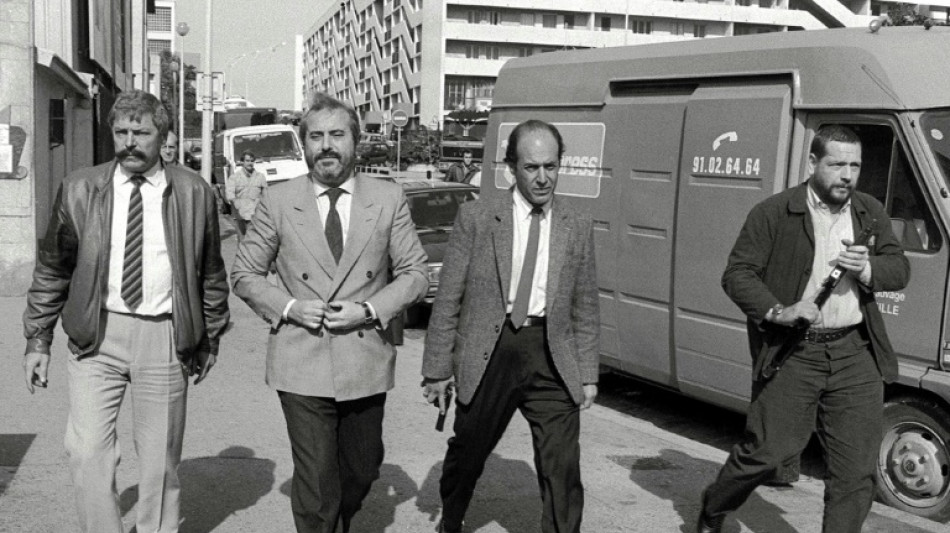
Thirty years ago, the Sicilian mafia killed judge Giovanni Falcone with a bomb so powerful it was registered by experts monitoring volcanic tremors from Etna on the other side of the island.
The explosion, which ripped through a stretch of motorway near Palermo at 5:56 pm on May 23, 1992 sent shockwaves across Italy, but also signalled the start of the mafia's decline.
Anti-mafia prosecuting magistrate Falcone, his wife, and three members of his police escort were killed.
The mob used a skateboard to place a 500-kilogramme (1,100-pound) charge of TNT and ammonium nitrate in a tunnel under the motorway which linked the airport to the centre of Palermo.
Falcone, driving a white Fiat Croma, was returning from Rome for the weekend.
At a look-out point on the hill above, a mobster nicknamed "The Pig" pressed the remote control button as the judge's three-car convoy passed.
The blast ripped through the asphalt, shredding bodies and metal, and flinging the lead car several hundred metres.
The three policemen on board were killed instantly.
Falcone, whose wife was sitting beside him, had slowed seconds before the explosion and the car slammed into a concrete guard rail.
His chauffeur, who was sitting in the back, survived, as did the three agents in the convoy's rear.
A "garden of memory" now stands on the site of the attack. Oil from olive trees that grow there is used by Sicilian churches for anointing children during baptisms and confirmations.
- 'Mafia massacre' -
Falcone posed a real threat to the Cosa Nostra, an organised crime group made famous by "The Godfather" trilogy and which boasted access to the highest levels of Italian power.
It was he who gathered evidence from the first mafia informants for a groundbreaking trial in which hundreds of mobsters were convicted in 1987.
And at the time of the attack, he headed the justice ministry's criminal affairs department in Rome and was working on a package of anti-mafia laws.
His murder woke the nation up. The Repubblica daily attacked the "mafia massacre" in its headline the next day, with a photo of the famous mustachioed magistrate, while thousands of people in Palermo protested in the streets.
All eyes turned to fellow anti-mafia magistrate Paolo Borsellino, Falcone's close friend and colleague, who gave an interview at the start of July saying the "extreme danger" he was in would not stop him doing his job.
On July 19, just 57 days after his friend, Borsellino was also killed in a car bomb attack, along with five members of his escort. Only his driver survived.
Amid national outrage, the state threw everything it had at hunting down Cosa Nostra boss Salvatore (Toto) Riina, who was involved in dozens of murders during a reign of terror lasting over 20 years.
Riina was arrested on January 15, 1993, in a car in Palermo.
- The truth? -
The murders of Falcone and Borsellino "in the long term turned out to be a very bad business for Cosa Nostra, whose management team was decapitated by arrests and informants' confessions", Vincenzo Ceruso, author of several books on the mafia, told AFP.
Dozens of people have been convicted for their roles in the assassinations.
But Roberto di Bella, now an anti-mafia judge at the Catania juvenile court in Sicily, said that while "the majority of the perpetrators have been tried and convicted", there remained "a part that is still not clear".
Survivors insist there are still bits of the puzzle missing and point to Falcone's belief there could be "possible points of convergence between the leaders of Cosa Nostra and the shadowy centres of power".
"We still don't have the truth about who really ordered the murder of Giovanni Falcone, because I don't believe that ignorant people like Toto Riina could have organised an attack as sophisticated as that in Capaci," Angelo Corbo, one of the surviving bodyguards, said in a documentary.
He said he was not alone in believing there were "men in suits and ties" among the mobsters.
However, an investigation into possible "hidden orchestrators" of the Capaci attack was thrown out in 2013.
"There is no evidence of the existence of external backers. There is no doubt that these are mafia acts," author Ceruso said.
A.Gasser--BTB