Graveyard sheds light on Kim Jong Un's South Korean heritage / Photo: © AFP

 Millions of Thais banish the booze for Buddhist Lent

 Returning to 'Ted Lasso' after break 'effortless': Hannah Waddingham

 Trump says new Iran talks set to start after calling off massive attack

 Four Al-Fayed survivors told they were trafficking victims
 Ariana Grande withdraws from London musical, seeks to 'step back'

 Sudan army drone attack on Darfur court kills 35

 At least 72 died in Spain's Ceuta migrant rush, Spain says
 Russian teen Liutova wins WTA Memphis title
 Zverev remains wary of 12-day Masters events

 Wimbledon champ Noskova ready for 'new opportunity'

 Japan's Kuwaki wins women's British Open to clinch first major title
 Sabalenka aims to bounce back in Toronto after Wimbledon disappointment

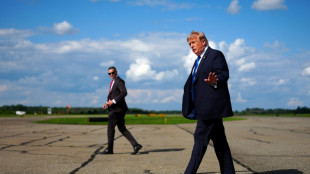 Iran says close to Hormuz deal with Oman, after US suspends attack plan
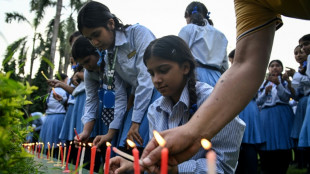
 'Spider-Man' soars to huge $355 million opening in North America
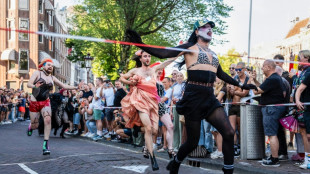 Handbag tosses and high-heeled sprints: Amsterdam celebrates Drag Olympics
 Trump's on-again-off-again war against Iran: in his own words

 Dodgers land Tigers pitching ace Skubal in MLB trade deadline blockbuster
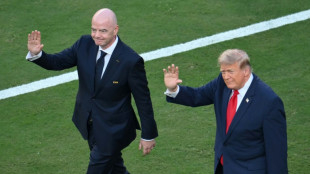 Infantino struggling to survive, says former IOC marketing chief
 OPEC+ boosts September production by 188,000 barrels/day
 Rescuers recover climber Nirmal Purja's body after avalanche disaster
 Fire toll mounts in Greece as blazes spread
 Sri Lanka deploys troops after prison riot
 Baltics transform from Soviet stagnation to startup hubs

 AI keeps consumer prices high in 'RAMaggedon' chip crunch
North Korea's leader Kim Jong Un has threatened Seoul with fiery destruction, but as a remote graveyard on a resort island shows, he has closer links to the South than he might like to admit.
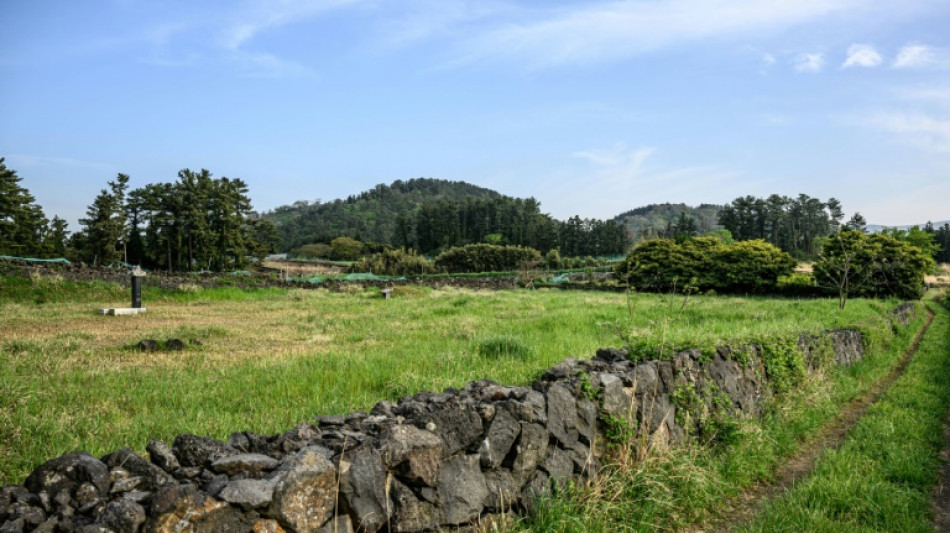
At a cemetery in a hard-to-find corner of South Korea's Jeju island, there are 13 tombstones bearing the Ko family name -- Kim's relatives through his mother, Ko Yong Hui.
Jong Un is the third member of the Kim family to rule North Korea, following in the footsteps of his father and grandfather -- what official hagiography calls the "Paektu bloodline".
But the Jeju graves tell a wider story.
Kim's mother was born in Osaka in 1952 to a native Jeju islander who emigrated to Japan in 1929, when the Korean peninsula was under Tokyo's colonial rule.
Many of her family, including Kim's maternal great-grandfather, are buried on Jeju, their overgrown graves a stark contrast to Pyongyang's Kumsusan Palace of the Sun, where the embalmed bodies of Kim's father and grandfather Kim Il Sung lie in state.
After Kim came to power in 2011 following the death of his father Kim Jong Il, many experts highlighted his mother's South Korean and Japanese heritage. Pyongyang has never confirmed it.
The regime "must have feared confirmation would undermine its legitimacy", Cheong Seong-chang of the Center for North Korea Studies at the Sejong Institute, told AFP.
The Kim dynasty bases its claim to power on Kim Il Sung's role as a guerrilla fighter driving out Japan and winning Korea its independence in 1945.
"Korea-Japan heritage runs directly counter to the North Korean myth of its leadership," Cheong said.
- Kim's mother -
Kim's mother grew up in the Japanese port city of Osaka, but her family moved to North Korea in the 1960s as part of a decades-long repatriation programme by Pyongyang.
The scheme urged ethnic Koreans living in Japan to move to North Korea, part of a drive to "claim supremacy" over the South, said Park Chul-hyun, a novelist and columnist in Tokyo.
"The North saw the Korean-Japanese community as a strategic battleground," he said, and managed to convince nearly 100,000 ethnic Koreans to relocate to the "socialist paradise".
The Ko family answered the call, and lived a relatively normal life in the North until their eldest daughter caught the eye of the country's heir apparent.
Experts believe that Ko, who was a performer with the Mansudae Art Troupe of musicians and dancers, first met Kim Jong Il in Pyongyang in 1972.
She would become his partner in 1975, experts say, and although there is no official record of their marriage the pair had three children. She died in 2004.
"There has been nothing about Ko Yong Hui in official state media," said Rachel Minyoung Lee, a non-resident fellow with the 38 North Program at the Washington-based Stimson Center.
There is not much in state media about Kim Jong Un's background and heritage generally beyond attempts to show he is the legitimate heir to the Mount Paektu legacy, she added.
– Empty grave -
South Korean media discovered the Ko family graves on Jeju in 2014 -- one of the first real confirmations of Kim Jong Un's South Korean ancestry.
At that time, there was a plaque -- known as an "empty grave" in the South -- honouring Kim's maternal grandfather Ko Gyong Taek, even though he died and was buried in the North.
"Born in 1913 and moved to Japan in 1929. He passed away in 1999," read the plaque, a custom which allows family members to perform ancestor rites even if the body is not present.
The plaque was not there when AFP visited the Jeju graveyard in April 2022.
It had been removed by a distant relative of Kim Jong Un, who was shocked by the media attention and feared the grave would be vandalised, the daily Chosun Ilbo reported.
He said his family "knew nothing about the relation to Kim Jong Un", prior to the media discovery, the report said.
M.Ouellet--BTB